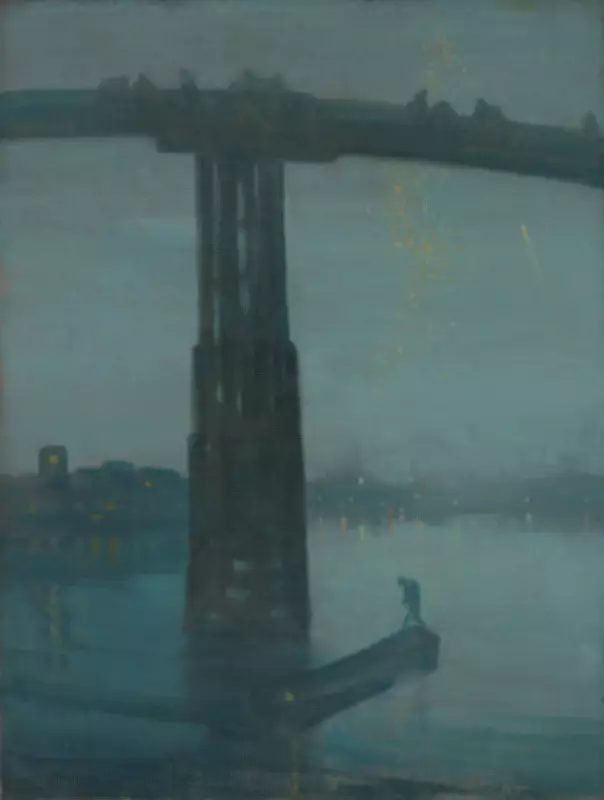
A new exhibition at Tate Britain showcases James McNeill Whistler's works, which are deeply influenced by music. Whistler titled his paintings using musical terms such as 'symphonies,' 'arrangements,' 'harmonies,' and 'nocturnes,' drawing a parallel between visual art and musical abstraction. His famous Nocturnes of the Thames at twilight take their name from Chopin's Nocturnes, reflecting a fusion of sensory experiences.
Whistler's Artistic Philosophy
Whistler believed that painting, like music, should be appreciated for its formal qualities rather than narrative content. He stated, 'As music is the poetry of sound, so is painting the poetry of sight.' This radical view positioned him as a precursor to modernism, as noted by critic Jonathan Jones.
Mutual Inspiration Between Arts
The influence flowed both ways. Claude Debussy's orchestral Nocturnes were inspired by Whistler's paintings, aiming to capture 'the various impressions and the special effects of light.' This cross-pollination highlights a shared focus on sensory experience over storytelling.
Tom Service also reflects on a performance by soprano Felicity Lott, whose rendition of Strauss's Four Last Songs provided an epiphany about the power of music beyond modernist ideologies.
The exhibition invites viewers to reconsider the boundaries between art forms, celebrating the interplay of sight and sound.