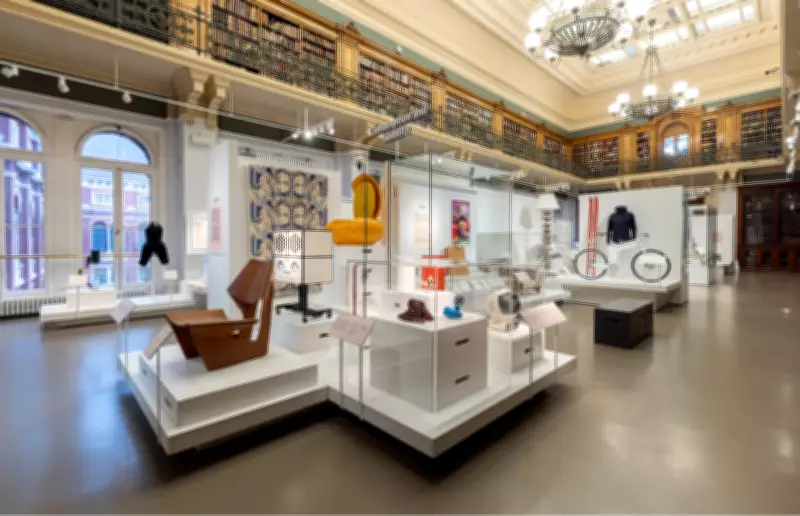
V&A's Spectacular Design Galleries Reopen with Major Transformation
The Victoria and Albert Museum's acclaimed Design 1900-Now galleries are set to reopen to the public this week following a comprehensive upgrade that promises to captivate visitors with an extraordinary journey through 125 years of design evolution. The newly enhanced exhibition spaces trace the remarkable trajectory of human creativity from the invention of the baby monitor to contemporary IKEA furniture and powerful protest posters that have shaped social movements.
A Treasure Trove of Design History
The V&A Museum houses a truly magnificent collection of remarkable objects spanning centuries of human achievement. Within its walls, visitors can discover everything from sixteenth-century Raphael Cartoons and Leonardo da Vinci's notebooks to an ancient Iranian carpet believed to be the world's oldest, a Storm Trooper suit from Star Wars films, Beyonce's diamond butterfly ring, and surprisingly, a Labubu plush toy that captured Gen Z's imagination last year. This eclectic mix demonstrates the museum's commitment to showcasing design in all its diverse forms.
Expanded Exhibition Spaces and Themes
The redesigned Design galleries occupy two expansive rooms on the museum's upper floor, featuring 250 carefully curated artifacts with 60 entirely new additions. The exhibition is organized around six compelling thematic areas that explore critical aspects of modern design: housing and living, crisis and conflict, consumption and identity, automation and labour, sustainability and subversion, and data and communication. Each section invites visitors to critically examine every element of our designed world through thought-provoking displays.
From Everyday Objects to Political Statements
The collection presents a fascinating juxtaposition of familiar everyday items and politically charged designs. Visitors will encounter recognizable objects like an iPhone, 1960s Tupperware containers, modern office chairs, and IKEA lamps alongside powerful political statements including a "No More Racist Murders" poster created after teenager Rohit Duggal's death in 1992, "life medals" awarded to environmental activists imprisoned for their work, and fast fashion jeans similar to those produced at Bangladesh's Rana Plaza building, where structural failure caused a catastrophic collapse killing over 1,000 people in 2013.
Surprising Stories Behind the Designs
Each artifact is accompanied by detailed plaques revealing often surprising historical contexts and design origins. Did you know that the baby monitor was invented in 1937 as a direct response to the shocking Lindbergh baby kidnapping five years earlier? Or that plywood only became a popular commercial material after being used to create splints for transporting wounded soldiers' legs during World War II? These fascinating narratives provide deeper understanding of how design responds to human needs and historical circumstances.
New Additions and Contemporary Relevance
The upgraded galleries feature several notable new acquisitions including a reconstructed early YouTube watch page, a portable pocket prayer mat, innovative Loop earplugs, Hydrostar pimple patches, and a striking Hamed Ouattara cabinet crafted from repurposed oil drum scraps. During a preview of the renovated spaces, Corinna Gardner, the V&A's senior curator of design and digital, explained the exhibition's ambitious vision: "The galleries aim to help everyone who enters recognize that we all wake up in the 21st century. How can we understand today through the past while imagining a collective future we might want to create, and what role does design play in that vision? These material objects help us navigate our place in the world."
Exploring Design's Broader Impact
Beyond the main exhibits, visitors can explore design's profound influence on contemporary society through displays examining Edward Snowden's laptop and its significance to British history, the origins of the burkhini swimwear, Snake Island stamps that became symbols of Ukrainian resistance against Russian aggression, the intricate design process behind football shirts, and innovative approaches to creating more environmentally sustainable products. The galleries provide a comprehensive look at how design shapes and reflects our political, social, and environmental realities.
V&A's Expanding Cultural Presence
The Design 1900-Now galleries reopening coincides with other major developments at the V&A, including the highly anticipated spring opening of V&A East, for which tickets are now available. This expansion represents the museum's ongoing commitment to making design accessible and relevant to contemporary audiences while preserving important historical narratives for future generations.