Swedish Exhibition Uncovers Life of 18th-Century Black Diarist Badin
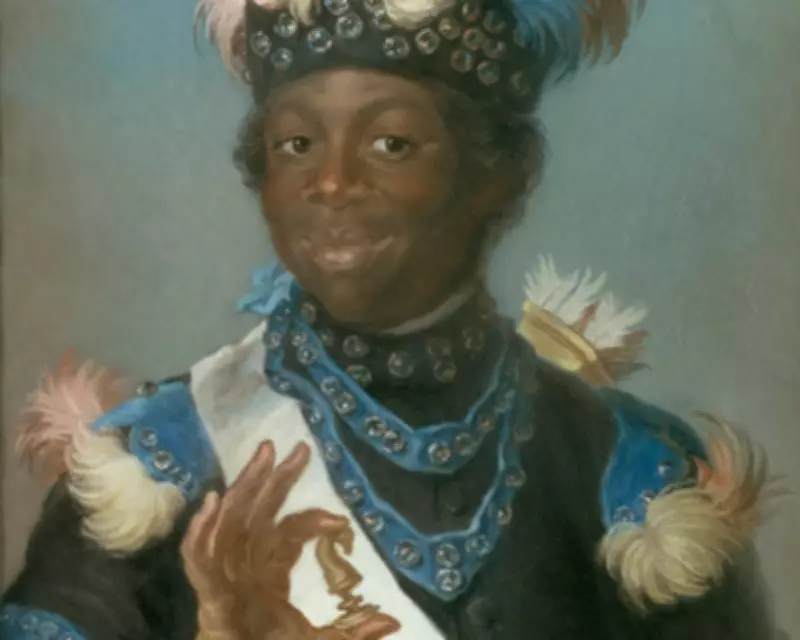
A groundbreaking exhibition at the National Museum in Stockholm is bringing long-overdue attention to Adolf Ludvig Gustav Fredrik Albrecht Couschi, known as Badin, an 18th-century Black diarist whose remarkable life story has been largely overlooked in Swedish history. The exhibition, titled Badin – Beyond Surface and Mask, represents the most comprehensive examination to date of this complex historical figure who navigated Swedish royal society while leaving behind an extraordinary written legacy.
From Enslaved Child to Court Figure
Badin's journey began around 1760 when he arrived at the Swedish royal court as a "gift" to Queen Louisa Ulrika. Born into slavery between 1747 and 1750 in the former Danish colony of St. Croix (now part of the US Virgin Islands), the approximately ten-year-old child had been "owned" by Christian Lebrecht von Pröck before being taken to Denmark and eventually "donated" to the Swedish queen by Gustaf de Brunck, a Swedish councillor of commerce.
Despite his traumatic beginnings, Badin rose to hold multiple significant positions within Swedish society, including chamberlain, court secretary, ballet master, and civil servant. His nickname, derived from the French word for joker or prankster, may have been a survival strategy in a society where his intelligence and education could have been perceived as threatening.
A Rare Written Legacy
What makes Badin particularly significant is the extensive written record he left behind, which is exceptionally rare for people of African descent in 18th-century Sweden. When he died, Badin left diaries, a vast book collection, private letters, and an autobiography that provides invaluable insight into his life in Stockholm during the late 18th and early 19th centuries.
According to Swedish population records, there were only about twenty people of African origin in Sweden between the early 18th and early 19th centuries, and virtually nothing is known about their experiences due to the absence of records. Badin represents a crucial exception, though his privileged position within the royal court means his experiences were not representative of most Black people in Sweden at the time.
Rediscovering Badin's Voice
The exhibition marks the first time Badin's writings have been displayed together, offering visitors direct access to his own words and perspectives. This is particularly significant because, as exhibition curator Åsa Bharathi Larsson notes, "He has an in-between position in the court. He is free but he isn't part of the royal family. We don't know anything about his real family, but he has a status and a different relationship with the royal family than perhaps other court servants had."
Queen Louisa Ulrika raised Badin according to the educational ideals of philosopher Jean-Jacques Rousseau, who believed boys should develop freely and think independently. This unusual upbringing included a Christian education and literacy instruction—extraordinary opportunities for the time—which later enabled his involvement in dance, theatre, and his extensive writing.
Artistic Reinterpretation and Recognition
A central component of the exhibition is a specially commissioned film by artist Salad Hilowle titled Maroonen (The Marooned). Hilowle, who has dedicated much of his career to studying Badin, created the film out of frustration that interest in Badin has often focused on his image rather than his actual words.
"He pops up everywhere, from August Strindberg plays about Gustav III and then also other projects," Hilowle explained. "The image of him is everywhere but no one seems to hear or read his own voice." The film imagines Badin giving a lecture to current students at Uppsala University, reflecting on his life and how he has been portrayed over time.
Hilowle's film incorporates opera to explore Badin's writing, including setting to music Badin's Swedish phrase "I as one of the Blacks." The artist explained his approach: "I took it into the opera singing because I wanted to hear that. How does it feel when you hear that?"
Beyond Surface Representations
Despite appearing in fictionalized form in multiple works—including a racist depiction in August Strindberg's 1902 play Gustav III and more recently in a ballet at the Royal Swedish Opera—Badin remains vastly under-researched and overlooked by the Swedish public. Hilowle's film seeks to counter superficial representations by showing Badin as "very sensitive and fragile," qualities he believes have been absent from previous portrayals of Black subjects in Swedish culture.
Using Badin's diary as a starting point, Hilowle aimed to give Badin both recognition and dignity while exploring how he might have survived psychologically in his complex social position. "It's very interesting because it had to cost him a lot," Hilowle reflected. "And being in those spaces and being almost like a cameo, shapeshifting."
The exhibition represents a significant moment in Swedish art history, not only for recognizing Badin's contributions but also for featuring the work of an African-Swedish artist interpreting this historical figure. As Hilowle noted, "I'm always talking about how he [Badin] was an image and he was the other and now the other is also an artist. Time has changed in Sweden. It's a super strong moment."
Through his diary and other writings, Badin accomplished what few in his position could: he wrote himself into history. The National Museum exhibition now ensures that his voice will finally be heard and his complex legacy properly examined, offering visitors a more nuanced understanding of both this remarkable individual and the society in which he lived.