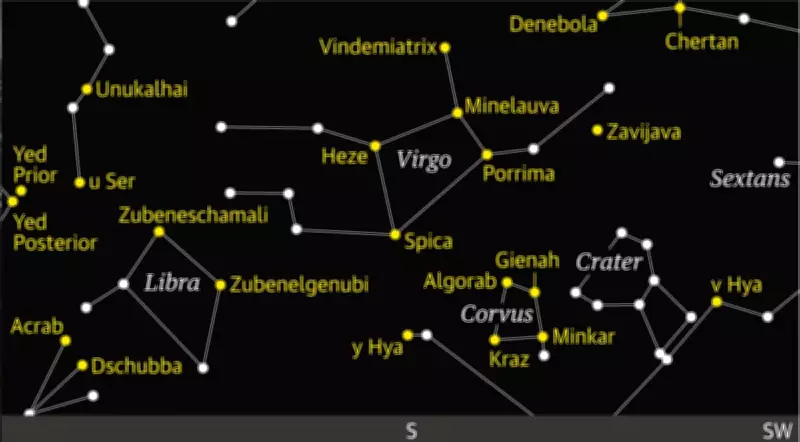
The constellation of Virgo, the virgin, is particularly well placed for observation during the northern spring months. Virgo is one of the fainter zodiacal constellations, meaning it sits on the imaginary line in the sky that is followed by the sun, moon and planets.
Location and Visibility
It is situated between the much brighter Leo, the lion, to the west and the equally faint Libra, the scales, to the east. The chart shows the view looking due south from London at 2300 BST on Monday, although the view will be essentially the same all week. For observers in the southern hemisphere, the constellation is visible high in the eastern sky during the early evening at this time of year.
Historical Significance
Virgo is part of Ptolemy's original catalogue of 48 constellations, compiled in the second century, although its origins as a concept stretch back even further to Babylonian astronomy in the 10th century BCE. In almost all western mythical depictions, Virgo is associated with the harvest and wheat. To the Babylonians, the constellation was the goddess Shala. To the Greeks, she was Demeter, the goddess of agriculture.
Notable Features
The brightest star in the constellation, Spica, is said to represent an ear of wheat being held in the maiden's hand. Occasionally, she was associated with justice, and depicted holding the nextdoor constellation, the scales of Libra, in her hand.
This week offers an excellent opportunity to observe Virgo, especially for those in the northern hemisphere. With a clear night sky, stargazers can spot this ancient constellation and appreciate its rich mythological history.