The National Portrait Gallery in Washington DC has quietly removed a descriptive placard that detailed Donald Trump's two impeachments and the January 6th Capitol attack from the display of his official portrait. The museum, which is part of the Smithsonian Institution, replaced the text with a significantly shorter label when it swapped an older photograph of the former president for a new image.
Caption Controversy and Content Removal
The previous caption, which has now been taken down, explicitly stated that Trump was "impeached twice, on charges of abuse of power and incitement of insurrection after supporters attacked the U.S. Capitol on January 6, 2021, he was acquitted by the Senate in both trials." According to reports from The Washington Post, the new placard is so brief that the outline of the old, larger sign remained visible on the wall beneath it. The updated text now simply notes Trump's years in office.
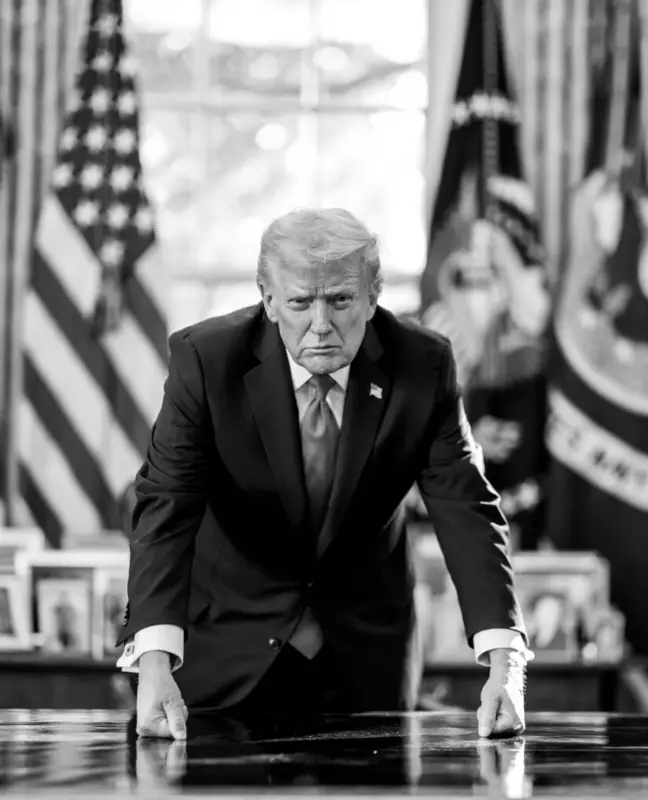
This change coincides with the installation of a new official portrait of Trump, taken by photographer Daniel Torok. The image shows the former president standing in the Oval Office with a scowl and his fists placed on the desk. It replaces a previous photograph where he appeared with a serious expression, standing with his hands in front of him.
A Pattern of Institutional Pressure
The text removal is not an isolated incident but appears to be part of a broader effort by Trump and his administration to influence the Smithsonian's narrative. In July, the Smithsonian's National Museum of American History also removed references to the two impeachments from its displays.
Furthermore, in March, Trump signed an executive order aimed at prohibiting the Smithsonian from using funds for exhibits deemed to "degrade shared American values" or "divide Americans based on race." This move was widely interpreted as an attempt to control how institutions frame recent history, particularly the events surrounding the Capitol riot.
The tension extended to personnel. In May, Trump claimed he had fired the gallery's director, Kim Sajet, labelling her a "highly partisan person." While the museum's board of regents rejected this attempt, citing its own control over staffing, Sajet ultimately resigned from her position.
Historical Context and Presidential Sensitivities
Trump has previously shown sensitivity about his official portraits. Last year, he publicly criticised a painting of him in the Colorado state capitol, calling it "purposefully distorted" and "truly the worst." That painting was later replaced.
In a more unconventional move, Trump added a "Presidential Walk of Fame" to the White House exterior in September, featuring portraits of every former commander-in-chief except his successor, Joe Biden. In Biden's place, Trump installed a photograph of an autopen signing Biden's name—a visual jab promoting the baseless claim that Biden is not actively making decisions.
A spokeswoman for the National Portrait Gallery, Concetta Duncan, told The Washington Post that the museum is "exploring" the use of less descriptive "tombstone labels" for some new exhibits. She noted that Trump's portrait in the popular exhibition has been changed before. The institution did not respond to further requests for comment on the specific decision to alter the impeachment caption.
This episode raises significant questions about the role of national institutions in documenting contentious political history and the pressures they may face from sitting administrations to curate a particular version of events for the public.