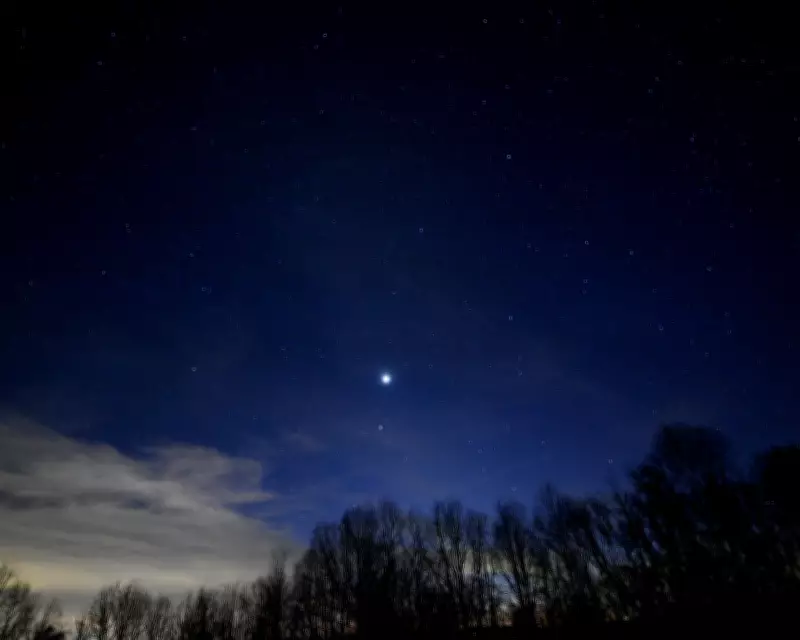
Six Planets Set for Rare Alignment in February Night Sky
Skywatchers around the globe are poised for a celestial treat this month as six planets align in a rare planetary parade visible in the night sky. The phenomenon, which involves Mercury, Venus, Jupiter, Saturn, Uranus, and Neptune, will be at its most impressive on 28 February, offering a stunning visual display for astronomy enthusiasts.
What is a Planetary Parade?
According to NASA, a planet parade or planetary alignment occurs when at least four or five planets can be seen together from Earth's perspective. This event happens because all planets orbit the sun in roughly the same flat plane, known as the ecliptic plane. Although each planet travels at different speeds and distances, there are times when several appear to line up, creating a visual effect. In reality, the planets remain millions to billions of kilometres apart, but from our vantage point, they seem closely grouped.
Historical Context and Rarity
Such alignments are not unheard of, but they are infrequent. For instance, on 27 February 2025, seven planets aligned in a display that won't be seen again until 2040. As Greg Brown, an astronomer at the Royal Observatory Greenwich, explained to PA Media, groups of three to five planets are common, but full seven-planet parades are rare due to the precise alignment required. The upcoming six-planet event is a notable occurrence that highlights the slow, gradual movements of our solar system's bodies.
Viewing Details and Tips
The alignment will be visible from late February into early March, with the peak on 28 February when the planets will be most tightly grouped. Multi-planet viewing opportunities can last for weeks, as planetary motions are gradual. To catch the spectacle, the best time is about 30 minutes after local sunset, looking low in the western sky with an unobstructed view and clear weather.
Four planets—Mercury, Venus, Mars, and Jupiter—will be visible to the naked eye. However, Uranus and Neptune, located in the cold outer regions of the solar system, will require binoculars or a telescope. Mercury may be tricky to spot due to its low position near the horizon, so patience and ideal conditions are key.
NASA notes that for a planet to be visible without optical aid, it should be at least a few degrees above the horizon, with 10 degrees or higher being optimal. Earth's atmosphere near the ground can dim celestial objects, making bright planets difficult to see when too low.
Global Visibility and Dates
This planetary parade will be observable worldwide, though the exact best viewing date varies by location. According to Star Walk, optimal dates include:
- 25 February for São Paulo
- 28 February for Athens, New York, Mexico City, and Tokyo
- 1 March for Beijing, Berlin, London, and Mumbai
- 2 March for Reykjavik
Viewers in different parts of the world may see the alignment a few days before or after 28 February, as it serves as a median date for the event.
This rare celestial event offers a unique opportunity for stargazers to witness the beauty of our solar system in action, reminding us of the vastness and wonder of space.