Rothko in Florence: A Journey into Spiritual Art
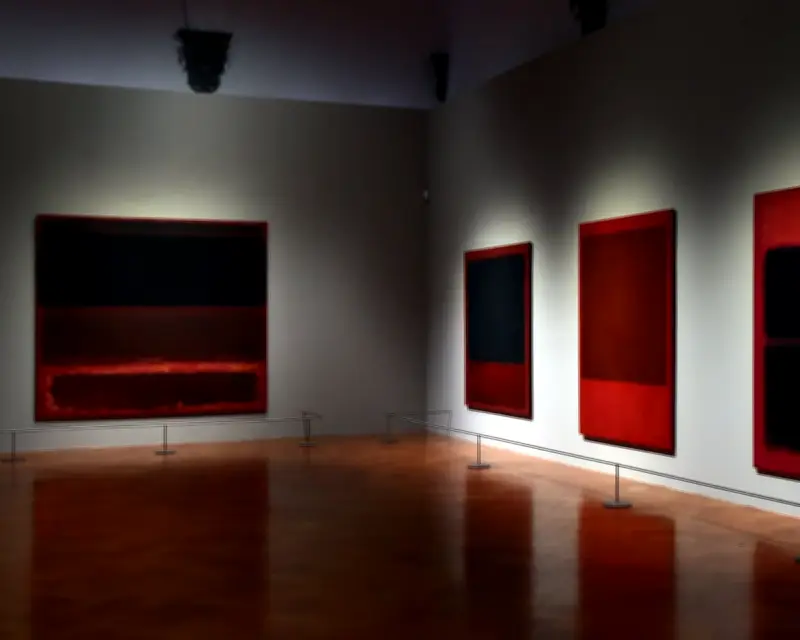
Mark Rothko's paintings are on display at the exhibition Rothko in Florence in the Palazzo Strozzi, as seen in a photograph by Roberto Serra/Iguana Press/Getty Images. The exhibition pairs his giant canvases with Renaissance religious art, creating a profound experience for visitors.
A Personal Encounter with Rothko's Monumental Art
Rhiannon Lucy Cosslett, an unbaptised agnostic raised with no religion, describes the closest she comes to a spiritual experience is when standing in front of an artwork. Last week, she travelled to Florence not for Michelangelo's David or Botticelli's Birth of Venus, but for Rothko's works. The exhibition Rothko in Florence, curated by his son Christopher and author Elena Geuna, takes place at Palazzo Strozzi and two satellite sites. It makes explicit how Renaissance art had a profound impact on Rothko and his painting.
The Emotional Impact of Rothko's Canvases
Cosslett admits feeling tearful when confronted with the first large canvas. She describes an emotion born of appreciation, astonishment, and gratitude. She felt profoundly lucky to be there, absorbing how colours like purples, reds, oranges, yellows, and blues blend and glow. As she continued to look, she stopped thinking about herself. This dissolution of identity in contemplation is the beauty of Rothko's art, especially in self-referential times. The underpinnings are not so different from religious art: in casting off the self comes awe and wonder.
Rothko and Renaissance Art: A Shared Visual Language
The next day at the former San Marco monastery, where cells were frescoed by Fra Angelico with religious scenes, Cosslett felt the connection more strongly. Rothko was overwhelmed when he saw these frescoes at age 47 and wanted his own colour field paintings to provoke a similarly intense, spiritual response. At San Marco, some frescoes are paired with Rothko's works in juxtapositions highlighting a subtle shared visual language and strikingly similar rationale. Rothko spoke of a painting being an experience and believed in quiet contemplation. The spiritual aspect is most obvious in the Rothko Chapel in Houston, Texas, but here, on a smaller scale with an uplifting colour palette, a kind of holiness emerged. Cosslett's father was similarly moved.
Youth Engagement and Modern Relevance
Rothko might not have loved the noise levels at Palazzo Strozzi or groups of Italian schoolchildren looking through phone screens, but when Cosslett eavesdropped on their interactions with the tour guide, their responses were perceptive and authentic. One teenage boy said, 'I love the yellow. Why do you think he chose it?' Rothko's works are embraced by younger people, possibly as a refuge from the unceasing visual bombardment of infinite scroll. Cosslett believes it goes beyond that: a search for greater meaning.
A Shift in Perspective: From Nihilism to Wholeness
Cosslett admits she got Rothko wrong when she was young. Writing about the 2008 Tate Modern retrospective, she referenced Sartre's Being and Nothingness and original nihilation. Now older, she doesn't reach for theory. The dissolving, floaty response is not nihilistic but includes a feeling of wholeness. Beatific joy is still possible if you know where to look. She won't justify her belief in Rothko's greatness. People who hate his paintings can be recommended to stand in front of one. She guarantees they will feel something. Afterwards, at the Duomo, she lit a candle for her brother and watched the flame flicker and blur, merging with darkness. 'That,' she thought. 'That's how it feels.'