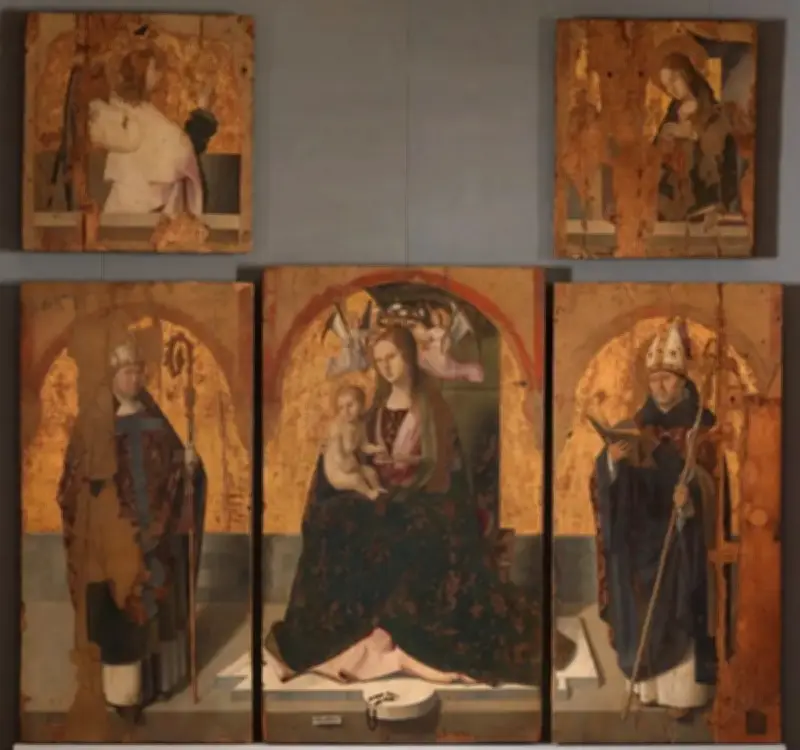
Two Renaissance masterpieces by Antonello da Messina were stolen from the Regional Gallery of Palazzo Abatellis in Palermo, Sicily, during the August holiday weekend, according to the Italian Ministry of Culture. The theft, discovered on the morning of Monday, 16 August, triggered an immediate international alert and a police investigation.
The Stolen Works and Their Significance
The stolen paintings are "Portrait of a Man" (also known as "The Unknown Sailor") and "The Annunciation" (also known as "The Virgin Annunciate"), both created by Antonello da Messina (c. 1430–1479), one of the most influential painters of the Italian Renaissance. The works are considered priceless national treasures, with the ministry describing them as "among the most important works of the Italian Renaissance."
Antonello da Messina was a pioneer of oil painting in Italy, and his works are celebrated for their psychological depth and technical mastery. The two pieces had been on display at the museum since the 1970s, drawing thousands of visitors each year. According to museum records, the paintings were insured for a combined value of €20 million, though art experts say their cultural value far exceeds any monetary estimate.
The Theft and Initial Response
The theft was discovered when museum staff returned after the Ferragosto holiday, a national Italian holiday on 15 August. The intruders had entered the museum through a rooftop skylight, bypassing the alarm system, according to the Palermo police. The alarm system had been deactivated during the holiday, and the intruders apparently exploited this vulnerability.
"We are dealing with a sophisticated operation, likely carried out by an organized group with specific knowledge of the museum's security measures," said Colonel Giuseppe Petralia, commander of the Carabinieri's art squad in Palermo, in a statement to the press. "The paintings were removed from their frames, which were left behind, indicating a targeted and quick removal."
The Italian Ministry of Culture immediately activated the national database of stolen art and alerted Interpol and the European Union's law enforcement agency, Europol. The ministry also offered a reward of €500,000 for information leading to the recovery of the paintings.
Impact and International Cooperation
The theft has raised concerns about the security of Italy's vast cultural heritage, particularly in smaller regional museums. In a press conference on Tuesday, the Minister of Culture, Dario Franceschini, stated, "This is a devastating blow to our cultural heritage. We are working around the clock with international partners to ensure these masterpieces are returned safely."
Museum director Maria Concetta Di Natale told reporters, "We are heartbroken. These works are the soul of our collection, and their loss is a tragedy for our community and the world." The museum has been closed indefinitely as investigators examine the crime scene and review security protocols.
The theft has also sparked a broader debate about the need for enhanced security measures in Italian museums, especially during holiday periods when staffing may be reduced. Experts note that the black market for stolen art remains active, and the paintings could be used as collateral in criminal transactions or sold to private collectors.
As of this report, no arrests have been made, and the paintings remain missing. Italian authorities have called on the public to report any information that might lead to their recovery, emphasizing that the works are too famous to be publicly sold and are likely being held for ransom or negotiation.
The case is now one of the most high-profile art thefts in recent Italian history, drawing comparisons to the 1969 theft of Caravaggio's "Nativity" in Palermo, which has never been recovered. The international art community is closely watching the investigation, hoping for a swift resolution that will return these irreplaceable works to their rightful home.