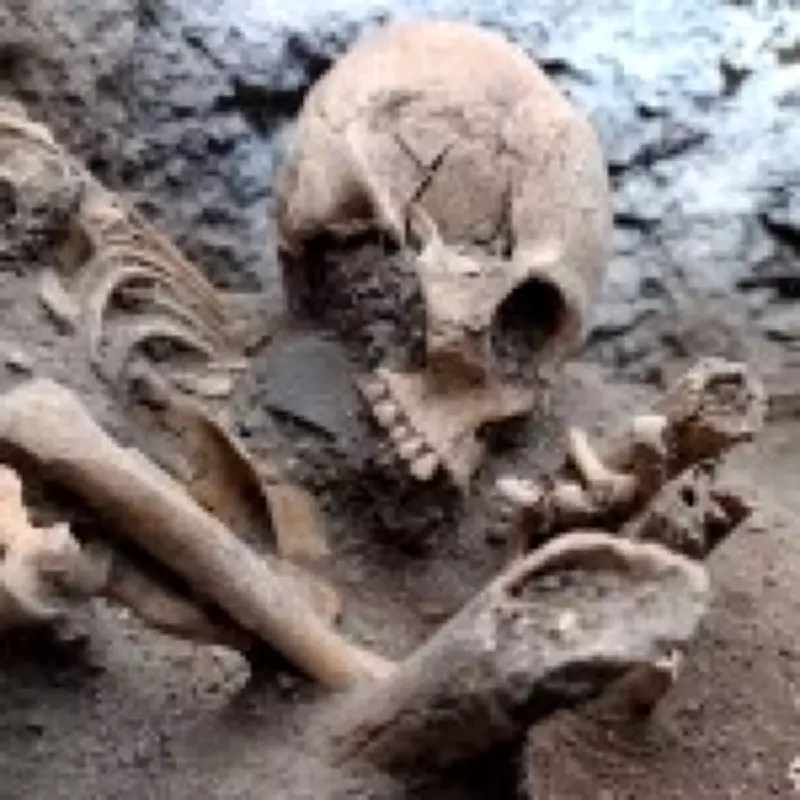
Archaeologists have uncovered five ancient shaft tombs filled with human remains and burial offerings in central Mexico, shedding new light on pre-Aztec civilizations. The discovery was made during excavations linked to a major railway project in Tula, Hidalgo.
Discovery Details
One chamber contained the remains of eight individuals alongside 47 miniature ceramic vessels. Several bodies were buried in seated positions with offerings placed at their feet. Among the artifacts recovered were fragments of a semi-circular mother-of-pearl pendant, plaques made from shell, a small shell, and decorated vessels.
The tombs were carved into tepetate, a hardened volcanic soil found across the region, beneath the remains of ancient homes and courtyards dating back almost 1,800 years.
Archaeological Context
Researchers from the Archaeological Salvage Programme, led by archaeologist Víctor Heredia Guillén, have been on site since September 2025. They have documented more than a dozen individual and collective burials, including remains of children, teenagers, and adults.
Most of the structures uncovered belong to the Teotihuacan civilisation, prominent between AD 225 and 550. This culture existed centuries before the Aztecs and is famous for constructing the giant pyramids at Teotihuacan.
Broader Significance
Mexico’s culture secretary, Claudia Curiel de Icaza, stated that the find 'provides information about the ways of life, beliefs, and social organisation of those who inhabited this region more than a thousand years ago, and confirms that infrastructure development can be accompanied by rigorous research and the preservation of heritage.'
The settlement formed part of a wider network of Teotihuacan-linked communities across northern Tula dating from AD 200 to 650, including Chingú, El Tesoro, Acoculco, El Llano, and La Malinche.
Last year, liquid mercury was found in the Quetzalcoatl temple in Teotihuacan, which experts believe may have been considered a 'gateway to the underworld.'