Digitisation unlocks hidden details in Hurley's Endurance photographs
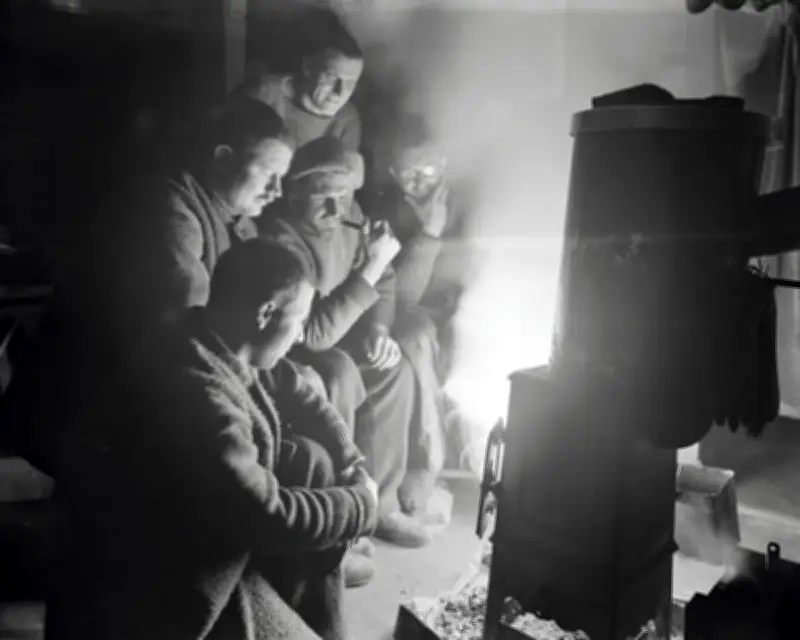
High-definition scans of Frank Hurley's original glass-plate negatives from Sir Ernest Shackleton's Trans-Antarctic expedition (1914–17) have revealed remarkable new details, including a sixth crew member previously invisible in a well-known image titled 'The Nightwatchman's Story, March 1915.' The digitisation project, undertaken in 2015 by the Royal Geographical Society in collaboration with Riverside Press, brings unprecedented clarity to Hurley's iconic photographs of one of history's greatest survival stories.
The heroic trek of the Endurance crew
When the Endurance was crushed by ice in the Weddell Sea, all 28 expedition members survived and began a 10-month trek over ice and sea until their rescue from Elephant Island. Hurley, an Antarctic veteran who had served as official photographer on the Australasian Antarctic Expedition of 1911–1913, captured the journey with a heavy camera and fragile glass plates. According to Alexandra Shackleton, the explorer's granddaughter, 'Hurley was a superb photographer, not only for his vision but for his commitment. He would lie down in front of the moving ship and climb high in the mast, burdened with very heavy camera equipment.'
Revealing a hidden crew member
The digitisation of negatives in 2015 unlocked details invisible in previous reproductions. In 'The Nightwatchman's Story, March 1915,' a sixth crew member was revealed, hidden behind smoke from the stove. This discovery adds depth to the visual record of the expedition, which includes images of the ship in full sail, dog igloos ('dogloos'), and impromptu football matches on the ice to maintain morale.
Hurley's artistic vision and sacrifice
Hurley regarded himself primarily as an artist rather than simply a recorder of events, according to Alexandra Shackleton. He did not scruple on occasion to embellish his subject matter and add or subtract details. After the Endurance sank on 21 November 1915, Hurley rescued the fragile glass-plate negatives he could carry but made the agonising decision to smash 400 others on the ice to lighten the load. The surviving negatives form the basis of the new book 'The Endurance Photographs,' published in collaboration with the Royal Geographical Society.