Celestial Spectacle: Waning Moon to Align with Antares Before Dawn
Early risers in London are in for a breathtaking astronomical treat on the morning of 11 February, as the waning crescent moon makes a close pass by Antares, the brightest star in the constellation Scorpius. This celestial event offers a rare opportunity to observe two contrasting luminaries in the pre-dawn sky, with the moon's silver glow guiding viewers to the brilliant red supergiant star.
Timing and Viewing Conditions for Optimal Observation
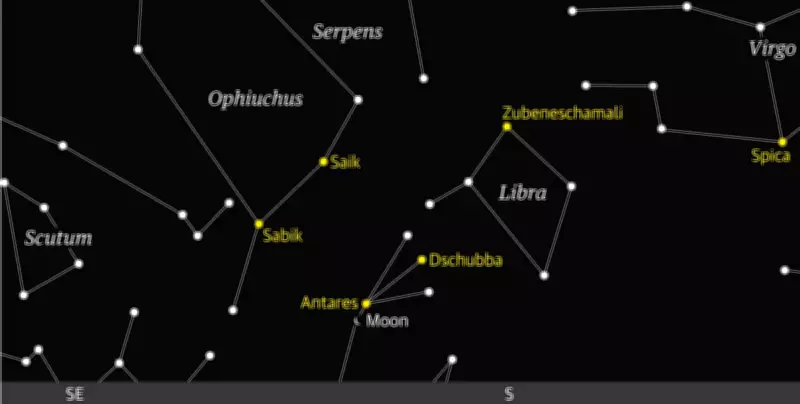
The chart illustrates the view looking south-south-east from London at precisely 06.00 GMT on 11 February. To catch this spectacle, observers should begin watching from around 05.30 GMT, as the moon rises shortly after Antares. The viewing window is limited, with the sun scheduled to rise at 07.21 GMT, though dawn's light will likely obscure Antares well before that time.
For the best chance of success, an unobstructed view of the south-eastern horizon is absolutely essential. The celestial pair will ascend only a few degrees above the horizon before daylight overwhelms them. Atmospheric haze at this low altitude may slightly diminish Antares' usual brilliance, but the moon's crescent should remain clearly visible to the naked eye, serving as a perfect celestial pointer.
Astronomical Details of the Encounter
Antares, located approximately 550 light years from Earth, is a magnificent red supergiant star that never climbs particularly high above the UK horizon, making any sighting feel like a special achievement. On this morning, it will be joined by the moon in its waning crescent phase, about three days from becoming new, with approximately 34% of its visible surface illuminated.
The two celestial bodies will be separated by just a few degrees in the sky, creating a striking visual contrast between the moon's cool, silvery light and Antares' distinctive reddish hue. This proximity makes for an excellent observing opportunity, even for those with limited astronomical experience.
Practical Viewing Tips for London Skywatchers
To maximise your chances of witnessing this event, consider the following recommendations:
- Find a location with a completely clear south-eastern horizon, away from buildings, trees, or other obstructions.
- Allow your eyes to adjust to the darkness for at least 15-20 minutes before beginning your observation.
- Dress warmly, as February mornings in London can be particularly chilly.
- Be patient and persistent; atmospheric conditions can vary, and the low altitude makes this a challenging but rewarding observation.
This celestial alignment serves as a reminder of the dynamic nature of our night sky and offers Londoners a chance to connect with astronomical phenomena visible from their own city. Whether you're an experienced stargazer or simply curious about the cosmos, this event provides a compelling reason to rise early and look to the heavens.