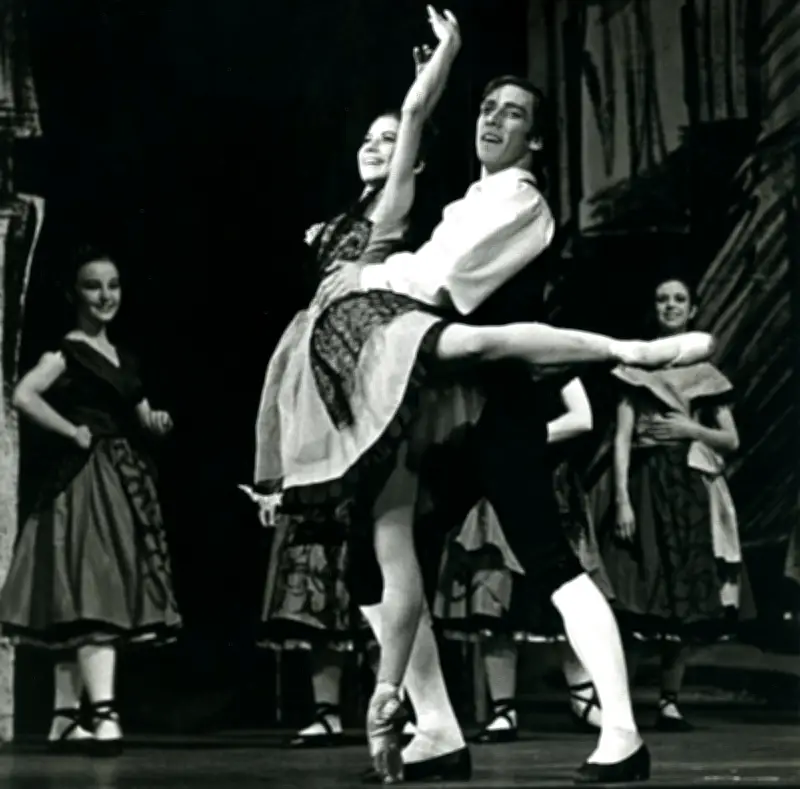
Kenneth Bannerman, who danced with Ballet Rambert between 1958 and 1966 and was the first British dancer to perform the role of Basilio in Marius Petipa's Don Quixote, has died aged 89. The ballet was staged for the company by Witold Borkowski in 1962.
The role of Basilio is typically associated with dancers of the caliber of Rudolf Nureyev, Vladimir Vasiliev, or Carlos Acosta, highlighting Bannerman's talent. It also showcased his stage partnership with Lucette Aldous, a vibrant ballerina who later became one of Nureyev's preferred partners.
In the late 1950s and early 1960s, Rambert performed eight shows a week and traveled constantly, a demanding schedule that led to shorter careers. After a back injury, Bannerman retired at age 30 and worked for 30 years as a Post Office clerk.
Early Life and Training
Bannerman was born in Haddington, East Lothian, Scotland, the fourth of five sons of James, a doctor and surgeon, and Margaret (nee Robertson), a nurse. During World War II, his mother took the boys to West Vancouver, Canada, returning in 1945. While still in primary school, Bannerman showed interest in ballet and trained with Marjorie Middleton in Edinburgh, making his debut in a pantomime in Perth.
Impressed by a Ballet Rambert performance in Edinburgh, at age 16 he chose the Rambert School over Sadler's Wells Ballet School after Middleton provided letters of recommendation. This decision proved wise, as he soon joined the company and filled a vacancy for a principal classical dancer.
Career Highlights
After two years of national service with the Royal Artillery, Bannerman took on roles such as Franz in Coppélia, Albrecht in Giselle, and the male role in Les Sylphides. Initially tentative, he soon made these roles his own. In 1961, the series Dancer You Will Know in Dance and Dancers noted his transformation from a retiring boy to a confident performer.
Bannerman was likely the first Scot to dance James in La Sylphide, choreographed by August Bournonville in 1836. He took over the role in 1960 from Danish star Flemming Flindt. The intricate style challenged him, and when the BBC filmed the production in 1961, Flindt returned for the role, with Bannerman dancing a solo as a village boy.
He appeared in Norman Morrice's contemporary works, including Two Brothers (1958) and The Travellers (1963), and played the Foreman in Hazaña (1959). His portrait in Conflicts (1962), a ballet about creating ballet, was particularly noted. In 1964, he created the role of the Young Man in Cul de Sac, with critic Clive Barnes praising his performances in Morrice's works.
Bannerman's repertoire was broad. He performed the difficult Harlequin solo in George Balanchine's Night Shadow (1961), revealing its humor, and excelled in the Popular Song in Façade with Morrice. He gave a moving rendition of the fifth solo in Antony Tudor's Dark Elegies and appeared in roles including St Leon in Pas de Déesses, a Cavalier in John Cranko's La Reja, and in Walter Gore's Simple Symphony.
Personal Life and Legacy
Bannerman's longtime partner was John Webley, a Rambert administrator. They entered a civil partnership on December 21, 2005, the day such partnerships became legal in Britain. They continued supporting the company, including its move from Chiswick to a new studio on the South Bank in 2013.
Webley died in 2023. Bannerman is survived by his younger brother Douglas, five nephews, and five nieces. Kenneth Boog Watson Bannerman was born on October 4, 1936, and died on May 23, 2026.