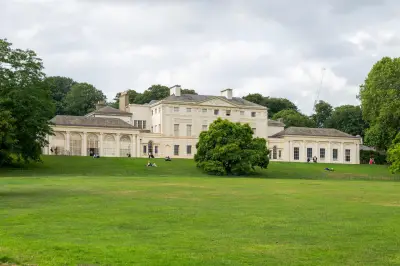
Photographer Roland Reinstadler gained rare access to the cloistered Lanegg monastery in Lana, South Tyrol, Italy, documenting the traditions, rituals, and daily lives of its priests and nuns for his book In Umbra Lucis. The project, available to pre-order from GOST, offers a glimpse behind the walls of a secluded religious community.
Rare access to a closed world
Initially introduced by the prior of the Teutonic Order, Reinstadler photographed the architecture, inhabitants, and interplay of light and shadow within the monastery. He describes the book as 'a book about faith, the divine and the lives of the friars and nuns of the Teutonic Order. At the same time, it’s an attempt to shed light, through metaphorical images, on the more complex side of the church. For me, it is also a very personal book and project, and perhaps even an attempt to come to terms with my past.'
Daily rituals and community life
One image shows priests of the Teutonic Order sitting together in the kitchen of the convent in Lana, enjoying a shared marende (a traditional South Tyrolean afternoon snack) after an ancient liturgical ceremony. According to Reinstadler, 'The scene shows not only an everyday gathering but also a moment of sharing and maintaining traditions within religious life, highlighting the importance of community and centuries-old customs.'
Another photograph captures pilgrims leaving a small mountain church in St Leonhard in Passeier after a shared service. The Monday pilgrimages held each May are described as 'an expression of a living religious tradition that is still maintained in the village today. The cross, the simple church and the impressive mountain landscape speak of trust and the people’s deep connection.'
Ageing community and symbolic imagery
Sister Josefa, 78, is one of the last 16 sisters living at the Lanegg convent. Despite her advanced age, she lovingly cared for the plants in the convent’s greenhouse until the end of last year. In the photo, she holds a red flower and looks out into the convent garden. Prior Arnold, 84, of the Teutonic Order, is shown sitting at a desk reading the Bible before the shared lunch. Reinstadler notes that 'Reading from the Bible before a shared meal is a symbol of reflection and solidarity.'
A particularly striking image depicts a young candidate lying prostrate on the floor during a religious initiation ritual into the Teutonic Order, with priests in white habits standing beside him. Reinstadler explains that 'The prostrate posture traditionally represents the complete surrender of one’s life to God and the readiness to serve within the community.'
Symbols of decline and transience
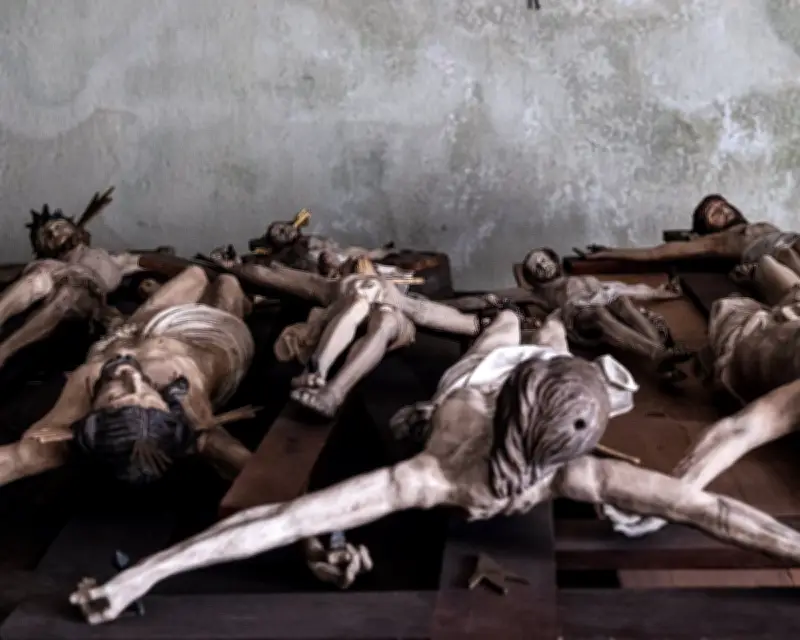
One photograph shows crucifixes lying on a wooden board at Säben abbey in South Tyrol. Reinstadler interprets this as 'a symbol of the current situation of the church. The many discarded crosses not only convey the religious significance of the place but can also reflect the decline and abandonment of the monastery. They stand as a symbol for an ageing population, the decline of religious communities and the loss of life and tradition in this place.'
Another image captures an elderly nun at the Lanegg convent, her hunched posture indicating advanced age and physical frailty. The interplay of light and shadow 'conveys tranquillity, solitude and the transience of human life,' according to the photographer.
Landscape and atmosphere
Reinstadler also includes landscapes, such as a dramatic evening mood in the mountains of the Passeier valley, with dark clouds and sunbeams breaking through, and a river winding through the landscape. He describes it as conveying 'a peaceful atmosphere.' A weather cross in a snow-covered mountain landscape also features, with mountain peaks stretching out in the background.