Claire Fuller has a fascination with corpses: the moment when a living, beloved body becomes inert, heavy matter. In her Costa-winning novel Unsettled Ground, twins grapple with their mother's death, balancing pathos and dark comedy. Now, in Hunger and Thirst, the protagonist Ursula's life is shaped by two encounters with dead bodies, as the novel oscillates between social realism and gothic horror.
A Troubled Beginning
The first corpse is Ursula's mother, a busker who died of dengue fever when Ursula was seven, leaving her trapped in a Moroccan bathroom for two days. The novel opens in 1987, with 16-year-old Ursula having moved through seven children's homes to a halfway house. She lands a job at Winchester School of Art, where she meets Sue, a bold friend who introduces her to a warm, chaotic family. Ursula narrates 40 years later, hinting at a tragedy involving Sue's murder, explored in a documentary called Dark Descent.
Into the Horror
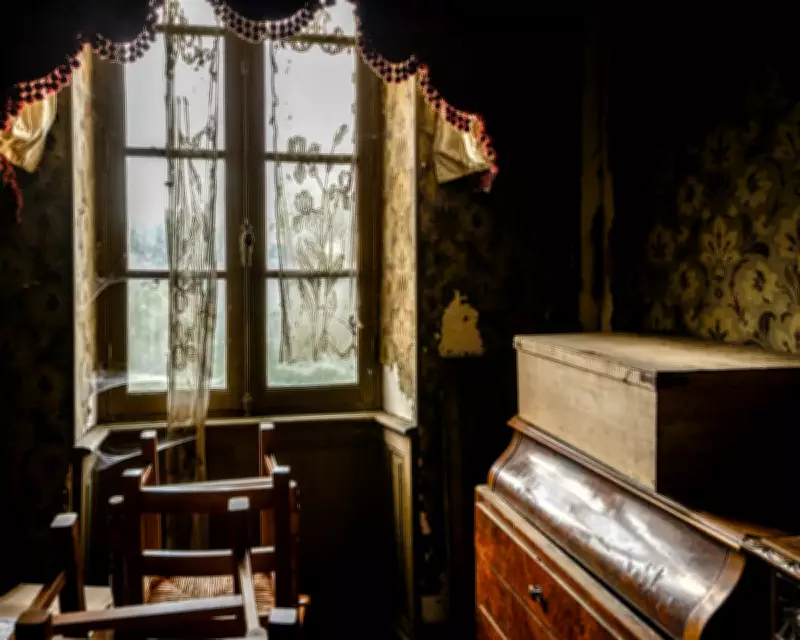
Sue and Ursula watch horror films with Sue's boyfriend Vince and brother Raymond, with whom Ursula falls in love. Sue suggests moving to a derelict house, The Underwood, where the Bloodworths were murdered a decade earlier. Ursula feels at home in the dusty, soupy air, drawn to the horror genre by her past. Sue's destructive energy leads to a seance and a recreation of the murder, pushing Ursula toward violence.
Ursula discovers her sculpting talent, carving figures on a dead tree and drawing bodies within bodies. She channels the house's demonic energy into creativity, exploring the porousness of human connection. But betrayal strikes when her secrets are exposed on camera for the documentary. Her sculpting mallet becomes a murder weapon, and a second corpse haunts her forever.
Dual Narratives
The novel operates on two levels: the careful observation of Thatcher's Britain and the care system's failures, and the lurid horror of The Underwood. Like The Shining, it explores madness and societal hauntings, questioning what is real. The social critique remains urgent, suggesting that horror may be the most honest genre to represent a world where families are isolated and communities fragmented.
Hunger and Thirst is a big, messy, brilliant book, full of intimate portrayal and intense feeling. As Raymond says early on, "You watch because you want to know the worst that can happen." In this world, ordinary feelings morph into horror, and happiness becomes illusory.