A breeze from the vast North American plains has swept across the rolling Yorkshire hills, bringing with it the powerful works of 38 Indigenous American artists. The Yorkshire Sculpture Park has transformed its underground galleries into a realm of clay, earth, fabric, and ceramics, where painting and sculpture speak of land, memory, oppression, and freedom.
Ancestral Identity and Innovation
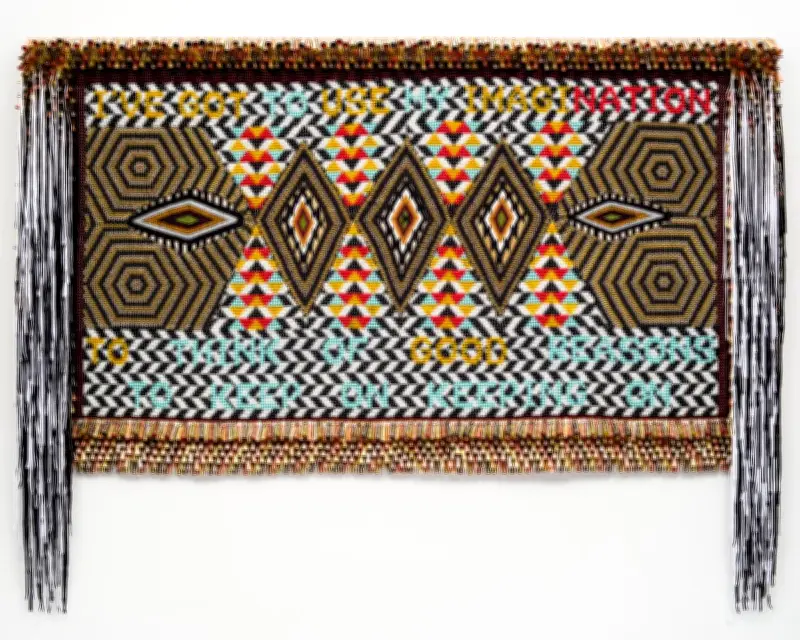
Everywhere, there is a palpable sense of ancestral identity, memory, and tradition. This is evident in the Navajo weavings of Tyrrell Tapaha and Melissa Cody, the intricate beadwork of Jeffrey Gibson, and the dizzying geometric patterns of Dyani White Hawk's towering column. These artists use traditional aesthetics to explore new frontiers: Gibson examines the intersection of his queer identity with Indigenous culture, White Hawk ventures into pure abstraction, and Cody blends pixelated video game aesthetics with Navajo patterns. The exhibition is a testament to taking old ways and pushing them in fresh directions.
Generations of Women in Clay
Pueblo sculptor Rose B Simpson presents ceramic figures, one carrying a piece of clay made by her child, another cradling a baby. Nearby, a sculpture by her mother, Roxanne Swentzell, stands out: a nude woman molding herself from clay. These two generations of women honor their ancestral expertise in an art form perfected over centuries and millennia, celebrating their past and their land using the earth itself as material.
The exhibition is not limited to weaving, hides, and beads; it includes photographs, neons, and videos. Yet, most works share a common thread: art enduring in the face of oppression. Indigenous Americans live on occupied land, having faced persecution and exploitation for centuries, and their art reflects that injustice. This show is filled with anger and protest.
Art as Aesthetic Resistance
Edgar Heap of Birds uses placards to protest the exploitation of sacred sites. Yatika Starr Fields hangs tents from the ceiling, used by protesters against the Dakota Access Pipeline. Sayokla Kindness Williams calls for the return of stolen ancestral land with a beadwork sign. Virgil Ortiz commemorates a Tewa leader who organized a 17th-century revolt against the Spanish with a giant black ceramic bust. After centuries of colonialism and exploitation, the anger and pain are palpable. This is art as a form of aesthetic resistance.
It is hard not to view these themes of stolen land and colonialism through the lens of recent political regimes, with their immigration enforcement and travel bans. The exhibition prompts questions about who has the right to call a nation home.
Not All Hits, But a Moving Snapshot
Not every piece is a success. Jeffrey Gibson, who represented the US at the 2024 Venice Biennale, often feels schlocky and chintzy. Moreover, this is not a comprehensive survey of Indigenous North American art, as the topic is too vast for three rooms. Among the many Indigenous art exhibitions that have become a trend in UK museums, this one is neither the best nor the worst. However, it is a moving and sometimes beautiful snapshot of a diverse community, united by shared pain, love of the land, and a belief that more connects us than divides us.
Hold to This Earth: Works by Contemporary Indigenous North American Artists from Tia Collection is at Yorkshire Sculpture Park, Wakefield, from 13 June to 18 April.