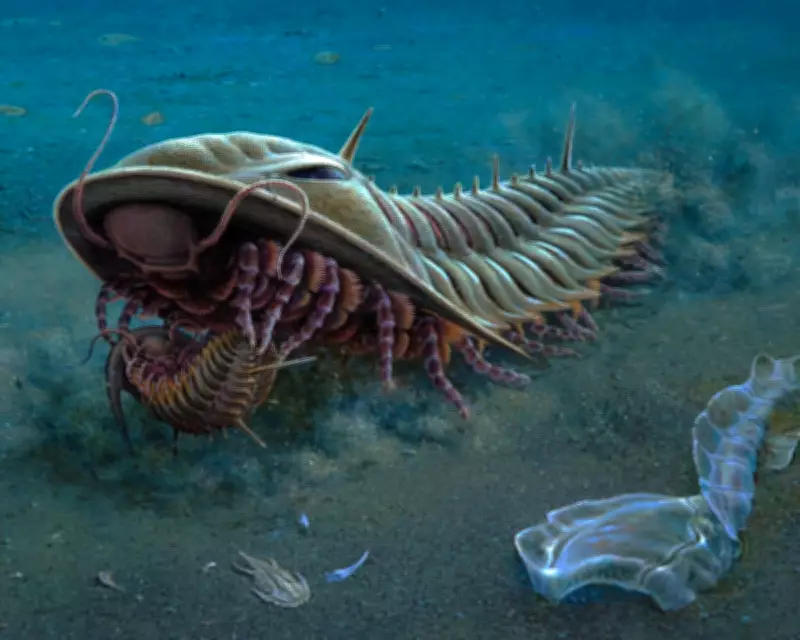
Vibrant illustrations of prehistoric creatures, based on 512-million-year-old fossils from Kangaroo Island, have been transformed into a captivating new stamp series by Australia Post. The detailed artworks, created by renowned artist Dr Peter Trusler, bring to life ancient marine organisms from the Palaeozoic era in a collection titled Creatures of the Palaeozoic.
Bringing Ancient Fossils to Life
The project draws inspiration from remarkable fossil discoveries at Emu Bay on Kangaroo Island, which represent one of the most significant Cambrian period sites in the southern hemisphere. This unique location preserves delicate, non-mineralised external skeletons and some internal soft tissues that are exceptionally rare in the fossil record.
Dr Trusler collaborated closely with leading palaeontologists, including Associate Professor Diego Garcia-Bellido from the South Australian Museum and Adelaide University, along with Professor John Paterson from the University of New England-Armidale. The artist incorporated the latest scientific research to create scientifically-informed reconstructions of these ancient creatures.
Artistic Interpretation Meets Scientific Accuracy
"The images produced by Peter Trusler are as accurate as we can make them in 2026," explained Associate Professor Garcia-Bellido. "Obviously, we don't know the colours so there's a fair bit of artistic licence, but I sent him all our research papers and he started coming back to me with these incredible recreations. He's so good."
Dr Trusler acknowledged the challenge of depicting invertebrates without extensive prior experience in this specific area. "I don't have a strong background in painting invertebrates, so my learning curve was fairly steep," he admitted, noting his long-standing interest in the Emu Bay fossil site.
Featured Creatures of the Deep
The stamp series showcases four remarkable prehistoric organisms that once inhabited ancient Australian seas:
- Nesonektris aldridgei - An 18cm long swimmer possessing a rudimentary backbone, with a front-facing mouth opening and a flexible swimming tail
- Emu Bay Shale monster - A 4cm long worm-like creature distinguished by spines along its back and stubby legs near its hind end
- Anomalocaris daleyae - Approximately 50cm in length, featuring prominent eyes, front appendages for capturing prey, and swimming flaps along its body
- Redlichia rex - The largest known trilobite from this period at about 25cm long, equipped with spiny legs designed for crushing and shredding food
Historical Context and Display
The Emu Bay shale deposit was originally discovered in the 1950s by South Australian scientist Reg Sprigg, who played a crucial role in establishing the Arkaroola Wilderness Sanctuary within the fossil-rich Flinders Ranges at the request of explorer Douglas Mawson.
The original illustrations will be prominently displayed at the South Australian Museum, where visitors can appreciate these artistic interpretations of ancient life. "As soon as visitors enter the museum, they will see these creatures in all their glory," said museum director Dr Samantha Hamilton. "You could not get a better glimpse at such a long-gone world."
This innovative stamp series represents a fascinating intersection of scientific research, artistic interpretation, and philatelic design, bringing Australia's remarkable prehistoric heritage to public attention through accessible and visually striking format.