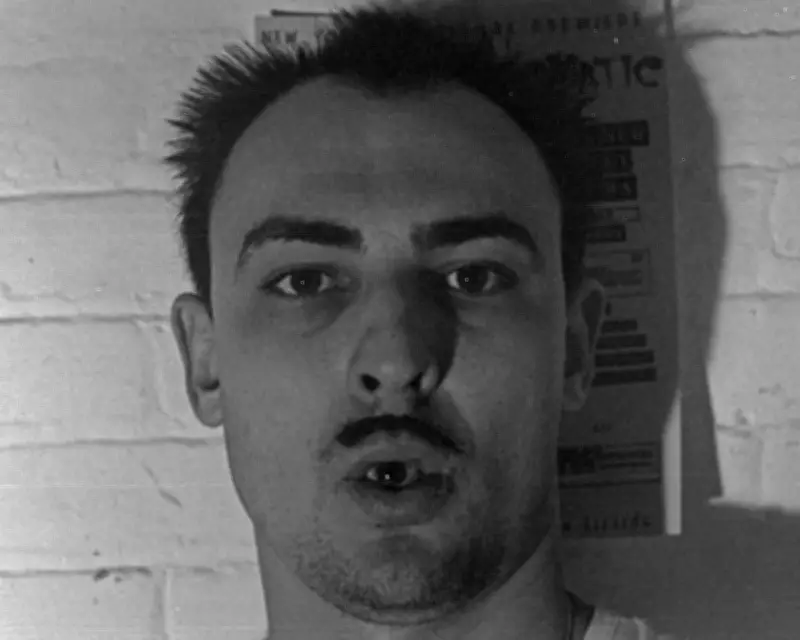
A newly discovered archive of the late no wave artist Gordon Stevenson is casting new light on his life and work. Stevenson, who died of AIDS in 1983 at age 29, was a multifaceted figure: a jewelry designer, musician, and filmmaker best known for the notorious no wave film Ecstatic Stigmatic. The archive, found in a storage unit in Chelsea, New York, includes jewelry, collaborations with mail-art pioneer Ray Johnson, and clues to the whereabouts of a surviving print of his film.
Early Life and Move to New York
Born in Dublin, Georgia, Stevenson was a math prodigy who rejected a scholarship to Georgia Tech to study liberal arts at Eckerd College in Florida. There, he met Mary Kathryn Cervenka, who later renamed herself Mirielle, and her sister Christine, whom Stevenson encouraged to change her name to Exene. The couple married at a Florida dump on July 4, 1976, and moved to New York the following year.
Life in Downtown New York
In New York, Stevenson and Cervenka launched the jewelry brand LHOOQ, which sold at boutiques like Fiorucci and Saks. Their work repurposed vintage trinkets for the punk market, and Stevenson's "memento mori" series featured crosses and skulls, anticipating gothic fashion. Stevenson also played bass in Lydia Lunch's Teenage Jesus and the Jerks, a band described as "intense, abrasive, not friendly – just a perfect band."
Ecstatic Stigmatic and Its Aftermath
Stevenson's film Ecstatic Stigmatic, shot in 1979 on a $5,000 budget, was inspired by Catholic mystic Marie Rose Ferron and the Jonestown massacre. The film features disturbing scenes of child abuse and has been described as "shadowy, sleazy and sexual." After Cervenka's death in a car accident in 1980, Stevenson continued promoting the film and rebuilt his jewelry brand as Junk. He also developed a relationship with designer Anna Sui.
Illness and Legacy
In 1982, Stevenson fell ill with Kaposi's sarcoma, later diagnosed as AIDS. He documented his illness in letters to his parents, raging against the Reagan administration's neglect of the crisis. He died on August 14, 1983. His mother preserved all his letters, which were rediscovered after her death. The Chunklet Music Preservation Project contacted Stevenson's sister Barbara while researching another band, leading to the discovery of the storage unit.
The archive includes thousands of pieces of mail art created with Ray Johnson, as well as reels from Ecstatic Stigmatic. MoMA and New York University are negotiating to acquire the archive. A reconstruction of the film, using alternative takes, is set for release by Factory 25 this year, with screenings planned in the US and UK. Stevenson's sister Barbara is writing a book about her brother, featuring his letters.