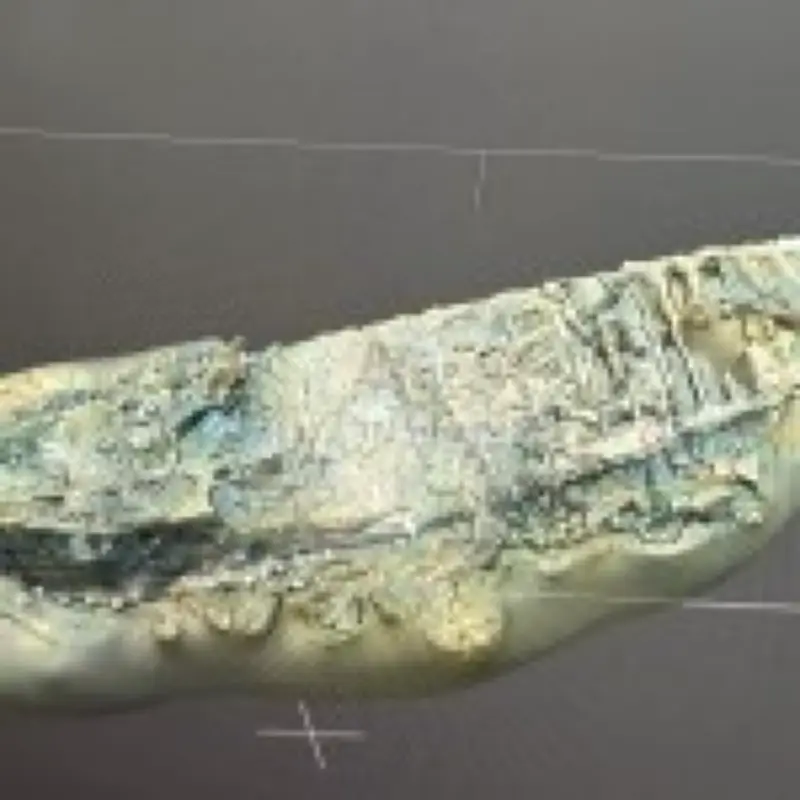
Explorers from the Royal Canadian Geographical Society (RCGS) and the Woods Hole Oceanographic Institution (WHOI) have produced the first 3D images of the Terra Nova, the ship that carried Captain Robert Falcon Scott on his final Antarctic expedition. The wreck lies 10 nautical miles south of Greenland, where it has languished for 83 years since being deliberately sunk by the US Coast Guard in 1943.
How the images were captured
The images were recorded using Falcon, a remotely operated vehicle, and the deep-diving submersible Alvin, which famously became the first crewed submersible to visit the wreck of the Titanic four decades ago. Experts employed deep-imaging technology to capture every inch of the Terra Nova, allowing it to be examined piece-by-piece. The expedition is a race against time, as the ship is slowly being lost to the sea.
The ship's historic role
Terra Nova carried Scott and his team on the British Antarctic Expedition of 1910, which aimed to become the first expedition to reach the South Pole. Scott arrived at the Pole on 17 January 1912, only to discover that Norwegian explorer Roald Amundsen had beaten him there by 34 days. Scott and the four other members of his polar party died on the return journey. Diaries and papers recovered with their bodies chronicled their final struggle for survival.
The doomed expedition has entered British history, in part due to the heroism of Scott's team, including Captain Lawrence Oates' self-sacrifice in leaving their tent knowing he faced certain death in an attempt to help others survive. Terra Nova later carried news of the expedition's fate back to Britain before returning to service in the Newfoundland sealing fleet.
First-hand account
John Geiger, chief executive of the RCGS and leader of the Heroic Age Expedition, was among the first people to view the wreck in person. He said: 'Seeing Terra Nova, a ship that is so tied with the tragic deaths of Captain Robert Falcon Scott and his polar party, as well as to Canadian and Newfoundland history, brings these important stories to a new generation.'
He added: 'Through cutting-edge Canadian Voyis 3D imaging technology, it is now possible to recreate the wrecks of Terra Nova and Quest before these historic ships are lost to the seabed.'
Discovery of Quest
The discovery follows the expedition's recent completion of the first comprehensive visual and scientific survey of Quest, the final ship of Sir Ernest Shackleton, Scott's former colleague and rival.
What is the Terra Nova?
Built in Dundee in 1884, Terra Nova was a wooden-hulled, three-masted vessel. It was bought by the Bowring family of St John's, Newfoundland, in 1898 for use in the sealing industry. Three years later, the Royal Navy acquired the ship to support Scott's first Antarctic expedition aboard Discovery. After returning to commercial service in 1906, Terra Nova was once again purchased by the Royal Navy for Scott's second Antarctic expedition before resuming work in the Newfoundland fishery.
During the Second World War, the United States military chartered the vessel to transport supplies to bases in Greenland. On September 12, 1943, Terra Nova suffered severe damage from pack ice and sent a distress signal. After the crew had been evacuated, the US Coast Guard concluded the crippled vessel posed a hazard to navigation and deliberately sank it by shelling it with a three-inch gun. The ship finally sank on 13 September 1943.
Condition of the wreck
Divers reported that although the ship's bow is beginning to split apart, much of the hull remains intact. From the stern they observed the rudder still standing upright, along with the propeller and sections of the engine room.
The 2026 Heroic Age Expedition
The 2026 Heroic Age Expedition includes a team of marine scientists, historians and archaeologists. It is investigating and 3D-mapping the Terra Nova and the Quest, the ship on which Shackleton died. The international team also includes shipwreck hunter David Mearns, marine archaeologist Cora Annamaiya Norling of Denmark's National Museum, benthic ecologist Kirstin Meyer-Kaiser, RCGS research director Antoine Normandin, historian and author Jan Chojecki, and Geir Kløver, director of the Fram Museum.