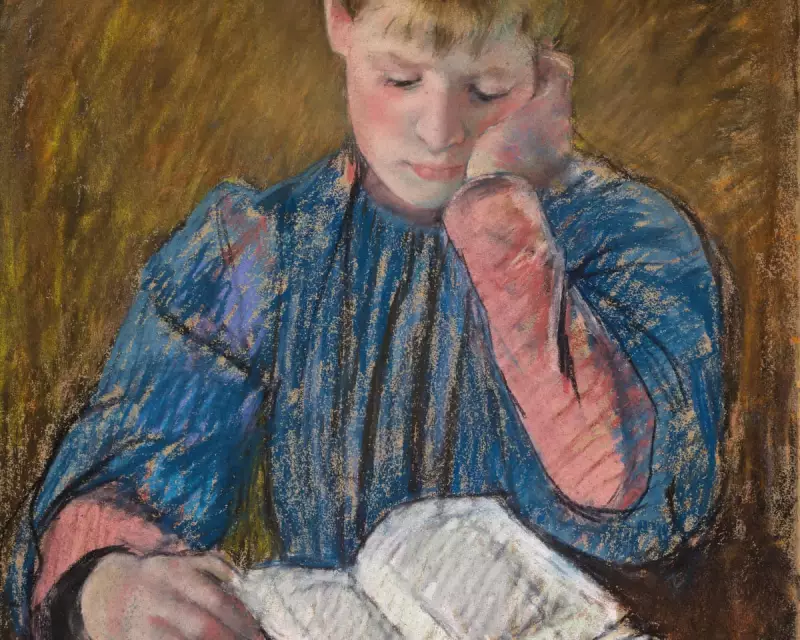
A powerful image of a young girl, utterly absorbed in a book, has become a poignant symbol for a national campaign aiming to tackle a worrying decline in reading among the UK's youth. Mary Cassatt's Young Girl Reading, created over a century ago, captures the all-consuming sensation of being lost in a story—a feeling that is fast becoming rare for modern children.
A Startling Decline in Reading for Pleasure
Recent statistics paint a concerning picture for literacy and enjoyment of books in the United Kingdom. In 2025, the National Literacy Trust (NLT) found that the percentage of children and young people who 'enjoyed reading' was at its lowest point in two decades. The research revealed a dramatic 36% drop in enjoyment levels since 2005, with fewer than one in five 8 to 18-year-olds now reading something daily in their free time.
This decline is widely attributed to the pervasive influence of digital distractions and social media, which compete for young people's attention and fragment their concentration. The deep, immersive experience depicted in Cassatt's artwork is increasingly being replaced by the fleeting engagement of scrolling feeds.

The National Year of Reading: A 2026 Initiative
In direct response to this crisis, the charity is spearheading a major national effort. The NLT has declared 2026 the National Year of Reading, a UK-wide, government-supported campaign designed to help people of all ages rediscover the joy of books. A central pillar of the initiative is an ambitious plan to distribute 72,000 new books to children with the greatest need, ensuring access is not a barrier.
The campaign's strategy is to connect young readers with material that genuinely interests them. Rather than prescribing a single canon, it encourages starting with a child's existing passions, whether that's history, sport, film, or art. The goal is to find the right 'gateway' book for every child.
Using Art as a Gateway to Reading
This is where art history enters the frame as a potential powerful catalyst. Art historian Katy Hessel is championing this approach with her new publication, The Story of Art Without Men: An Illustrated Guide to Amazing Women Artists. Adapted from her 2022 adult book, this illustrated guide is designed for readers of all ages and aims to make art history engaging and interactive.
The book, brought to life with illustrations by Ping Zhu, corrects the historical omission of women from traditional art narratives. It features new chapters, such as one on First Nations Art in Australia, and includes practical 'art tasks' in every chapter. Readers are encouraged to create their own works inspired by artists like Clara Peeters, Yoko Ono, or Joan Mitchell, thereby connecting literary learning with hands-on creativity.
Hessel's book aims to emulate the inclusive teaching philosophy of artist Georgia O'Keeffe, who once said, 'I enjoyed teaching people who had no particular interest in art.' The hope is that such resources will also serve as valuable tools for teachers looking to integrate art into their classrooms.
A Call to Action for Families and Institutions
The campaign presents a clear opportunity for families and cultural institutions. With free entry to permanent collections in UK museums, the initiative encourages not just reading about art, but experiencing it firsthand. The argument is that art history is a broad church, encompassing subjects from technology and the environment to music and literature, and there is likely an artwork to spark any young person's curiosity.
Engaging with books and art together is presented as a low-cost, enriching activity for families. It stimulates imagination, teaches empathy, and offers a vital counterbalance to digital saturation. Ultimately, the goal for 2026 is to ensure young people from all backgrounds feel welcome in cultural spaces, find books that resonate with them, and recapture the profound, world-dissolving immersion so beautifully captured by Mary Cassatt over a hundred years ago.