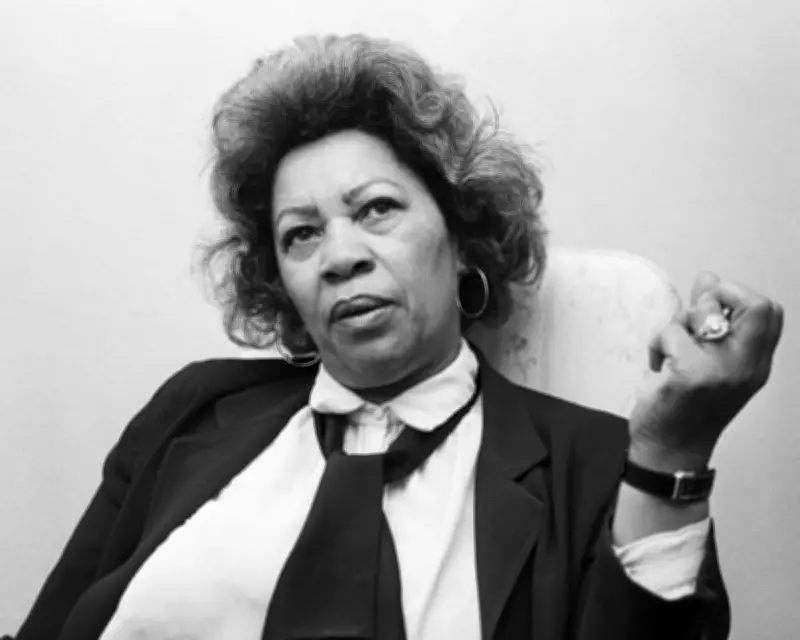
Toni Morrison, captured in a 1985 photograph in New York, stands as a towering figure in literary history. Her groundbreaking work, including the acclaimed novel Beloved, has profoundly influenced how we perceive literature, politics, and ethics. In 1993, she achieved the historic milestone of becoming the only Black woman ever to receive the Nobel Prize in Literature, cementing her status as a canonical author. Yet, her legacy is marked by a deliberate embrace of difficulty—both in her writing and her persona.
The Many Facets of Difficulty
Difficulty can manifest in numerous ways: as demanding, stubborn, or baffling. For Black women, these forms often intersect, creating a complex tapestry of experience. Morrison herself was frequently labeled difficult, but she transformed this into a source of strength. In a 1981 Vogue profile, she recounted a reader's struggle with understanding Black culture in her books, to which she retorted with wit about Beowulf. This exchange highlighted her impatience with ignorance, a trait she openly relished.
Balancing Multiple Roles
Morrison's career was a juggling act of roles: editor, professor, writer, critic, and public intellectual. She navigated these demanding positions while raising two sons as a single mother, a challenge she described as intensely difficult. Her decision to keep her writing secret at her first publishing job until The Bluest Eye was released underscores her independent spirit. This occupational strain was compounded by her unique position in predominantly white fields, where her gender and race added layers of complexity.

Championing Other Difficult Artists
Morrison found joy in the difficulty of other Black women artists, such as novelist Gayl Jones and jazz pianist Mary Lou Williams. She saw their perceived difficulty as a testament to their insistence on being taken seriously. To read Morrison with the depth she deserves requires grappling with the intertwined knots of race and gender. As she noted in a 1971 New York Times op-ed, Black women have consistently defied classification, making them a challenging subject for analysis.
Personal and Racial Narratives
Her childhood stories diverge from standard American race narratives. She spoke of her father's defensive racism and her mother's activism in integrating movie theaters. A poignant moment involved her great-grandmother's racial commentary on Morrison and her sister, highlighting purity and identity. Similarly, the author reflects on her own mixed-race family dynamics, including moves between Zambia, the UK, and the US, which were punctuated by racial absurdities.
Resisting Pigeonholing
Morrison disliked being pigeonholed but accepted labels of race and gender as rich sources for her imagination. She criticized literary criticism for reducing Black literature to sociology rather than recognizing it as a rigorous art form. Her difficulty, she argued, stemmed from a commitment to reflecting Black aesthetics, epitomized by jazz—a form she described as complicated, sophisticated, and difficult.
Underappreciation and Criticism
Despite her acclaim, Morrison faced dismissal and criticism. Some attributed her success to affirmative action or dismissed her work as sentimental, as noted in anecdotes about Beloved. Her friend Fran Lebowitz remarked that her experimental writing often went unremarked upon due to biases. Morrison incensed many by refusing to placate or translate her work, demanding it be read on its own terms.
Aspirational Freedom
Being Toni Morrison was not easy, but her legacy inspires a yearning for the freedom to be difficult. She embodied a defiance that challenges readers and critics to engage deeply with art. This edited extract from On Morrison by Namwali Serpell celebrates her enduring impact on literature and thought.