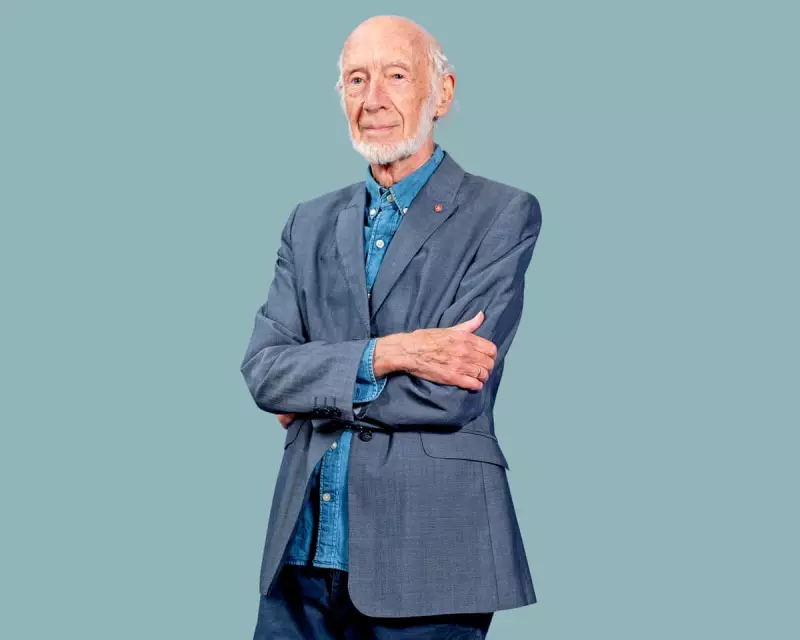
Renowned poet and broadcaster Roger McGough has marked his 88th birthday with a characteristically humorous and reflective interview, offering a glimpse into a life dedicated to words, performance, and family. The Liverpool-born writer, famous for making poetry accessible and entertaining, shared anecdotes ranging from childhood ambitions to brush with danger and enduring love.
A Life in Verse and Laughter
Roger McGough, now 88, found his happiest recent moment during a family gathering to celebrate his birthday, though he jokingly admits uncertainty over whether it was last Sunday, Saturday, or the week before. This playful nod to time mirrors one of his greatest fears: losing track. McGough's career began not in the pulpit—despite early dreams of becoming "the first scouse pope"—but in the classroom, before he found fame in the 1960s with the comedy, poetry, and music group The Scaffold. The trio, formed with John Gorman and Mike McGear, scored a number one hit with Lily the Pink.
Beyond pop success, McGough has built a formidable literary legacy, publishing over 100 poetry books for adults and children, including the recent Collected Poems 1959-2024. He is also the familiar voice hosting BBC Radio 4's beloved programme Poetry Please. A father of four, he lives in London with his second wife.

Candid Confessions and Core Beliefs
In a wide-ranging Q&A, McGough deplores his own habit of getting people's names wrong and expresses irritation at critics who dismiss popular, comprehensible, or humorous poetry. He describes himself with a witty trio of words: "Unimpeachable, nonpareil, self‑effacing." His dislikes include selfishness, arrogance, and the specific London grievance of Hammersmith Bridge being closed to traffic.
When asked about fame versus anonymity, he opts for fame, quipping that "it's easier to spell and pronounce." For a film of his life, he suggests an AI-generated amalgam of fellow Liverpudlians Ken Dodd, Jodie Comer, and David Morrissey. His debt, he says, is to his parents who, despite wartime poverty, raised him to feel lucky for his family, his Catholic faith, and his Liverpool roots—even with an outside toilet.
Love, Danger, and Legacy
McGough recounts the moment he met the greatest love of his life in 1978, "bewitched by a beautiful blond biochemist from Yorkshire" at a bus stop during a bus strike. "And the rest," he says, "is geography." His closest brush with death came as a child on Seaforth beach during the war, when he wriggled through a barbed-wire fence and ran across a minefield, only to be rescued by his brave teenage aunt Kat.
Ever the wordsmith, he admits to overusing the phrases "No, let me pick up the tab" and "No, it's my round, I insist." In a typically modern and humorous twist, when asked how often he has sex, he pretends to consult his virtual assistant: "Alexa, how often do I have…"
The most important lesson life has taught him? "That it will go on quite happily without me." It's a humble reflection from a man whose work—from the pop charts to the poetry shelf—has ensured his voice will resonate for a long time to come.