Lionel Fogarty: A Poetic Voice for Justice and Indigenous Solidarity
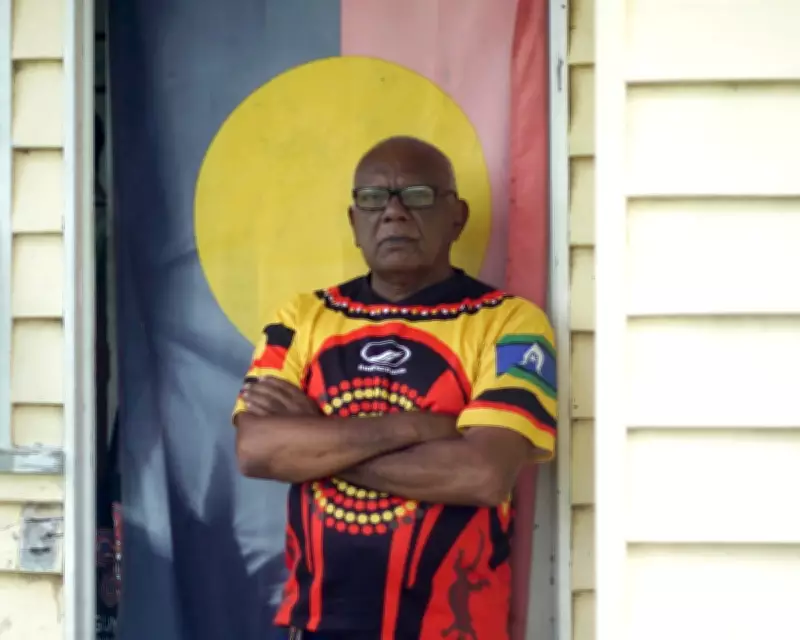
The literary and activist world mourns the loss of Lionel Fogarty, the revered Yugambeh poet and activist, who passed away recently. Over his prolific career, he published 16 collections of poetry, spanning from his debut Kargun in 1980 to his final work Harvest Lingo in 2022. His contributions have cemented his status as a transformative figure in Aboriginal literature and global Indigenous movements.
A Legacy of Artistic Excellence and Political Activism
Described by Waanyi novelist Alexis Wright as the "poet laureate" of Aboriginal literature, Fogarty was celebrated for his unique voice that challenged colonial norms. His work often deconstructed conventional English grammar and spelling, aiming to decolonize communication systems. In a 2011 interview, he famously stated, "poetry is only relevant when it changes the bloody law!" reflecting his belief in art as a tool for social change.
Fogarty's activism was deeply rooted in community efforts. He co-founded several organizations, including the Aboriginal Legal Service and the Black Community School, alongside activist Cheryl Buchanan. His political engagement began early; in 1974, as a teenager, he was part of the "Brisbane Three" arrested under the Bjelke-Petersen government for advocating funds to build a school on Palm Island. After a national campaign, all charges were dropped, highlighting his lifelong fight against injustice.

Personal Tragedies and Poetic Responses
One of the most defining moments in Fogarty's life was the death of his brother, Daniel Yock, in police custody in 1993. This tragedy fueled his activism against Aboriginal deaths in custody, inspiring some of his most powerful poems, such as those in his 1995 collection New and Selected Poems: Munaldjali, Mutuerjaraera. His grief and anger resonated through his writing, making him a vocal advocate for justice.
Fogarty's artistic expression evolved over time, incorporating visual elements into his work. His 2004 collection Minyung Woolah Binnung featured illustrations, paving the way for his later painted poem exhibitions, including Burraloupoo at Sydney's Darren Knight Gallery. Even in his final days, he continued to create, drafting new poetry and reviewing manuscripts for upcoming works like Warrior with a Fighting Stick.
Global Impact and Enduring Influence
Fogarty's influence extended beyond Australia. In 1976, he addressed the International Indigenous Treaty Council in the United States, discussing Aboriginal rights to self-determination and connecting with figures like Russell Means and Jimmie Durham. His poetry and activism fostered a sense of global Indigenous solidarity, emphasizing shared struggles against colonialism.
His recent accolades include the Red Ochre award for lifetime achievement and the Judith Wright Calanthe award for Harvest Lingo, though he often treated such honors pragmatically, using award objects as coasters for paint bottles. Despite this, these titles amplified his message, ensuring his work reached wider audiences.
A Conversational Art and Lasting Legacy
Beyond his written works, Fogarty was known for his engaging conversations, described as flowing like the rivers of his Yugambeh Country. He checked in with listeners to ensure understanding, mirroring the storytelling traditions of his childhood in Cherbourg Aboriginal reserve. His art and life were intertwined, with poetry serving as a medium for communication and resistance.
In his poem 15th June 1978, Fogarty envisioned his legacy, urging poets to be "loud shouting in winds" and "living for future children to see trueness." His passing invites us to honor his call, continuing the fight for justice and celebrating his indelible mark on literature and activism. May his spirit inspire generations to come, echoing through the winds of change he so passionately championed.