Unlocking the Complex World of Killer Sudoku
Killer Sudoku presents a sophisticated and engaging variation on the classic number puzzle that has captivated millions worldwide. While it retains the fundamental principles of traditional Sudoku, this advanced version introduces additional layers of challenge that demand heightened logical reasoning and mathematical precision.
The Core Rules and Unique Mechanics
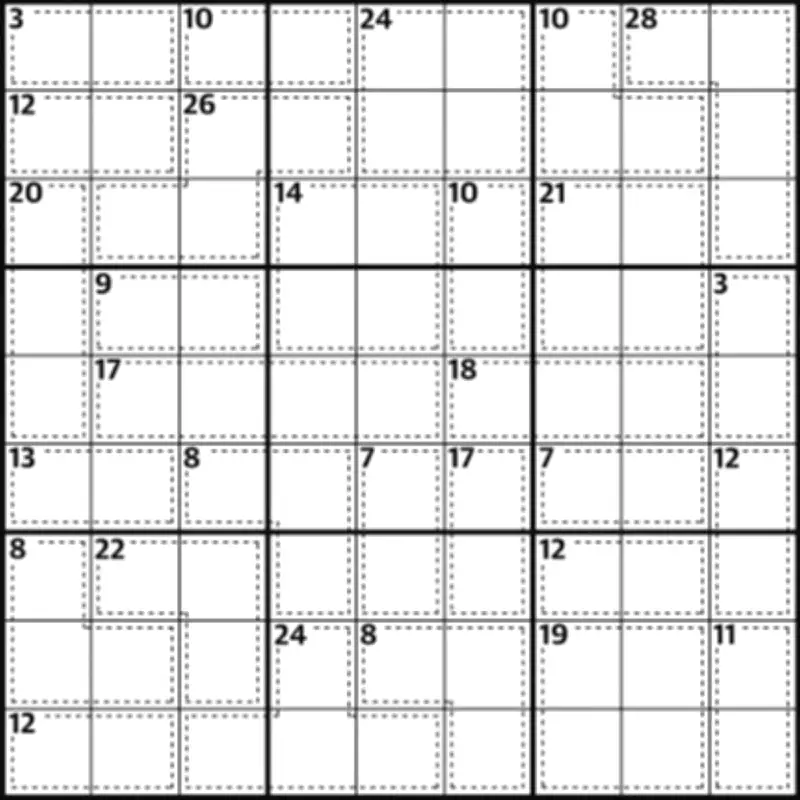
Normal Sudoku rules remain firmly in place for Killer Sudoku, requiring players to fill a 9x9 grid with digits 1 through 9, ensuring no repetition occurs in any row, column, or designated 3x3 box. However, the distinctive feature of Killer Sudoku lies in the dotted lines that create irregular shapes across the puzzle grid.
Within each of these specially formed shapes, the numbers must sum precisely to the figure displayed in the corner of that particular section. This mathematical constraint adds a significant strategic dimension to the solving process. Crucially, no number can be repeated within any individual dotted-line shape, even if the standard Sudoku rules would otherwise permit it.

Accessing Solutions and Publication Details
The Guardian continues its tradition of publishing these challenging puzzles, with solutions appearing in subsequent editions. For puzzles published from Monday through Thursday, the completed solutions are available in the next issue of the newspaper. Friday and Saturday puzzles receive their solutions in either Saturday's or Monday's edition, providing consistent access for dedicated puzzle enthusiasts.
This publication schedule ensures that players can verify their solutions and learn from any mistakes, gradually improving their Killer Sudoku skills over time. The print version remains accessible through standard newspaper distribution channels.
The Broader Puzzle Landscape
Killer Sudoku represents just one of many sophisticated logic games that challenge the mind and provide hours of intellectual stimulation. As part of the broader puzzle ecosystem, it demonstrates how simple rule variations can create entirely new solving experiences that appeal to both novice and expert puzzle solvers alike.
The mathematical component of summing numbers within designated shapes introduces elements of basic arithmetic to the logical deduction process, creating a unique hybrid puzzle experience that exercises multiple cognitive skills simultaneously.