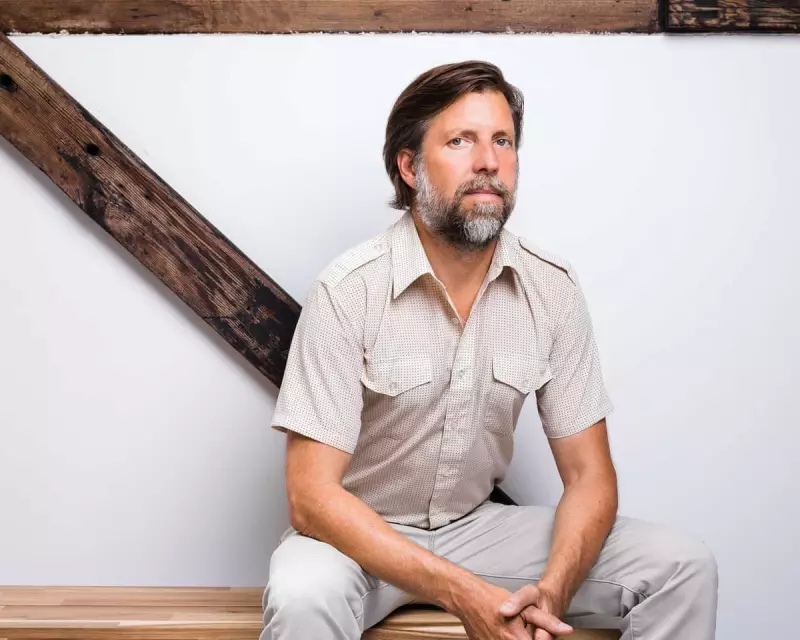
In a publishing phenomenon that has captured the global imagination, journalist James Nestor's exploration of the human breath, 'The Pulmonaut', has soared past a staggering three million copies sold. The book, which meticulously documents Nestor's decade-long journey into the forgotten science and art of breathing, has transformed from a niche interest into a cornerstone of the modern wellness movement.
From Journalistic Curiosity to Global Movement
The genesis of 'The Pulmonaut' lies in a 2010 assignment for a prominent magazine, which sent Nestor to a breathing workshop in San Francisco. Initially sceptical, Nestor's perspective shifted dramatically after the session, sparking a ten-year obsession. His research took him across the globe, from ancient catacombs and crypts to cutting-edge laboratories at Stanford University and the Karolinska Institute in Stockholm.
Nestor immersed himself in the practices of 'pulmonauts'—individuals who experiment with their breath to enhance health, longevity, and cognitive function. He investigated techniques ranging from the controlled breathing of elite athletes to the traditions of Tibetan monks and Russian daredevils. The book argues compellingly that modern humans have, quite literally, forgotten how to breathe correctly, with profound consequences for our health.

The Science Behind the Sensation
What sets 'The Pulmonaut' apart is its foundation in robust scientific inquiry. Nestor collaborated with researchers to conduct experiments, notably one where he had his nasal passages deliberately blocked for ten days, forcing him to breathe solely through his mouth. The results were stark: his blood pressure spiked, his stress levels soared, and he developed sleep apnoea. The experiment powerfully demonstrated the critical importance of nasal breathing.
The book details how proper breathing can influence a host of bodily functions, advocating for practices like slower, deeper breaths to improve autonomic nervous system balance. It highlights how such techniques can lower heart rate, reduce stress, and improve sleep quality. This marriage of ancient wisdom and peer-reviewed science provided the credibility that propelled the book beyond typical self-help fare.
Cultural Impact and Lasting Legacy
The impact of 'The Pulmonaut' extends far beyond book sales. It has ignited a widespread cultural conversation about respiratory health, particularly in the wake of the COVID-19 pandemic, which brought lung function into sharp focus. Breathing coaches and workshops have seen a surge in interest, and the book's principles have been adopted by everyone from corporate executives seeking stress relief to athletes aiming for a performance edge.
Nestor's work has also prompted a reevaluation of simple, daily habits. The book makes a persuasive case for the health detriments of chronic mouth-breathing, a common issue exacerbated by modern diets and lifestyles. By presenting breathing not as an autonomic function to be ignored, but as a vital pillar of health that can be optimised, Nestor has carved out a permanent niche in the wellness landscape. His journey proves that sometimes, the most profound discoveries lie in the act we perform over 20,000 times a day, yet rarely stop to consider.