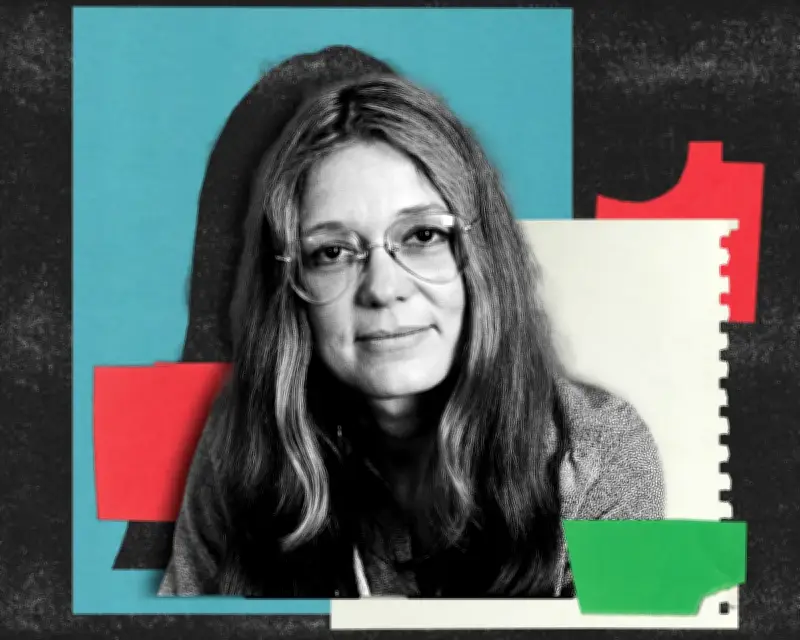
Gloria Steinem, the American feminist and civil rights activist who died last week aged 92, left a transformative legacy that global feminist writers are now reflecting on with gratitude, admiration, and a clear-eyed acknowledgment of her contradictions. From Rebecca Solnit to Elif Shafak, a panel of writers from around the world shared their personal and political tributes, underscoring Steinem's role in reshaping women's lives and the feminist movement.
Making Feminism National: Steinem's Media and Activism
Rebecca Solnit, Guardian US columnist and author, credited Steinem with expanding the women's movement beyond coastal cities and university towns. "As far as I can tell, the US women's movement was mostly clustered in coastal cities and university towns until Ms magazine, which Gloria Steinem cofounded and for many years co-managed, made it national," Solnit wrote. She recalled how her mother, a suburban California subscriber, was strengthened by the magazine, leading her to leave a violent marriage. Solnit emphasized that many today have "no idea of what women's lives were like before second-wave feminism," including legal inequality, lack of equal pay, and marital rape not being a crime until the 1970s and 1980s.
Rokhaya Diallo, French journalist and Guardian Europe columnist, noted Steinem's early understanding that "the feminist struggle would be fought through the media as well as campaigning." As co-founder of Ms, the first US magazine run entirely by women, Steinem "strengthened the connection between journalism and activism." Diallo also highlighted Steinem's attentiveness to race, citing her first feminist essay, After Black Power, Women's Liberation, and her work with women of color like Dorothy Pitman Hughes, Shirley Chisholm, and Wilma Mankiller. Steinem once said, "Personally, I learned feminism disproportionately from Black women." In 1971, she served as treasurer for the legal defense fund of Angela Davis.
Personal Kindness and Global Solidarity
Mona Eltahawy, Egyptian-American journalist, shared a deeply personal memory: after she was assaulted by Egyptian riot police in November 2011, Steinem emailed her about a "girl gang" of feminists organizing support. "No matter where you are, please tell me if there is anything at all I can do to make your life easier – or our outrage more effective, with friendship and empathy from your Girl Gang!" Steinem wrote. Eltahawy recounted Steinem's kindness, including lending her $1,000 during a financial crisis, and called her empathy "like steroids that strengthened us" for the fight against patriarchy.
V (formerly Eve Ensler), American playwright, thanked Steinem for early support of The Vagina Monologues and the V-Day movement, now 30 years old. "She showed up decking her red boa at every event we held early on to birth the V-Day movement," Ensler wrote. Steinem's support helped others "be brave" in a time when the play was outside the mainstream. Ensler noted that Steinem died amid a major backlash against women's rights, but "she would want us to remember that the backlash is an indication of our victories and our power."
A Legacy to Carry Forward
Julia Gillard, former Australian prime minister, called Steinem "a feminist icon" and said, "It is impossible to write the history of the women's movement without her name being at the centre of the narrative." Gillard interviewed Steinem in 2022 and admired her passion even at 88. Jennifer Robinson, Australian barrister, described hearing of Steinem's death while at the Sydney premiere of her documentary Silenced, and quoted Steinem: "There is no one torch – there are many torches – and I'm using my torch to light other torches." Robinson said Steinem inspired her grandmother, mother, and herself.
Elif Shafak, British-Turkish novelist, recalled discovering Steinem's books while a fellow at Mount Holyoke College, and praised her courage in exposing Playboy bunny clubs and her belief in bottom-up change. "She passionately wanted to connect local, national and global feminisms," Shafak wrote, adding that Steinem's optimism came from constant travel. Rhiannon Lucy Cosslett, British Guardian columnist, credited Steinem's undercover Playboy Bunny piece with making her question raunch culture, and noted Steinem's dedication in a book to the British doctor who granted her an abortion at 22, even though it was illegal. Cosslett concluded, "She would not give up the fight, and nor must we. Onwards, in her honour."