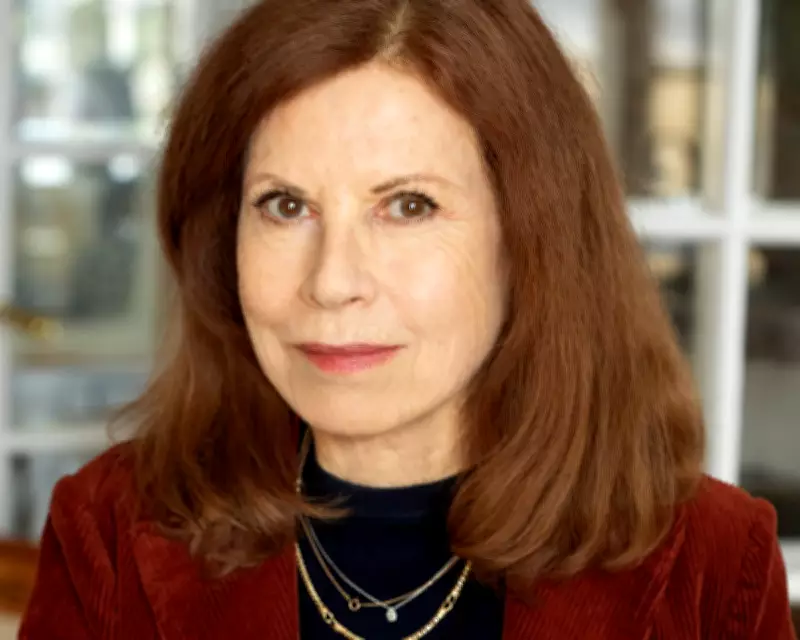
Caroline Huppert, the sister of renowned actor Isabelle Huppert and author of the memoir Une Histoire Cachée (A Hidden Story), has revealed how she recovered her family's wartime secrets. The 75-year-old director and screenwriter spoke about the book, which tells the story of her parents, Raymond and Annick, who fell in love in 1934 at Paris's HEC business school. He was Jewish, she was Catholic, and her haute-bourgeois family opposed their marriage—a challenge that became even more perilous when the Nazis invaded France, forcing the couple to flee to the Free Zone near Lake Annecy.
A Privileged Position
In the late 1990s, Huppert found herself alone with her father and a tape recorder. Over five days, he opened up about his life before and during World War II. 'I think I had that privileged position with him, because he had a taste for history, too,' she says. 'But we didn't have the same vision. I like the approach of what is called the nouvelle histoire, things like details of daily life in the past. With him, it was more emperors, kings, dates.' More than 25 years later, their exchanges led to her memoir, which bundles quotidian intimacy and big-ticket history.
Hidden Letters Unlock the Past
Huppert's parents were not ones to discuss the past. 'I wasn't aware of any of it in the least,' she says. 'My parents weren't people who talked about the past. They were always absorbed in the present, in action.' After her father died in 2003, she began thinking about how to undertake the 'archaeology of her family,' but her hectic career intimidated her. Then in 2024, a cache of 150 old letters hidden in a false drawer of a desk fell out. 'She sent me a photo of them, and I recognised my mother's writing,' says Huppert. 'And this goldmine allowed me to go to the very end of what I wanted to do with the book, because it was a really great source of information about daily life.'

Daily Life Under Antisemitism
The book closes with a high-wire climax that Huppert prefers not to spoil. The courage her parents inspired in each other came as a surprise, notably 'the intrepidness of my mother, who wasn't afraid of anything and crossed the demarcation line in the boot of a car.' But it is in the patient logging of banal wartime realities, thanks to Annick's correspondence, where Une Histoire Cachée also fascinates: the struggles to find food, the freezing conditions in the Savoie house where Raymond ends up fabricating drill bits for a collaborator, and how the couple still snatched moments of ephemeral pleasure amid turmoil.
Documenting Franco-Jewish Experience
Such minutiae are especially important as they relate to the Franco-Jewish community during the time, of which there is only 'piecemeal' documentation, according to Huppert. She wanted to describe what antisemitism looked like on a daily basis in French society, even before the Nazis' racial laws. 'And show the continuity with what the Pétain regime decreed—and to what point it seemed natural to everyone, bit by bit, to put those laws in place.' Huppert brings a distinctive Jewish slant to a recent mini-boom of Vichy literature and cinema, but she is not tempted to infer contemporary resonances. 'I don't know anything about that. As an archaeologist, I lean more towards understanding the origins rather than the results. It's sociologists who look at what is happening now.'
Family Legacy
Huppert seems detached about her Jewish roots, saying she doesn't feel culturally or religiously more Jewish after writing. 'It's annoying to say 'the Jewish people.' It's a terrible expression. I don't see where there's a Jewish people—there are Jews of all different kinds.' Her sister Isabelle, a fan of the book, sums it up: 'A magnificent portrait of a woman, a highly moving homage to our family, and an exciting and superbly researched document of that time.' For Caroline, the notion of lineage counts. 'I wanted my children and children's children, my own posterity, to know this was their history.' But she couldn't rescue everyone from the fog of time. She is still haunted by the story of Françine, a young refugee whose fate remains unknown. 'I was very touched by the fate of this sensitive young girl whose adolescence was stolen from her. I've been worrying about her. I hope she survived.'