The literary legacy of a century of English rural life has been secured for the nation. The British Library has acquired the extensive personal archive of the celebrated writer and essayist Ronald Blythe, ensuring his unique perspective is preserved for future generations.
A Meticulously Ordered Treasure Trove
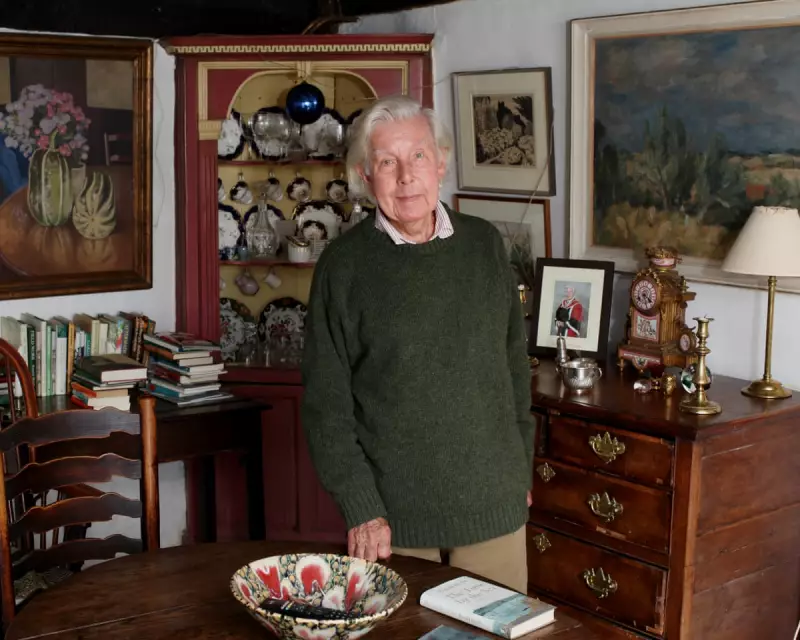
Blythe, who lived to be 100 and passed away in 2023, was a former librarian who remained dedicated to pre-digital methods. His archive, found in his home in Wormingford, Essex, is a testament to his orderly mind. It comprises over a million words of immaculate handwriting, carefully recorded in humble school workbooks and on countless index cards.
Despite this neatness, curators estimate it will take a full year to fully catalogue the collection. Ian Collins, Blythe's biographer and literary executor, noted the rarity of such organisation, stating, "When people say 'archive' it's usually another word for 'muddle' but with Ronnie you can tell it's the product of an amazing, self-trained mind."

The Heart of the Archive: The Making of Akenfield
The collection offers unparalleled insight into the creation of his masterpiece, Akenfield. This global bestseller, published in 1969, captured a Suffolk village undergoing profound agricultural and social change through the authentic voices of its inhabitants.
The papers reveal the depth of Blythe's research. He wrote to the Ministry of Agriculture for records of livestock in Charsfield, the real village that inspired fictional Akenfield. His index cards show he interviewed hundreds of people, from otter hunters to commuters, building a kaleidoscopic and truthful portrait.
Collins explains that Blythe, a supremely attentive listener with a remarkable memory, would write up interviews from recollection. "All his books are true but it's a deeper and broader truth than verbatim. Oral history tells us what people did; Ronnie tells us what people are," Collins said.
A Life of Frugality, Hedonism, and Literary Genius
The archive also paints a vivid picture of the man himself. Born into abject poverty as a labourer's son, Blythe was entirely self-educated. He forged a rich life through reading and friendships with figures like the artists John and Christine Nash, publishing over 40 books across genres.
His frugality is evident in reused index cards and notebooks crammed with neat script. Collins connects this directly to his writing genius: "Every word has to work so he's constantly revisiting and honing it down to get the essence of it all. There's no waste."
While a hermetic figure with a sturdy Anglican faith, the archive reveals a more complex private life, including a previously unknown correspondence and friendship with the American novelist Patricia Highsmith.
The collection also includes critical letters, such as one from the Earl of Stradbroke who objected to the honest depiction of feudal hardships in Akenfield. Blythe's steely reply defended his work: "Akenfield was never intended to be a public relations exercise for Suffolk but a statement about human nature."
Helen Melody, lead curator at the British Library, said the institution is "delighted" with the acquisition. She highlighted that the archive provides "an amazing insight into the century he lived through" and will be a vital resource for scholars of both literature and social change.
With this acquisition, the profound and gentle observations of a writer who captured the soul of the English countryside are now a permanent part of the UK's national heritage. As Ian Collins concluded, "He is a writers' writer but also the writer for every person."