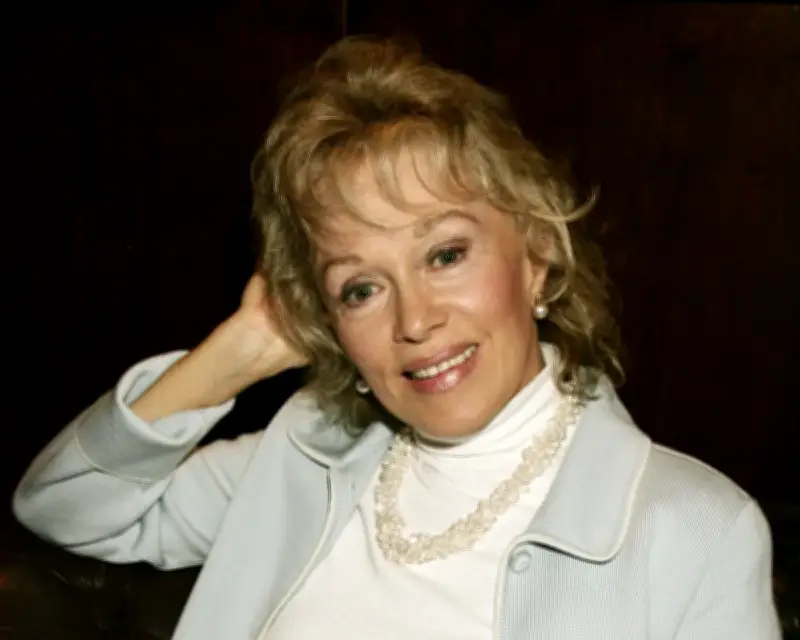
Blanche d'Alpuget, the acclaimed Australian author and widow of former prime minister Bob Hawke, has died. In a personal tribute, her friend and biographer Derek Rielly recounts the final days and the remarkable life of a woman who was both a literary force and a target of intense public scrutiny.
A Final Farewell and a Life Remembered
Rielly, who wrote the biography "Fridays with Blanche," described his last moments with d'Alpuget. "Thirty-six hours before Blanche took her last breath, I negotiated the plastic tubes and mask she wore over a still beautiful face and gave her one final kiss," he wrote. "I wasn't sure, then, if it was a goodbye but I knew it would be close."
D'Alpuget, who was 82, had been a central figure in Australian cultural and political life for decades. She was the author of the bestselling 1982 biography of Hawke, a work that Rielly says "helped propel him into the prime ministership and thus helped change Australian politics for ever."
The Scorn of the Public Eye
Her relationship with Hawke, which began as an affair and became public in late 1994, subjected her to a level of animosity that Rielly described as unprecedented. "It wasn't easy to disrupt Blanche but the breadth of animosity she encountered after her affair with Bob Hawke became public in late 1994 was like nothing she'd ever experienced," he wrote.
About 30 years after she was photographed with Hawke at Sir Richard Kirby's holiday house, d'Alpuget reflected on the abuse she faced. "I was very shocked and distressed by the trolling and abuse … as opposed to simple literary criticism," she told Rielly. "I developed a great contempt, distrust and loathing of journalists."
The Sydney Morning Herald had once described her as "some lipsticked wraith," a characterization that Rielly called a "cruel fate" for a woman of such significance.
A Fierce Intellect and a Fearless Writer
Born the daughter of one of Australia's great journalists, d'Alpuget moved to Jakarta at 22 with her first husband, Tony Pratt. There, she had a front-row seat as Indonesia struggled with the bloodletting of 1965, an experience that shaped her fearless writing and her challenge to the moral codes of the time.
Rielly first met d'Alpuget in the winter of 2016, when she was 72 but looked at least a decade younger. "Her silk cravat and wide black sunglasses touched on the side with gold detail delivered a 70s movie-star sheen," he recalled. They became friends, and at the suggestion of their mutual agent, Jeanne Ryckmans, a book deal was sought and made.
Death, Love, and Final Wishes
In her final years, d'Alpuget spoke openly about death. She had nursed her mother through her final hours and remained awake alongside Hawke on his final day. She likened dying to "untying a million little knots."
"The soul wants to be released, but it's held in by the body very, very strongly, and it's an enormous effort to untie all of those knots," she said.
Her final wishes were specific. Her headstone was already in place next to Hawke's at the Macquarie Park Cemetery and Crematorium in Sydney's North Ryde. Her coffin was to be red on the inside and blue and white on the exterior—blue for the sky, red for the colour of life, and white for the spirit. She wanted a band to play "When the Saints Go Marching In."
D'Alpuget's philosophy on love was profound. "The more humans there are, the more love there is," she liked to say. "Love is, I believe, what distinguishes humans from the rest of the animal world or creation. Love that extends beyond one's family and friends, beyond the blood bonds of tribe and race, to all other humans and to the rest of creation."