Bird Deity: A Powerful Debut Novel Exploring Colonialism Through Science Fiction
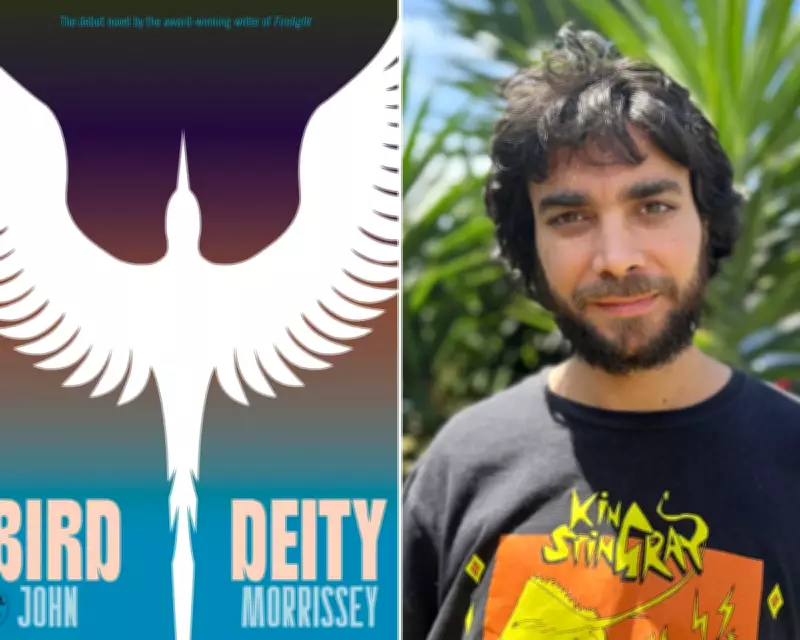
In his highly anticipated debut novel Bird Deity, Kalkadoon writer John Morrissey delivers a darkly satirical science fiction narrative that examines the brutal realities of colonial extraction and settlement. Following his award-winning 2023 story collection Firelight, Morrissey returns to speculative fiction territory with this compelling exploration of empire, violence, and human alienation.
A Bleak Vision of Colonial Extraction
The novel follows David, a scout who has spent ten years on a foreign planet searching for valuable artifacts worn by the native humanoid species called parasapes. His work involves tearing these objects from the bodies of the wearers, often harming or killing them in the process. David justifies this brutality by believing the parasapes "don't even realise that they're alive" and lack language or future planning capabilities.
Yet these highly advanced artifacts hold tremendous value for the colonists, essentially serving as the settlement's raison d'être. The colony itself presents a desolate environment of logging trucks, disintegrating garbage piles, and makeshift hovels constructed from plastic and wood—a landscape eerily reminiscent of real-world mining sites and plantation territories.

The Human Cost of Colonial Ambition
Morrissey masterfully depicts the colony's social dynamics through dark satire reminiscent of writers like Magnus Mills. Workers arrive on five-year contracts but often remain longer, tethered to dreams of wealth that rarely materialize. Violence becomes normalized as mere work rather than personal identity, while the colonial administration maintains an ominous bureaucratic detachment from the brutality it enables.
The government compound at the settlement's center features military barracks and offices surrounded by fences where stranded colonists gather daily, hoping for passage back to their home world. This imagery powerfully conveys the profound alienation colonization produces—not only separating people from land but also from each other.
Complex Relationships in a Fragmented Society
Among the colonists, Tom and Eliza stand out as a couple seeking something beyond temporary existence. Tom, David's mentor with twenty years of scouting experience, and Eliza, a botanist with a child of uncertain paternity, represent contrasting desires within the settlement. Eliza particularly longs to escape with her child to safety, while the men around her remain consumed by violence and relic hunting.
When anthropologist Sarah arrives with a mission to study the parasapes and potentially have them declared a protected species, she brings new energy to David's life. Their journey to the plateau where parasapes dwell becomes transformative, challenging David's understanding of both the native species and his own existence.
Psychological Depth and Symbolic Function
While Morrissey successfully creates a fragmented society through vivid details—David describes his lover Eliza as "fey and untouchable" and struggles to remember his child's name—some characters lack psychological depth. Eliza's story particularly feels underdeveloped, with her inner life sometimes yielding to symbolic function. This occasionally creates frustratingly shallow relationships among central characters.
Nevertheless, Bird Deity joins a distinguished tradition of science fiction as political commentary, using cosmic distance to illuminate earthly realities. Morrissey effectively employs genre conventions including intergalactic empires, anthropological study missions, and interspecies communication challenges to explore profound themes.
A Compelling Exploration of Colonial Destruction
The novel's most powerful achievement lies in its examination of immense, incomprehensible forces that simultaneously give and destroy life. Morrissey paints a grim portrait of colonial projects that ultimately devastate even their own participants, yet he manages to offer glimpses of hope. These moments suggest that somewhere in the universe, personal and social transformation might still find space to emerge.

Bird Deity rewards close reading with its original approach to colonial critique and its compelling narrative structure. While character development occasionally falters, the novel's thematic depth and imaginative world-building make it a significant contribution to both science fiction literature and postcolonial discourse.