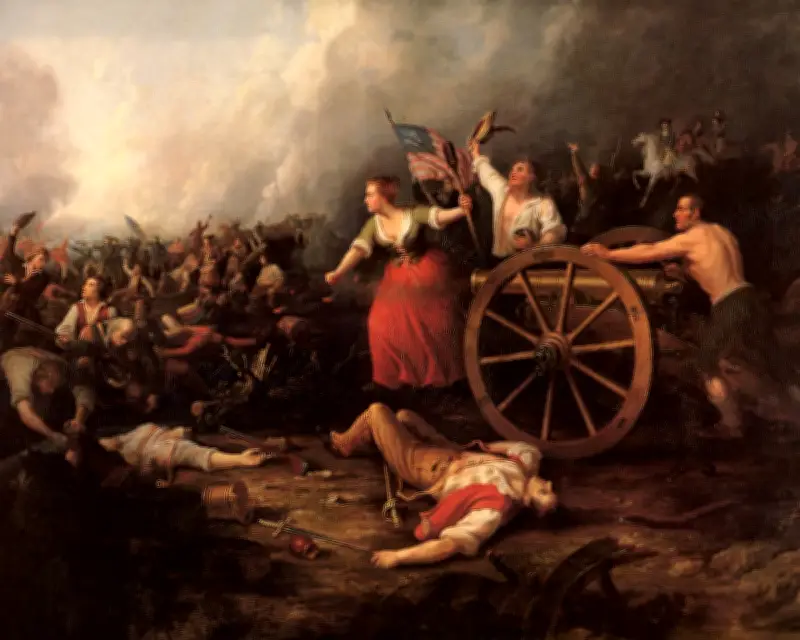
Denise Kiernan's new book, Obstinate Daughters: The Rebels, Writers, and Renegade Women Who Ignited the American Revolution, shines a light on women whose stories have been sidelined in US history. The book, eight years in the making, features figures like Margaret Corbin, a hero of the American Revolution who took over her husband's gun after he was killed at Fort Washington in New York. Corbin was grievously wounded and became the first woman to receive a US military pension. In 1926, her supposed remains were exhumed in Highland Falls and buried at the US Military Academy, but in 2016, it was discovered the bones were not hers and not even those of a woman.
Stories Preserved Through Pensions and Petitions
Kiernan explains that many women like Corbin are known through pensions or petitions to governments for redress. 'Because otherwise either the stories weren't taken down at the time, or the people involved – women, enslaved folks, Indigenous people – weren't necessarily encouraged to leave their own record behind,' she said. One exception is Elizabeth Drinker from Philadelphia, who kept a diary that 'runs to three volumes, thousands of pages, and it's an incredible record of life, and also life for Quakers, which was no picnic.'
Drinker's Journey to Valley Forge
Drinker's story includes a dramatic event in April 1778 when she and three friends set out for Valley Forge to petition George Washington for the release of their husbands, who were banished to Virginia for refusing to pledge allegiance to colonial forces. Kiernan notes the personal perspective: 'I want to get my husband out of here, I'm going to get these women together, we're going to Valley Forge. Oh, we get asked in by Mrs Washington, we have a meal.'
Other Notable Figures
The book also features Nanye'hi (Nancy Ward), a Cherokee leader; Elizabeth Freeman (Mumbet), who sued for freedom and won; and Deborah Sampson, who fought disguised as a man. Kiernan worked from letters, household accounts, and official documents, often filling in gaps. She describes finding Lorenda Holmes, a loyalist spy in New York, as a lucky discovery. 'It's never just the us-versus-them, hero-versus-villain version, ever,' Kiernan said.
Challenges of Native American Perspectives
Kiernan emphasizes the difficult choices faced by Native Americans: 'Do we side with the British? Do we side with the Americans? How is this going to help us try and maintain some semblance of this life we've had on this land for thousands of years?' She adds that the idea of choice and consequences is key.
Timing and Erasure Attempts
The book's completion coincided with Donald Trump's return to power and efforts to rewrite history. At Valley Forge, Kiernan found an inclusive focus in National Park Service work on camp followers, Black soldiers, and Polly Cooper of the Oneida tribe. Trump's war on history has affected sites like the President's House in Philadelphia, where boards highlighting slavery were removed then ordered back by a judge.
Legacy and the Molly Pitcher Legend
Kiernan's travels trace her characters' routes, including Bowling Green park in Manhattan, where patriots pulled down a statue of King George III in 1776. The legend of Molly Pitcher, depicted in a famous painting, could be based on Corbin or Mary Ludwig Hayes, who fought at the Battle of Monmouth. Kiernan writes: 'It's almost a case of who wasn't Molly Pitcher.' Obstinate Daughters is out now.