As the weekend beckons, Guardian Australia's Five Great Reads newsletter offers a curated selection of the week's most compelling features. From the political complexities of regional Australia to the cultural phenomenon of a rediscovered 1980s album, these stories provide depth and perspective on a range of topics.
Barnaby Joyce's Electorate: A Tale of Two Realities
In his newly adopted party, One Nation, Barnaby Joyce champions a vision of a "monocultural" Australia with an anti-immigration agenda. However, a different narrative unfolds in his own electorate, as reported by Adeshola Ore. Nine years ago, Joyce supported a campaign for Armidale to resettle refugees, and today, Yazidi and Congolese communities thrive there, buying homes and sharing stories of local goodwill.
Joyce's current party advocates limiting migration to English speakers, yet he suggests refugees might be exempt, stating he has "no problem" with the current number settling in his electorate. This contradiction raises questions about the alignment between his political stance and the lived experiences of his constituents.
The Enduring Legacy of Witchcraft Labels
Lucianne Tonti's new book, Good Witch: In Search of Our Lost Feminine Power, delves into the historical factors that marked women as witches. Tonti argues that financial independence and power made women vulnerable, a theme that resonates today. "While there were many causative factors in the witch-hunts – patriarchy, economic hardship, and religious and political tensions – a woman's financial independence and power made her vulnerable," she writes.
The label 'witch' still carries risk and violence, as seen in recent "ditch the witch" billboards targeting Victorian Premier Jacinta Allan. Tonti's work offers a historical lens on contemporary misogyny.
Colin from Accounts: The Real Love Story
As the third and final season of Colin from Accounts airs, creators and real-life couple Harriet Dyer and Patrick Brammall share insights into their creative process. "We don't want to flog a dead horse. It definitely feels right," Brammall says. Dyer adds, "It is not that the horse is dead yet – we don't even want to find it is having trouble breathing."
Their on-screen chemistry is mirrored off-screen, with Brammall noting, "Obviously, we love playing the stuff where we're falling in love, but we love having big arguments just as much. We're actors by trade, so we love pretendies."
Nirosta Steel: A Forgotten Masterpiece Resurfaces
Steven Hall, a Scottish musician now living in Illinois, released My Skyscraper under the name Nirosta Steel. The album, which fuses disco, folk, synth-pop, and Chinese opera, has been hailed as one of 2026's most thrilling releases. Hall, who has been driving an Uber, reflects on his sudden fame: "I feel like Rip Van Winkle! Like I suddenly walked out of a cave and I'm blinking my eyes and there's all this bright light shining on me."
His life story, filled with encounters with experimental icons like Arthur Russell and Allen Ginsberg, provides context to his genre-mashing work. "I thought it was normal," he says, "because it was the only thing I knew."
The Paradox of Modern Decadence
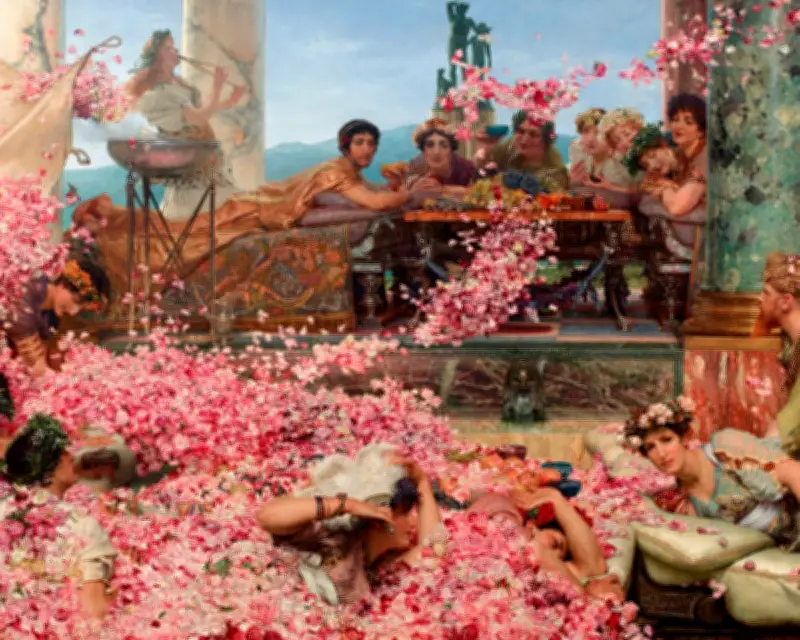
Our overstimulated culture promises numbing, empty stimulation, leading AI researchers to warn of "human enfeeblement." This era of decadence without pleasure echoes the excesses of Roman emperor Elagabalus, who reportedly smothered guests with rose petals. Yet, there is cultural potential in decadence, as seen in Rococo painting, late Ottoman silks, and Weimar Berlin's experimental cinema.
These five features offer a rich tapestry of insight, from political realities to cultural critiques, providing ample material for a thoughtful weekend read.