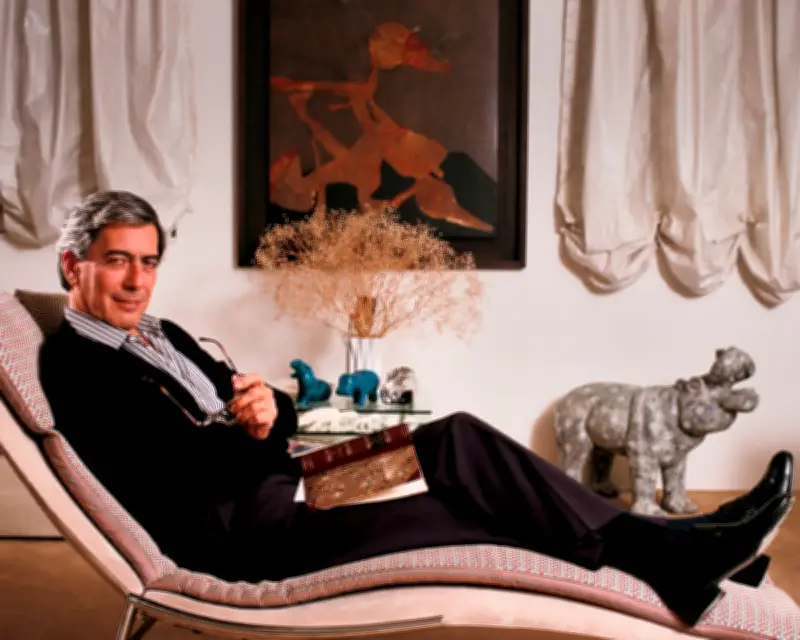
Gerald Martin's new biography of Mario Vargas Llosa, the Nobel laureate novelist, traces his journey from the hard left to the hard right over half a century, culminating in his adoration of Margaret Thatcher. Martin argues that Vargas Llosa never truly belonged to the left, describing him as a 'Lima posh boy' with a congenital 'factory defect' of patrician confidence in hierarchy.
From leftist beginnings to Thatcherite fan
Vargas Llosa's early novels, such as Conversation in the Cathedral, were written under the spell of Jean-Paul Sartre. His break with the left came in 1971 during the 'Padilla affair', when Cuban poet Heberto Padilla was forced into a public confession. Vargas Llosa led an international campaign against Castro, comparing him to Stalin. Martin is critical of this stance, arguing it helped isolate Cuba when the Latin American left needed unity.
After moving to England, Vargas Llosa settled in Cricklewood, where historian Hugh Thomas introduced him to Tory circles and eventually to Margaret Thatcher. He wrote a piece titled 'The Lady Among the Wild Beasts', expressing fanboy adoration.
Personal life and literary raw material
Martin restores the women Vargas Llosa turned into literary material. His marriage at 19 to aunt-by-marriage Julia Urquidi became the novel Aunt Julia and the Scriptwriter, while her memoir What Varguitas Didn't Say exposed the less charming reality. He later married his first cousin Patricia Llosa, who managed household disruptions so he could work. In his 80s, he began a relationship with Isabel Preysler, mother of singer Enrique Iglesias.
Political migration and later years
After losing the 1990 Peruvian presidential election to Alberto Fujimori, Vargas Llosa increasingly embraced the hard right, backing Peru's unelected leader Dina Boluarte and Chile's anti-gay, anti-abortion candidate José Antonio Kast. He denounced feminism as literature's 'staunchest enemy' and viewed leftward electoral shifts as a 'return to caudillismo'.
Martin contrasts Vargas Llosa with Gabriel García Márquez, who stayed with the left. The two had a famous falling out in 1976 when Vargas Llosa punched García Márquez after allegedly accusing him of comforting Patricia during their marriage collapse. García Márquez later said there were only 'two soups on the menu': capitalism and socialism, and Vargas Llosa chose the latter.
Mario Vargas Llosa: A Life by Gerald Martin is published by Bloomsbury (£35).