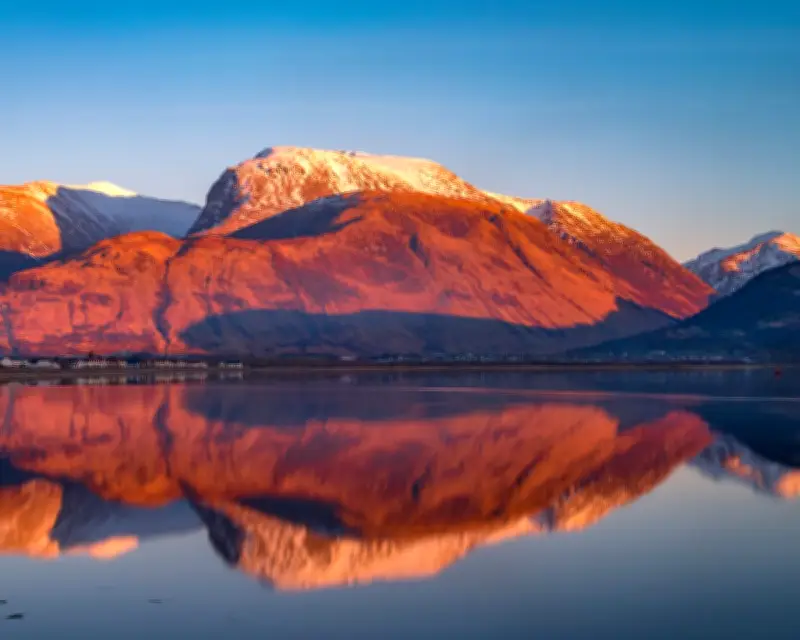
About 54,000 years ago, Britain's uplands were lush forests teeming with mammoths, woolly rhinoceroses, and giant elk, a stark contrast to today's rocky, grass-covered peaks. In 'Upland,' writer and climber Ed Douglas restores a sense of colour and carnival to these high places, exploring their ecological, historical, and cultural significance.
Defining Britain's Mountains
Douglas begins by defining his terms. In 1936, geographer Roderick Peattie argued that a mountain's essence lies in its ability to enter the imagination of those living in its shadow. By the 1990s, the UN adopted a more rigid definition: a region where altitude varies by at least 300 metres over 7km. Douglas's home on Totley Moor in the Peak District just qualifies, much to his satisfaction. Large parts of Scotland, Wales, northern England, Exmoor, and Dartmoor also meet the criteria.
Uplands as Vital Resources
Douglas challenges the view of uplands as detached from lowland life. Britain's high places provide over 60% of the nation's water and are the origin of staple crops like potatoes, barley, maize, apples, and tomatoes. He urges readers to reconsider the notion that uplands are barren, producing only occasional heather.
Mountains Shaping History
Mountains have profoundly influenced Britain's story. When Romans arrived in the first century AD, southern England's gentle hills quickly submitted, while the craggy north resisted. Evidence remains: Roman ruins in the south are villas; in the north, they are garrisons or walls. Yet the Romans eventually mined lead at Wanlockhead, Scotland's highest village at over 400 metres. Normans later profited from lead mining in the Peak District.
Internal Colonialism
Douglas frames the relationship between lowlands and uplands as internal colonialism. For millennia, high places have been exploited for raw materials. The Elan valley in mid-Wales, once admired by poet Percy Shelley, was dammed in 1896 to create a reservoir for Birmingham, submerging the village of Nantgwyllt. This echoed the Highland clearances, where tenant farmers were evicted for sheep, many emigrating to the US.
Resistance and Resilience
Uplands have also been sites of resistance. The Jacobite rebellions of 1715 and 1745 saw Highlanders march to Derby, just 110 miles from London, before retreating. Douglas highlights remarkable individuals, including women like Janet Lapworth, who sewed a specimen-sorting waistcoat for her geologist husband, and Hannah Mitchell, a rambler turned suffragette and social justice campaigner.
Queen Victoria and Balmorality
Queen Victoria's love for the Highlands, fueled by Walter Scott's novels, led her to buy Balmoral in 1852. After Prince Albert's death, she climbed peaks like Lochnagar and Ben Macdui, sparking what novelist George Scott-Moncrieff called 'Balmorality' – a sanitised view of uplands often seen on biscuit tins.
Douglas weaves these stories into a sweeping survey from prehistoric tectonics to modern concerns about second-home buyers driving up prices. 'Upland' is a delightful, informative read that reclaims Britain's mountains as dynamic, integral parts of the nation's past and future.