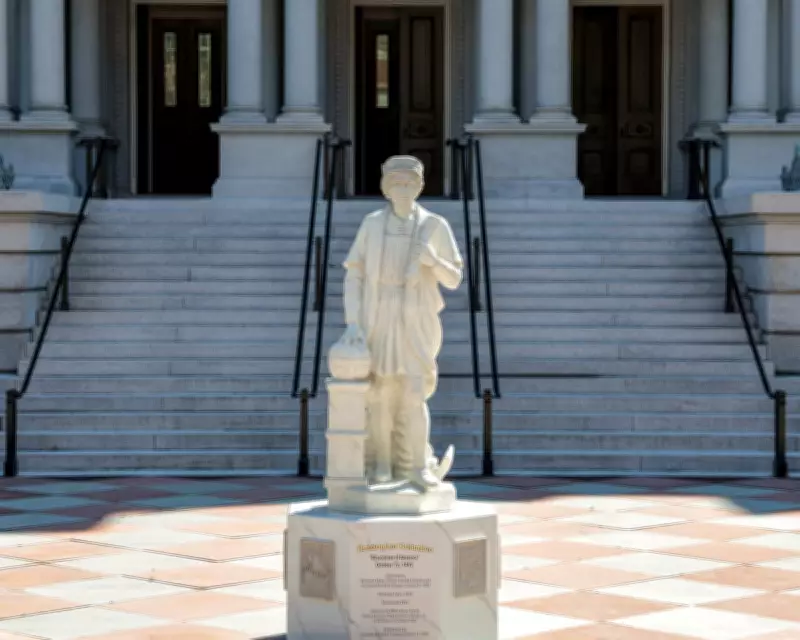
Trump's Columbus Statue at White House Ignites Historical Controversy
The installation of a Christopher Columbus statue at the White House during Donald Trump's presidency has sparked a heated debate over historical representation and legacy. This move, seen by many as a symbolic gesture, has drawn criticism from various groups who argue it glorifies a figure associated with colonialism and oppression.
Symbolism and Political Messaging
The statue's placement at the White House is viewed as a deliberate political statement by the Trump administration. Supporters of the statue claim it honors Italian-American heritage and celebrates exploration, while opponents highlight Columbus's role in the colonization of the Americas and its devastating impact on indigenous populations.
This controversy reflects broader societal tensions over how history is commemorated in public spaces. The debate has intensified discussions about which figures deserve recognition and how their legacies should be interpreted in modern contexts.
Historical Context and Modern Implications
Christopher Columbus has long been a polarizing figure in historical narratives. Traditionally celebrated for his voyages that connected Europe and the Americas, his legacy has been reassessed in recent decades to include the violence and exploitation that followed his arrival.
The White House statue has become a focal point for these conflicting perspectives, with some viewing it as a tribute to discovery and others as an endorsement of a problematic past. This incident underscores the ongoing struggle to balance historical accuracy with cultural pride.
Public Reaction and Future Considerations
Public reaction to the statue has been mixed, with protests and petitions calling for its removal, while other groups have rallied in its defense. The controversy has prompted calls for more inclusive historical narratives that acknowledge diverse experiences and perspectives.
As debates over monuments and memorials continue nationwide, the Columbus statue at the White House serves as a reminder of the complex relationship between history, politics, and public memory. Future administrations may face similar challenges in navigating these sensitive issues.