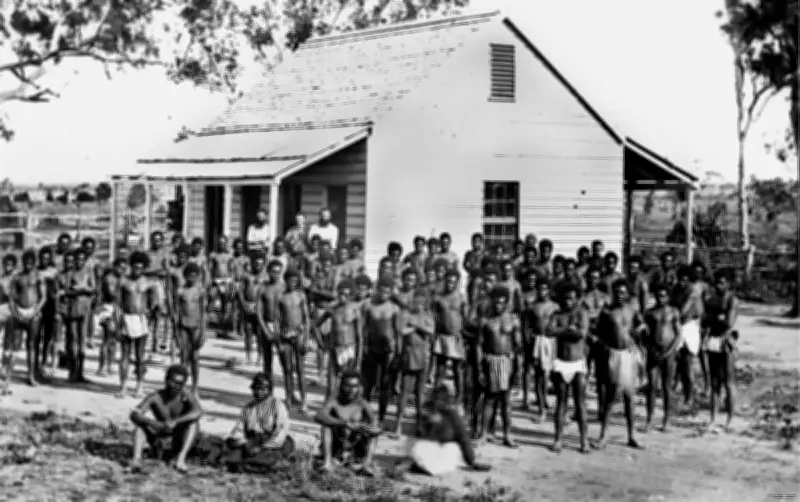
Blackbirding, Australia's slave trade, saw up to 62,000 Pacific Islanders shipped to Australia between 1860 and 1906, with at least 15,000 dying on Queensland plantations. A new book, Blackbirding: A Reckoning with the Australian Slave Trade by Ryan Butta, exposes how Sydney's colonial elite profited from this trade, challenging the nation's self-image as untainted by slavery.
The Hidden History of Blackbirding
Emelda Davis, a former Sydney city councillor and descendant of blackbirded South Sea Islanders, writes in the book's foreword that "the evidence of the Australian slave trade through blackbirding is everywhere – it hides in plain sight." Butta explains that blackbirding, a term borrowed from the African slave trade, has been hidden in Australian history, with most unaware of its scale.
Pacific Islanders were coerced, deceived, and kidnapped to work on sugar and cotton farms, docks, and civic projects. Butta notes, "The Pacific Islanders came, they died, they were buried like dogs and more were sent for." The book's release coincided with the June 2026 Nakamal agreement, where Australia formally acknowledged blackbirding's legacies for the first time.
Sydney's Role as a Slave Trade Hub
Butta's research centers on Sydney's wharves, where prominent merchants and politicians like Robert Towns, John Fairfax, and James Burns profited from the trade. Towns, after whom Townsville is named, is called "the founding father of Australian slavery" by Butta. The Burns Philp building in Bridge Street, built in 1899, was financed by blackbirding profits.
Davis, who lives in Pyrmont overlooking the historic sugar wharves, highlights the lack of recognition: "It pays homage to the refinery and its products – but about what happened to us? There's nothing. We need our own monument on the sugar wharves."
The Business of Enslavement
Butta follows the money, revealing that many connected to blackbirding had links to compensation from Britain's 1833 Slavery Abolition Act, which paid £20 million to former enslavers. This wealth found its way to Australia, funding ventures that exploited Pacific Islanders.
In 1869, a NSW royal commission led by Jacob Montefiore and John Fairfax, both with ties to slavery, found no incriminating evidence. The Queensland parliament was similarly conflicted, with planters and politicians often being the same people. The ship King Oscar, chartered by Queensland legislators, brought coerced Islanders to work on plantations.
Remains in Museums and the Fight for Repatriation
Davis and Butta estimate that at least 1,000 blackbirded Pacific Islanders' remains are held in Australian collections, including the National Museum of Australia and the Australian Museum. These remains are a legacy of the eugenics that underpinned slavery.
Negotiations for repatriation have begun, but progress is slow due to difficulties in determining provenance. Davis emphasizes the need for recognition: "We are not properly seen – and we need to be seen. Repatriation of remains and cultural artefacts is central to that." She also calls for an official apology, saying, "A prime minister stepping up and really apologising for what occurred would be a big step."
A Shared Legacy with Indigenous Australians
The forced labor of Pacific Islanders often overlapped with that of Indigenous Australians, who were also enslaved in pastoral and civic projects. The Canning stock route in Western Australia and the Cape Bowling Green Lighthouse, built with both Aboriginal and Pacific Islander labor, are examples of this shared history.
Butta's book is a watershed in acknowledging that blackbirding was slavery. As Davis puts it, "We can't change the past. But it's about being seen."