The Modern Viking Sacrifice: Mead, Sausages and Climate Prayers
In a quiet pine forest outside Stockholm, a circle of modern-day heathens raised their mead-filled horns to the sky. "Hail Thor!" chanted the priestess, leading an autumn sacrifice ceremony to the hammer-wielding Norse god of harvests and storms. The scene felt both ancient and strangely contemporary, with participants offering everything from horseshoe-shaped sausages to hammer-shaped cookies on a moss-covered stone altar.
The dozen gathered Swedes had diverse reasons for participating in this neo-pagan ritual. Many pleaded with Thor to bring rain after a summer plagued by drought, while others sought strength to battle unemployment or prayed for the recovery of sick relatives. A middle-aged man in a blue office shirt appeared to be connecting with his hippy-looking wife and teenage daughter, the sweat on his forehead suggesting he'd come straight from work.
From Fringe Faith to Formal Recognition
Sweden's conversion to Christianity during the medieval period largely eradicated Viking-era paganism, but contemporary Swedes are determined to resurrect their ancestral faith. While still far from a nationwide trend, this fringe religious movement has gained notable traction. Two formally recognised faith groups - the Nordic Asa-Community (NAC) and Community of Forn Sed Sweden - estimate they have approximately 2,700 members combined, though official statistics don't exist.
These organisations have established a significant online presence with 16,000 combined Facebook followers, offering naming ceremonies, initiation rites, weddings, funerals, and new holidays that provide reasons to gather in forests and fields. They operate 20 sub-divisions across Sweden that organise local, small-scale sacrifices like the one attended, while their annual nationwide ceremonies reportedly attract around 300 participants.
The movement's growing legitimacy received official recognition this summer when Sweden approved its first new pagan burial ground in almost a millennium. Located in the small town of Molkom, the site will feature three grass mounds shaped like buried ships positioned beside a Christian cemetery. According to the faith-based group behind the initiative, approximately 50 people have already requested burial at the site, expected to open next year.
Climate Anxiety and Identity in a Secular Society
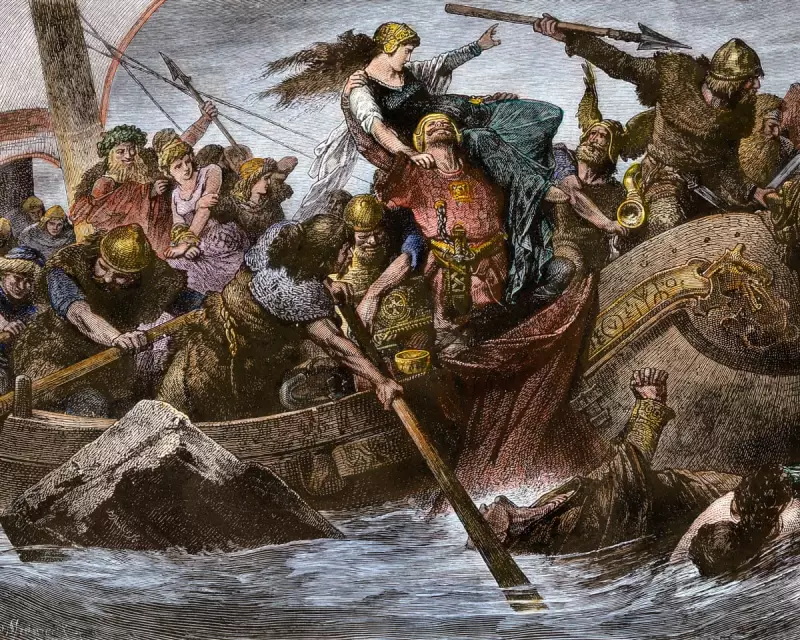
This pagan revival presents an unexpected development in Sweden, a country typically characterised as highly secular, ultra-modern, and technologically advanced. Historical precedent suggests such movements often emerge during periods of existential crisis. In the early 19th century, after Sweden ceded a third of its territory (Finland) to Russia, writers and intellectuals turned to Viking-age lore to forge a new national identity based on brave, masculine pillagers processing humiliating defeat.
This romanticised Viking ideal was later co-opted by the Third Reich to project Nazi notions of Aryan dominance, and far-right groups continue using runes and Norse symbols today. Against this backdrop, one might assume contemporary pagan revival links to nationalism and Sweden's growing anti-immigration sentiment, though it's impossible to determine how many heathens share such sympathies.
Officially, Forn Sed identifies as openly antiracist, and the NAC expelled one of its leaders in 2017 for allegedly making racist remarks. While reconnecting with lost traditions and ancestral heritage remains a core tenet, both groups strongly emphasise respect for the natural world. Nordic animism, which reveres nature as sacred, has emerged as significant theology within the heathen community, potentially representing a response to the current climate crisis.
The ecological interpretation of Norse culture may offer ways to cope with climate anxiety as forest fires, water shortages, and floods become increasingly noticeable even in northern Europe. Restoring a half-extinct religion could provide psychological shelter from fears that contemporary lifestyles may soon become history themselves.
This Scandinavian pagan revival isn't confined to Sweden. In Iceland, Norse paganism has become the second-most practised religion after Christianity, with 7,000 active members in a country of just 387,000 people. Their temple in Reykjavik is scheduled to open in 2026. Denmark's movement claims over 3,500 believers, with a pagan burial ground opening there in 2009 that had accommodated 13 heathens by 2025 according to local municipality records.
While it's easy to dismiss modern Viking heathens as eccentric with their rune-inscribed arms and braided beards, their longing for permanence in an unstable world mirrors broader cultural trends. From 2000s fashion revivals and 1970s music nostalgia to 'trad wives' idealising 1950s domesticity and pre-industrial homesteading, contemporary culture increasingly looks backward for comfort. The pagans may appear more extreme, but their fundamental desire for stability in chaotic times ultimately reflects our collective search for meaning.