The Birth of a Legacy: Sir Hans Sloane's Journey from Ulster to London
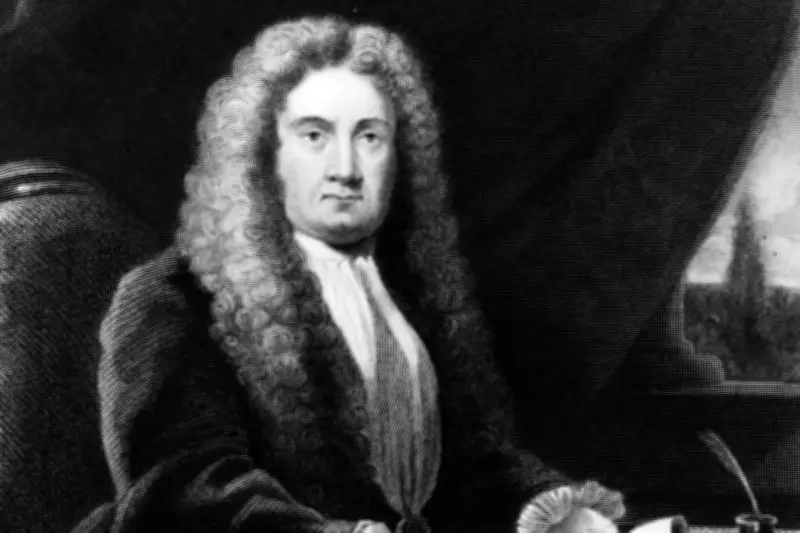
On April 16, 1660, in the small village of Killyleagh, County Down, a child was born whose name would echo through centuries of British history and culture. Hans Sloane, the seventh and final child of Alexander Sloane, Receiver-General of Taxes for County Down, and Sarah Hicks, daughter of an Anglican clergyman, would grow to become one of the most influential figures of his era. His Ulster-Scots heritage and early fascination with natural history set the stage for a remarkable life that would bridge science, medicine, and social anthropology.
From Medical Studies to Royal Patronage
In 1679, Sloane moved to London to pursue his scientific passions, studying chemistry at the Apothecaries' Hall and botany at the Chelsea Physic Garden. His intellectual curiosity led him to form friendships with luminaries like Robert Boyle and John Ray, and he continued his education abroad in Paris and Montpellier. Despite being ineligible for degrees from these universities as a Protestant, he earned a Doctor of Physic from the University of Orange near Avignon in 1683, placing him at the pinnacle of the medical profession as a specialist in internal medicine.
Upon returning to London, Sloane quickly established himself as a protégé of Dr. Thomas Sydenham, known as "the English Hippocrates." His rapid ascent included becoming a Fellow of the Royal Society in 1685 and the Royal College of Physicians in 1687. At just 27 years old, his diligence and connections earned him a position as personal physician to the Duke of Albemarle, accompanying him to Jamaica in 1687. There, Sloane immersed himself in botanical research, identifying 800 new plant species and documenting the island's natural history and ethnomusic.
A Career of Achievement and Philanthropy
After Albemarle's death in 1688 due to excessive drinking and tropical illness, Sloane returned to England and established a successful medical practice at 3 Bloomsbury Place. His clientele included the rich and famous, and he served as physician to Queen Anne, George I, and George II. Honors flowed freely: he was created a baronet in 1716, elected President of the Royal College of Physicians in 1719, and succeeded Sir Isaac Newton as President of the Royal Society in 1727.
Sloane's philanthropic efforts were equally impressive. He leased Chelsea Manor to the Society of Apothecaries for the Chelsea Physic Garden in 1722, served as an original governor of Thomas Coram's Foundling Hospital in 1739, supported Christ's Hospital, and held pro bono surgeries at the Royal College of Physicians. His investments in Chelsea property left a lasting mark on London's geography, with streets like Sloane Square, Sloane Street, and Hans Place bearing his name.
The Birth of the British Museum and the Sloane Ranger Phenomenon
Sir Hans Sloane's most enduring physical legacy emerged after his death on January 11, 1753, at age 92. He had amassed an extraordinary collection of over 71,000 objects, including books, manuscripts, drawings, coins, medals, and plant specimens. In his will, he bequeathed this collection to the nation on the condition that his heirs receive £20,000—a sum deliberately set far below its true value, estimated at perhaps a third or quarter of its worth.
This bequest was formalized under the British Museum Act 1753, leading to the opening of the world's first public national museum at Montagu House on January 15, 1759. Sloane's stipulation that the collection be accessible to the general public, not just scholars, laid the foundation for what is now the largest permanent collection globally, attracting nearly 6.5 million visitors annually.
The Unexpected Cultural Legacy
In a twist of cultural fate, Sloane's name took on new life in the late 1970s. Journalist Peter York was working on a piece for Harpers & Queen magazine, profiling the wealthy, privileged young socialites who frequented Mayfair's Connaught Hotel. Initially dubbing them "the Connaught Rangers" after a defunct Irish infantry regiment, sub-editor Tina Margetts suggested a more accessible reference: "Sloane Rangers," nodding to Chelsea's Sloane Square and the popular Western TV series "The Lone Ranger." This clever rebranding stuck, and when York and co-author Ann Barr published The Official Sloane Ranger Handbook in 1982, an icon of 1980s British society was born.
Thus, Sir Hans Sloane's legacy transcends his scientific and philanthropic achievements, embedding itself in the social fabric of London. From his contributions to medicine and natural history to the founding of the British Museum and the inadvertent naming of a social archetype, his impact remains vividly alive today.