Golf Course Sinkhole Uncovers 12th-Century Wine Cellar Sealed for a Century
A remarkable historical discovery has emerged from an unexpected source: a sinkhole on a Manchester golf course. The ground collapse has exposed a long-lost wine cellar, sealed for more than 100 years, that was once part of a 12th-century country hall.
Groundsman's Chance Discovery
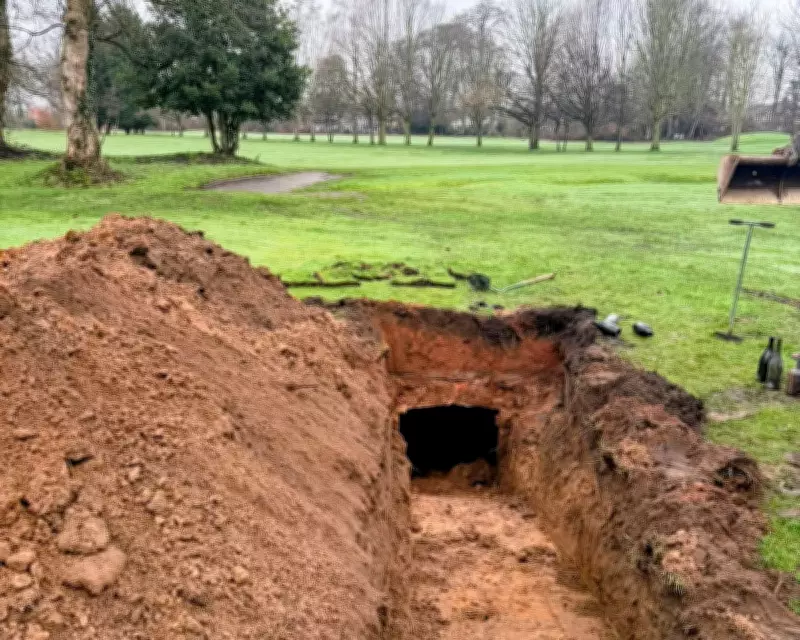
Steve Hopkins, the deputy head green keeper at Davyhulme Park golf club in Trafford, Greater Manchester, made the extraordinary find while inspecting what he initially believed was a collapsed drain on the course's 13th tee. "I am the first person to go in that room for over 100 years," Hopkins revealed, describing how routine maintenance work led to an archaeological revelation.
After noticing the small sinkhole, Hopkins and his team began digging, expecting to repair drainage infrastructure. "We're thinking it's just a drain that needs digging out and clearing and repairing," he explained, "but as we dug deeper and deeper it just opened underneath us."
Entering a Time Capsule
Using a small digger, Hopkins uncovered a doorway that required crouching to enter. Upon turning on his torch, he discovered an arch-ceilinged brick cellar containing dozens of empty, blackened glass bottles scattered among debris. The bottles, which once held wine and port, had been preserved in the subterranean space for generations.
Hopkins found another entrance within the cellar, but it was completely blocked by rubble, suggesting the space had been intentionally sealed off from access. The discovery has generated significant excitement among club members and local historians alike.
Historical Context of Davyhulme Hall
The cellar would have originally been part of Davyhulme Hall, a historic country house dating from the 12th century during the reign of Henry II. The hall served as the seat of medieval English knight John de Hulme and represented centuries of local history.
In 1844, the hall and its surrounding estates were inherited by Robert Henry Norreys, known locally as Squire Bob. Norreys was a keen sportsman who created a nine-hole golf course on the east side of the hall, establishing his own private golfing society with both gentlemen's and ladies' clubhouses. Historical records suggest the ladies' clubhouse was the second oldest such building in the world, following only St Andrews.
From Country Estate to Golf Course
Following Norreys' death in 1887, Davyhulme Hall was put up for sale but found no buyers, leading to the entire property being demolished two decades before the golf club's establishment. The Davyhulme golf club was formed in 1911, purchasing land from the Davyhulme estate to create the course that exists today.
Interestingly, the 13th hole where the discovery was made is known as "the Cellars," suggesting course designers were aware of the underground structures when laying out the golf links more than a century ago.
Preservation and Future Plans
The golf club has temporarily sealed the cellar while determining the best course of action for preservation and potential public access. Club officials have removed the bottles for safekeeping while considering their future display. "Perhaps they'll make a lovely display in the clubhouse – we'll keep you posted!" the club announced on social media.
Members and enthusiasts have suggested various possibilities for the cellar, including opening it as a historical feature of the course or creating educational displays about the site's medieval origins. The discovery represents a tangible connection to Manchester's rich historical tapestry, emerging unexpectedly from the carefully maintained greens of a modern sporting facility.
This accidental archaeological find underscores how history often lies just beneath our feet, waiting for the right moment – or the right sinkhole – to reveal secrets preserved for generations.