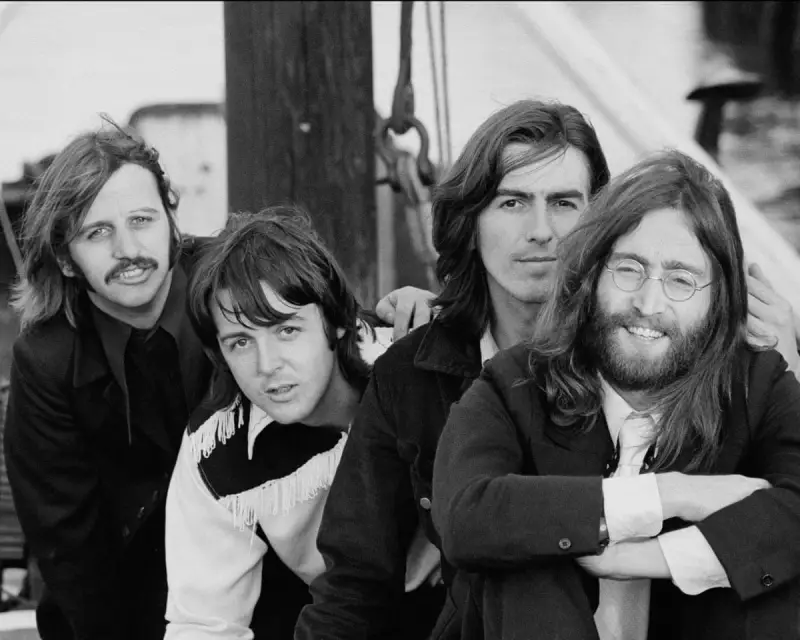
The enduring fascination with The Beatles continues to evolve as new projects promise to reshape our understanding of the legendary band. This month sees the release of an expanded Beatles Anthology project, featuring CD and vinyl reissues alongside the documentary series streaming on Disney+.
The Human Side Revealed
The 2025 edition represents a full-scale revisitation of the original mid-1990s compilation, but the most significant addition is a brand-new ninth episode built from recently excavated footage. This material captures Paul McCartney, George Harrison and Ringo Starr working together in 1994-95 in far more intimate and informal settings than previously seen.
The footage shows the three surviving Beatles rehearsing, reflecting and simply spending time as old friends rather than cultural monuments. They work on Free As a Bird and Now and Then, jokingly speculate on a stadium reunion tour and discuss their history, loss and unfinished musical ideas. The material reveals persistent "kid brother" tensions between Harrison and McCartney, offering a rare, humanising coda to their well-worn story.
Four Narratives of Beatles History
According to Erin Torkelson Weber's influential 2016 book The Beatles and the Historians, our understanding of the band has evolved through four distinct narratives. The initial "Fab Four" narrative during their lifetime emphasized collective charm and energy while glossing over drug use, sexual peccadilloes and Brian Epstein's homosexuality.
The "Lennon Remembers" narrative emerged from John Lennon's raw 1971 Rolling Stone interview, where he swiped at Harrison and McCartney and traduces loyal associates. This evolved into what Torkelson Weber calls the "Shout!" narrative, named for Philip Norman's 1981 biography that cast Lennon as sainted rebel and McCartney as a slick vaudevillian.
More recently, we've entered the "Lewisohn" narrative, driven by Mark Lewisohn's forensic, impartial approach to Beatles scholarship. Lewisohn, widely regarded as the world's pre-eminent Beatles authority, is deep into research for his massive three-volume biography All These Years.
Future Perspectives and Projects
The Beatles' historical interpretation continues to shift with new scholarship and upcoming projects. Recent years have seen more women enter Beatles scholarship, examining gender roles and masculinity in their music. Writers like Questlove, Nelson George and Yaw Owusu have explored the band's relationship with Black artists and Liverpool's colonial history.
Sam Mendes' ambitious plan for four interconnected biopics, each told from a single Beatle's perspective, suggests further decentralisation of the traditional "fab four" narrative. Early production details indicate the films may give greater weight to the band members' partners and familial relationships, foregrounding women whose influence has often been marginalised.
Philip Norman's forthcoming biography of Brian Epstein promises to refocus attention on the band's earliest professional years, potentially reassessing his role as architect of their public persona. Meanwhile, the constant arrival of new material, perspectives and technologies suggests the band's story remains fundamentally open-ended rather than approaching any "grand unified theory."
These projects encourage us to see The Beatles not as fixed historical figures but as subjects whose meaning continues to evolve with each retelling, ensuring the magical history tour shows no signs of slowing after more than sixty years.