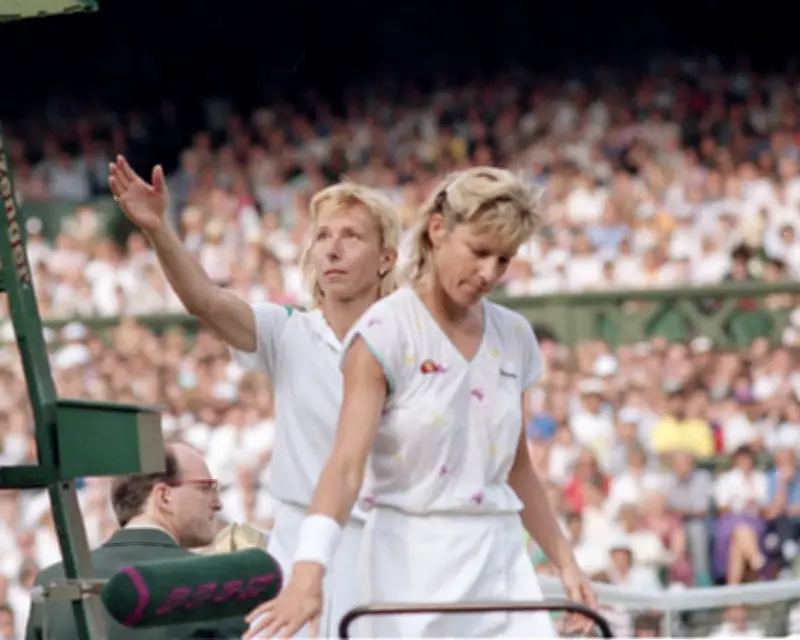
Emma Brockes grew up watching Chris Evert and Martina Navratilova, and the new Netflix documentary 'Chris & Martina: The Final Set' has left her an emotional wreck. The film delves into the lifelong rivalry and friendship between the two tennis legends, evoking memories of a bygone era.
The Era of Tennis Greats
Brockes recalls that the quickest way to evoke an era is through its tennis players. She grew up in the age of Steffi Graf versus Monica Seles and Andre Agassi versus Pete Sampras, but her earliest memories come from the period before that. The documentary takes viewers back to the late 1970s when Evert and Navratilova changed the women's game. They are described as 'the most cold-hearted pursuers of greatness that you've ever met in your entire life.'
Evert, blond and tiny from Florida, contrasted with Navratilova, who defected from communist Czechoslovakia in 1975. Navratilova was initially out of shape and unsure of herself but transformed into a winning machine over the next decade. While Evert was Brockes's first love, followed by Seles and Graf, it was Navratilova who broke hearts.
Growing Up in the Tennis-Club Belt
Growing up in the UK's tennis-club belt of the home counties in the late 1980s meant swerving louchely and knocking imaginary clay out of Fila trainers, mimicking Andre Agassi at Roland-Garros. Brockes murmured brand names like Yonex, Ellesse, and Diadora with fervour. For a solid 10 years, she couldn't imagine aspiring to anything higher than a white shell suit by Sergio Tacchini and a massive Tag Heuer watch, which sponsored Seles in the late 1990s. She despised Anna Kournikova, who never won a singles title, yet hoovered up multimillion-dollar sponsorship deals while Amélie Mauresmo, the actual world No. 1, went begging.
Homophobia in Tennis
Brockes notes that tennis had long had a homophobia problem. A generation earlier, Evert was sponsored by Rolex while Navratilova struggled to get any sponsorship at all. Evert was her only friend, and that friendship cost Navratilova dearly on court. It wasn't until Navratilova's girlfriend at the time, a pro basketball player from Brooklyn, said, 'You need to kick her ass,' that she turned into a killer and came after her friend. Navratilova's line, 'I think I was influenced too much by my girlfriends,' made lesbians everywhere laugh bitterly.
The women entered a period of trying to destroy each other, amplified by a stark preference by crowds for Evert. At the finals of the US Open in 1984, the entire stadium was behind Evert, and Navratilova was booed. 'I don't know if it's because I'm gay or from a communist country,' says Navratilova, 'but I'm American. And I'm a good person. And you guys are hating on me.' She won the tournament, but 40 years later the hurt is still audible in her voice.
The Real Reason for Dislike
Brockes asserts that the dislike for Navratilova wasn't about where she came from. The real reason was evident when sports journalists asked if she thought she was 'bad for women's tennis.' It was present at her grandparents' house during a Wimbledon final when her grandfather made a snide remark about Navratilova's awesome physique and suggested she might be better suited to the men's game. Brockes, not yet 10 at the time, remembers thinking with a sinking heart, 'oh, so there's that.'
Cancer Battles and Enduring Friendship
The documentary also tells a cancer story. The two old champions receive simultaneous diagnoses: Evert with ovarian cancer, Navratilova with throat and breast cancers. Incredibly, the cameras get access to them in hospital. When a nurse in a Florida facility says blandly, 'Christine Evert?', Brockes wants to shout at the screen: 'Do you know who she is?'
They retired, and a new order came in. Brockes fell in love with Graf and then the Williams sisters, but she never got over that era. In 1990, Navratilova made her final winning singles appearance at Wimbledon, winning her ninth title. Brockes thinks of her now with big glasses, hair peroxided and just growing out of the mullet look. By 1994, the crowds loved her, and as she bowed out of Wimbledon for the last time, they gave her a one-minute-40-second standing ovation. She cried, we cried. Watching these legends at 69 and 71, bald from chemo, fighting still, Brockes defies anyone not to cry. 'If I didn't have a bum shoulder, I'd kick your ass,' says Evert to her old friend as they leave the cancer ward.