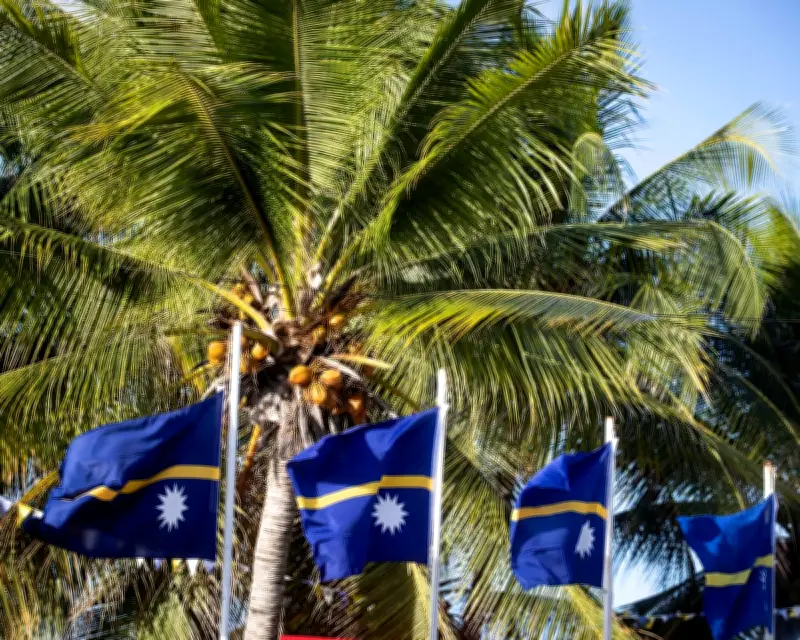
The Pacific island nation of Nauru has officially changed its name to the Republic of Naoero, President David Adeang announced, aligning the country's international designation with its traditional name in the national language. The change, which took effect after two rounds of parliamentary voting, alters the country's international code from NRU to NRO, and its citizens will now be referred to as dei-Naoero instead of Nauruans.
Return to Traditional Identity
The name Naoero, pronounced Now-ero, replaces the internationally familiar Nauru, which was pronounced Now-roo. The government stated that the previous name was a matter of convenience for foreigners, as the local name was difficult to pronounce, and not a reflection of the nation's heritage. The move is part of a broader effort to honor the country's linguistic and cultural identity, according to a government statement posted on its official Facebook account.
President Adeang had first proposed the change in January, stating that it “seeks to more faithfully honour our nation’s heritage, our language, and our identity.” The constitutional amendment was endorsed by lawmakers in two required voting rounds, and although it was not immediately clear if the document had been formally amended, the government confirmed the change in a statement last week.
Nation’s History and Challenges
Naoero, with a population of approximately 12,000, is the world's third-smallest country by population, after Tuvalu and Vatican City. The coral limestone atoll was colonized by Germany and later administered by Australia before achieving independence in 1968. The nation experienced significant wealth in the 1970s due to phosphate mining, but the industry's collapse in the 1990s brought economic ruin.
Today, the atoll faces severe threats from climate change, with rising sea levels endangering the island. The government has sought overseas investment through a paid citizenship program to fund the relocation of people and infrastructure away from the encroaching ocean.
National Pride and Official Recognition
Adeang described the name change as “the beginning of renewed national pride.” The government had initially considered a referendum to confirm the change, but after “extensive discussions,” lawmakers decided a public vote was unnecessary. The statement explained that “the name Naoero has never been lost, but rather waiting to be fully embraced,” noting that it is already used on the national coat of arms and spoken within the community.
The decision aligns with a global trend of nations reclaiming traditional names to shed colonial legacies. For instance, Eswatini reverted from Swaziland in 2018, and Turkey requested to be called Türkiye at the UN in 2022. Naoero's change will also require renaming its national aircraft and ships, and the government is seeking recognition from other countries and international institutions.
The United Nations website already lists the country under its new name, following a request from the government in June. Australia, New Zealand, the US, and Chinese embassies in the region have also updated their websites to refer to the nation as Naoero.