A historically significant and long-missing Suffragette medal, awarded to the personal nurse of movement leader Emmeline Pankhurst, is set for its first-ever public exhibition in London.
The Medal's Journey From Obscurity to Display
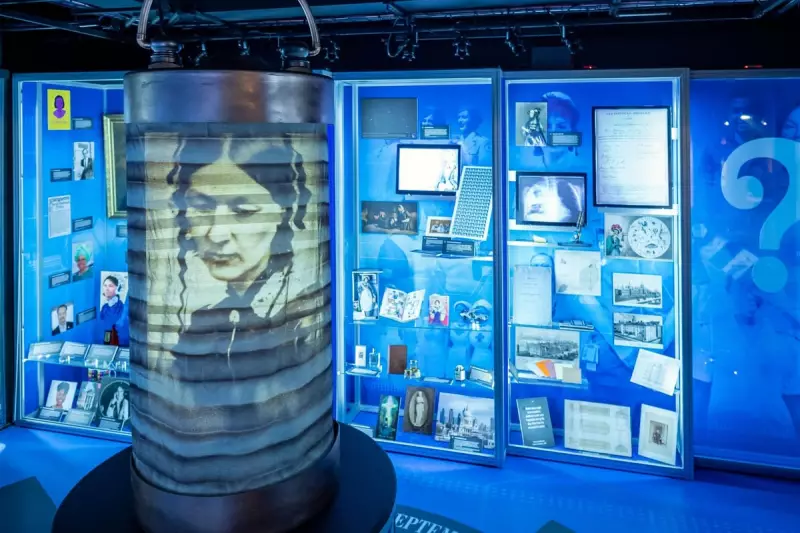
The circular silver medal, adorned with the distinctive purple, white, and green ribbons of the Women's Social and Political Union (WSPU), vanished for several decades after the death of its recipient. It will finally be unveiled at the Florence Nightingale Museum in a dedicated display titled In Focus: Nurse Catherine Pine. The exhibition is scheduled to run from 8 March 2026, coinciding with International Women's Day, until 4 October 2026.
The medal was presented 'For Duty' by the WSPU, the organisation founded by Emmeline Pankhurst and her family in 1903. Its eleven attached silver bars are engraved with ascending dates, each marking a major event in the militant suffrage campaign. These inscriptions chronicle episodes where Nurse Catherine Pine (1864-1941) provided critical care to suffragettes, often following their arrest, temporary release, or imprisonment under the notorious 'Cat and Mouse Act'.
The first bar records 29 March 1913, the date of Sylvia Pankhurst's release from prison after hunger striking. The subsequent bars detail Emmeline Pankhurst's own repeated arrests, culminating in the final date of 18 July 1914, which marked Pankhurst's last arrest before she fled to France.
The Woman Behind the Medal: Nurse Catherine Pine
Trained at St Bartholomew's Hospital, Catherine Pine left her post as House Sister in 1907 to establish a nursing home on Pembridge Gardens in Notting Hill. This facility secretly became a sanctuary for suffragettes recovering from the ordeals of hunger strikes and imprisonment. Her skilled care for Emmeline Pankhurst during these struggles led to her becoming the movement leader's trusted chief nurse.
Pine was a committed campaigner in her own right. She notably assisted Christabel and Sylvia Pankhurst in evading arrest by providing them with nursing uniforms as disguises. During the First World War, she supported Pankhurst's campaign for the welfare of 'war babies' and became the primary caretaker for the four children Pankhurst adopted, even travelling with them to North America.
A Detective Story of Historical Recovery
Upon her death in 1941, Pine bequeathed the medal to the British College of Nurses, but its location was later lost. Its rediscovery is a tale of dedicated historical sleuthing. Writer and historian Elizabeth Crawford OBE highlighted the medal's disappearance in a 2016 blog. This was read years later by Dr Hope Elizabeth May, a philosophy professor at Central Michigan University, who was researching suffragette medals.
Dr May recalled a photograph of the medal in a 1990 newspaper article about a planned auction. Her investigation revealed that, though unsold in 1990, it had finally been sold at a London auction in 2008. After connecting with Crawford, Dr May tracked the medal to a 2024 auction in the United States. To honour Pine's original wishes, Dr May personally acquired the medal and has since used it for educational work through her non-profit foundation.
Laura Sharpe, Director of the Florence Nightingale Museum, expressed excitement about displaying the medal. She praised the "wonderful detective work" of Crawford and Dr May in ensuring Pine receives due credit and her final wishes are honoured.
Dr Hope Elizabeth May stated: "I believe Pine bequeathed her medal... with the intention that it form part of an educational project. Both Pine and Nightingale are central figures not only in the history of nursing, but also in women's history and in the... development of human rights and justice."