Rugged coastlines, fertile farmlands, and ancient villages steeped in Viking history await visitors to Orkney, an archipelago of some 70 islands scattered like jewels off Scotland's north coast. Tony Wheeler, the founder of Lonely Planet, recently made the trip via the Caledonian Sleeper train after revealing he had been 'meaning to go for years.' He described the destination as a 'once-in-a-lifetime' experience.
The 'Scottish Pompeii'
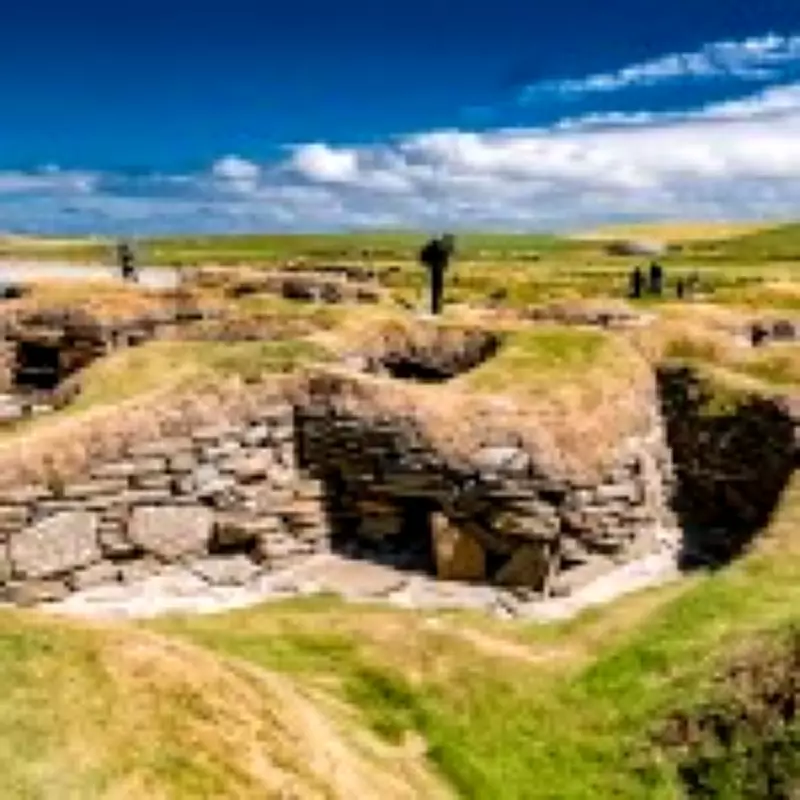
The Heart of Neolithic Orkney was designated a UNESCO World Heritage Site in 1999. The sixth-largest island in Scotland, it is home to four monuments that date back over 5,000 years. Perhaps the most famous is Skara Brae, often referred to as the 'Scottish Pompeii.' This stone-built Neolithic settlement is considered the best-preserved in Western Europe. Tony Wheeler describes it as the 'oldest village in Europe,' predating Stonehenge and the Pyramids. However, it is a lot easier to navigate than its Italian namesake. Five houses are clustered together in a 'final days' state, complete with stone beds and dressing tables. One house has been reimagined so visitors can cosplay Neolithic life.
Other sights to shout about include Maeshowe, a 2800 BC burial chamber, famous for Viking graffiti carved into its walls. At the winter solstice, the setting sun shines directly into the entry tunnel. There is also the Ring of Brodgar, a ceremonial stone circle set within a dramatic natural amphitheatre, and the Stones of Stenness, one of the earliest stone circles in the British Isles.
Practical Magic
Like Pendle Hill in Lancashire, Orkney is famous for its dark history of witch trials. Between the 16th and 18th centuries, over 70 islanders were accused of witchcraft — many were locked in St Magnus Cathedral's dungeon and executed at Gallow Ha in Kirkwall, Orkney's 'capital.' The most well-known trial took place in 1594. A woman named Alison Balfour refused to confess to an alleged plot against the Earl, so authorities tortured her family. Janet Forsyth, known as the 'Westray Storm Witch', was accused of casting dark spells. In reality, she was trying to guide ships to safety. Today, there is a stone slab memorial at Gallow Ha, etched and engraved with their names. You can visit the site on the Witches of Orkney Guided Walking Tour (£15), alongside the old Kirkwall Castle and former Tolbooth. The tour also stops at the exteriors of Romanesque St Magnus Cathedral and the Earl's Palace.
Across from the cathedral, the Orkney Museum houses 'Ragna', the Viking farmer, who came to Orkney from Arctic Norway in 859 AD. The museum has transformed Ragna into the UK's first AI-powered Viking character — the last thing you would expect in a landscape that feels like time forgot. Her role is to tell you what Viking life was like in Orkney.
A Thriving Food and Drink Scene
Few people know it, but Orkney is culinary heaven. Local produce is abundant here, from world-renowned Orkney beef to North Ronaldsay lamb (the salty taste comes from their seaweed-only diet). Of course, being surrounded by the North Sea and Atlantic Ocean means the seafood is as fresh as you can get. Expect hand-dived scallops, crab, and lobster. Orkney cheddar, Bere meal (an ancient grain), and Pattie Suppers are also island staples. The latter consists of mince, tattie and onion mixed, battered and deep-fried — a legendary chippy favourite. Cleanse your palate with some Highland Park whisky, one of the oldest and most northern Scotch distilleries. Beer fans should try 'Skull Splitter,' the Viking-inspired, rich, deep amber ale from the team at Orkney Brewery.
Beaches for Days
Scottish beaches may have infiltrated your Instagram algorithm after the North Coast 500 went viral a few years ago. And while not technically part of that route, Orkney beaches deserve their flowers. The islands boast miles of pristine, white-sand coastline, from Caribbean-like dunes on the isles of Sanday and Stronsay, to Scapa Beach on the mainland, which features a nearby shipwreck you can swim out to. The best part? They rarely get crowded.
Getting to Orkney
Travel like Tony Wheeler and take the Caledonian Sleeper train (seats start from £75) from London Euston to Edinburgh. Then it is three more trains via Perth and Inverness to Thurso. Take a NorthLink ferry from Scrabster (near Thurso) to Stromness in Orkney. An adult foot passenger ticket costs £29 in low season, and £44.50 in peak season.