Among the 272 stations on the London Underground network, some hold secrets far more intriguing than their modern-day commuter traffic suggests. One such station is West Ealing, which boasts a unique slice of industrial history: it once operated a railway platform devoted entirely to the delivery of milk.
From Castle Hill to a Creamery's Doorstep
The station's story begins in 1871, when it first opened under the picturesque name Castle Hill and Ealing Dene. The name itself reveals much about the area's past. 'Castle Hill' was derived from Castlebar Road, a nod to the many Irish settlers who came to work in London during the 19th century. 'Dene', meaning wooded valley, hints at the rural landscape Ealing once was.
Originally part of the Great Western Railway (GWR) line from Paddington to Maidenhead, the station briefly became part of London's underground network. From 1883, District Railway services ran to Windsor on a line that completed the inner circle route. This technicality made West Ealing part of an underground line, though the Ealing extension was closed by 1885 due to lack of profit.
The Golden Age of the Milk Platform
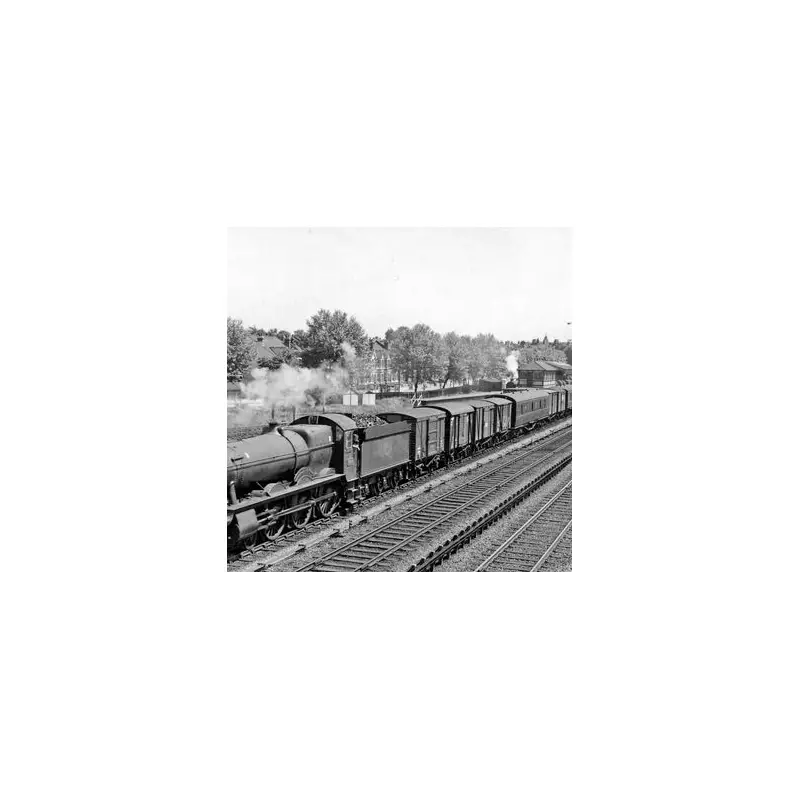
The station's most distinctive feature emerged due to its immediate neighbour: the London Cooperative Society's main creamery. From the mid-1900s, West Ealing station featured a dedicated platform for the daily 'milk train'.
These trains were a common sight on the GWR, one of the busiest routes for transporting dairy. They would collect milk from across Cornwall, Devon, and the West Country before arriving in London. A single 3,000-imperial-gallon wagon carried enough pasteurised milk to meet the daily needs of approximately 35,000 people. At the Ealing creamery, this milk was used to produce butter and cheese.
From Dairy Bay to Elizabeth Line Hub
The station's dairy-centric era eventually ended with the creamery's closure. The site underwent extensive rebuilding, and the former milk train bay was converted into an additional bay, known as Platform 5, to serve Great Western Railway services. For a time, Greenford trains terminating at West Ealing would discharge passengers directly onto the remnants of the old milk platform.
Today, the station has transformed again. It no longer handles Overground services but has been integrated into the modern Elizabeth Line, serving as a key transport link for west London. While the churn of dairy wagons is long gone, the history of West Ealing station remains a rich testament to London's evolving industrial and transport landscape.