A marble bust on a Corfu hilltop gazes skyward, lean and austere, with only the name 'Kapodistrias' carved beneath. It stands alone at Koukouritsa, the family home of Ioannis Kapodistrias, now the sole museum in Greece dedicated to the man who abandoned a top diplomatic post to build a nation from scratch. Without him, modern Greece might not exist, and Europe's map could look different today.
The Architect of Modern Greece
Kapodistrias supplied the Greek revolutionaries with resources and moral support, then negotiated with Britain, France, and Russia over borders and institutions. He established the currency, courts, schools, and civil service that underpin the modern state. Swiss philhellene Jean-Gabriel Eynard lamented after Kapodistrias's 1831 assassination: 'He who murdered Kapodistrias murdered his homeland.'
A Controversial Figure
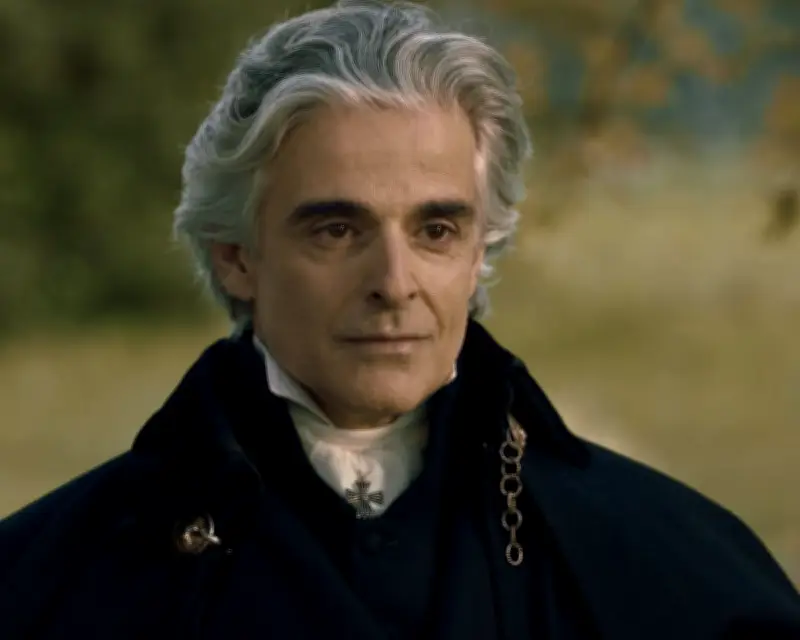
Two hundred fifty years after his birth, Kapodistrias remains little known outside Greece and divisive within it. His museum struggles to cover basic costs. A new film, Kapodistrias, opening in UK cinemas after success in Greece, aims to change that.
Born in Corfu in 1776 under Venetian rule, Kapodistrias rose to become joint foreign minister of the Russian Empire under Tsar Alexander I. He moved in glittering cultural circles. 'He was a political operator of great skill,' says historian Roderick Beaton. The film shows Kapodistrias urging the tsar toward war with the Ottomans and warning he would choose Greece over Russia.
The Statesman's Sacrifice
After resigning from St Petersburg, Kapodistrias worked European diplomatic circuits for Greece. He once said a grave in Corfu kept him alive in Russia. When elected Greece's first head of state in 1827, he arrived to a country with no currency, courts, schools, or unified army. He worked from dawn to night, founding schools, minting the Phoenix currency, organizing the judiciary, and introducing the potato to fight famine.
Autocrat or Enlightened Despot?
Historians agree Kapodistrias leaned toward autocracy. Some call him a tyrant; others an enlightened despot. 'The Greeks wanted colorful heroes after the war of independence, and he doesn't provide that,' says researcher Jonathon Bond. He didn't raise a sword and tried to curb warlords. The film captures this tension between the austere statesman and gun-wielding leaders.
Lead actor Antonis Myriagos describes his role as 'the chronicle of a death foretold.' Kapodistrias ignored warnings and walked to his murder at a church in Nafplio, followed by a chorus of mourning women, like a Greek tragedy.
Legacy and Debate
Beaton attributes Kapodistrias's obscurity to his divisiveness: 'He has been adopted as a hero by the political right and condemned as a dictator by the left.' In Greece, the film divided critics and audiences, becoming the fifth highest-grossing Greek film. 'His is a fascinating story and deserves to be much better known,' Beaton says.