Jock Gillespie, the Cambridge Evening News reporter whose exhaustive coverage of the 'Cambridge rapist' manhunt in the 1970s set a benchmark for local journalism, has died at the age of 86. His former colleague and friend confirmed the news, highlighting a career defined by unwavering commitment to factual reporting and the training of a new generation of journalists.
A Reporter of the 'Old School'
Gillespie, born Fulton Gillespie in Stirling, Scotland, was the son of a miner, James, and his wife, Barbara (née Myles). He began reading and writing at age five, a passion that stayed with him throughout his life, alongside jazz and family. Leaving school at 14, he became an apprentice compositor at the Falkirk Herald, where his spelling prowess was quickly noticed while correcting page proofs. By 16, his editor had promoted him to the newsroom.
In a 2016 letter to Alan Rusbridger, who later became editor-in-chief of the Guardian, Gillespie recalled the diverse duties of a junior reporter in 1956: covering antiquarian society debates, market fat stock prices in old pence and farthings, shipping movements, cinema synopses, miners' welfare committee meetings, and even the best cake at WI fetes. The editor, a gnarled ex-PoW, checked everything meticulously, and a single error meant retyping the entire story.
Career at Cambridge Evening News
After stints at the Daily Record and Sunday Mirror in Glasgow, Gillespie moved south in the early 1960s after marrying, joining the Cambridge Evening News in 1963. He remained there for 34 years, becoming a cornerstone of the newsroom.
His dedication to old-school reporting did not include shorthand, but his carefully folded copy paper notes and exceptional memory served him well, particularly during his nine months of detailed reporting on the hunt for Peter Cook, the 'Cambridge rapist' who attacked multiple women in the mid-1970s, and the subsequent trial. His bosses at the Cambridge Evening News believed he had better oversight of events than the police, a testament to his investigative acumen.
Impact and Legacy
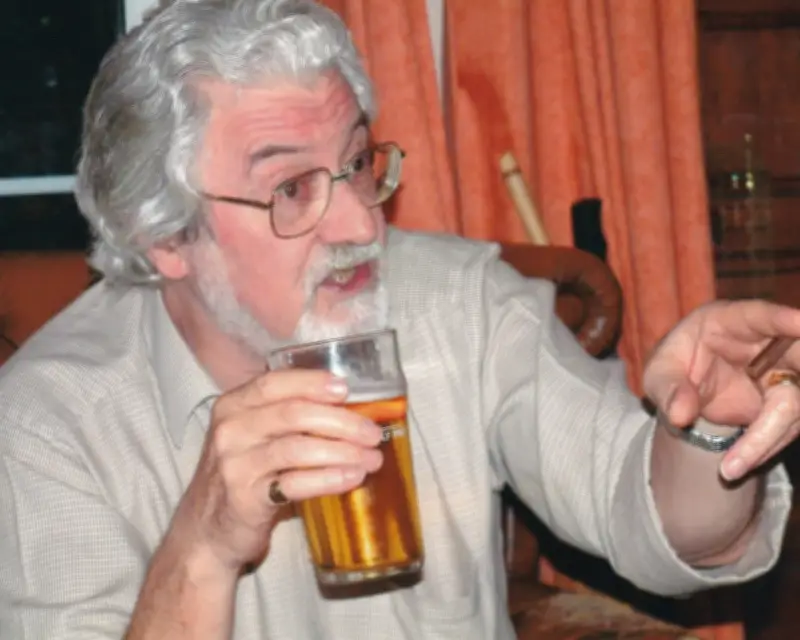
Crime and health reporting were the keystones of Gillespie's career. He could be blunt, even rude, but was highly respected both inside and outside the newsroom. Rusbridger described him in his book Breaking News as 'a growling silver-haired Glaswegian with dark glasses and the stub of a cigar permanently lodged between bearded lips,' who saw it as his duty to school young reporters in hard knocks.
In 2000, Gillespie's son Scott died from a heroin overdose, prompting Gillespie to write a moving article for the Guardian. He told a Commons select committee that it was not heroin that killed his son but the criminalisation of heroin, and he urged decriminalisation. Scott was a child from his first marriage to Pauline (née Whitaker), which ended in divorce; they also had a daughter, Fiona, and Gillespie adopted Pauline's son Mark. In 1983, he married Annemarie Russell (née Stark), who brought two children, Bernhard and Crystal, to the marriage.
Gillespie is survived by Annemarie, Fiona, Mark, Bernhard, and Crystal. His legacy endures not only through his own reporting but through the journalists he trained, including Rusbridger, who credited Gillespie with instilling the rigorous standards that shaped modern British journalism.