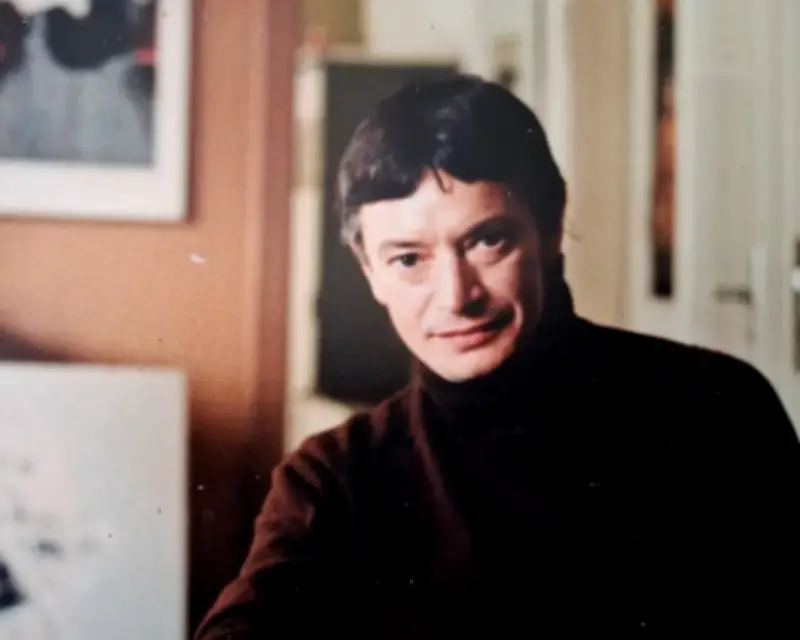
Jack Crabtree, the figurative painter whose work gave dignity to miners, steelworkers, and communities often overlooked, has died aged 87. Over a career spanning six decades, he produced a distinctive form of social realism rooted in his working-class upbringing, capturing people caught up in extraordinary circumstances.
Early Life and Artistic Training
Born in Rochdale to Lilian, a cotton mill worker, and Roland Crabtree, a labourer at the gasworks, Jack discovered art almost by accident. A schoolteacher at Rochdale grammar school for boys encouraged him to try the subject, leading to a scholarship that took him from Rochdale College of Art in 1955 to St Martin’s School of Art in 1957, and then to the Royal Academy Schools from 1959 to 1961.
In 1962, Jack married Mary Ellis, and they had two sons; she died in the late 1960s.
Documenting Miners and Industrial Communities
In 1974, Jack spent a year working underground in the south Wales coalfields, producing 119 sketches and paintings. This immersive approach became a hallmark of his practice. In 1977, he became the first recipient of the Ruhr arts fellowship, documenting the coal and steel industry in Germany.
His work also explored Belfast during the Troubles, which he witnessed for a decade from 1984 as professor and head of fine art at the University of Ulster. He saw beyond the bomb-scarred buildings and political headlines to the interrupted lives and resilience of the people who continued to live there. As an artist-in-residence for the National Trust in 1991, he documented the traditional processes of Patterson’s Spade Mill in Templepatrick, Northern Ireland.
Artistic Philosophy and Later Life
Jack was uncompromising about his art. “Painting is the business of thinking not just the business of seeing,” he said at 22. His work was never made simply to please. Yet the man behind the sometimes flamboyant appearance was reserved, selective about friendship and kind, funny and stubborn.
In 1994 he retired to Nantlle, north Wales, and converted the loft of his house into a studio. Even as he gradually lost his sight, his passion for work remained undiminished.
Legacy and Survival
His work is held in galleries and collections in Britain, Northern Ireland and Germany. He leaves behind not only an important body of art, but a lasting challenge to look more closely at humanity, and to recognise the importance of lives that might otherwise pass unnoticed.
Jack is survived by his sons, Tom and the author of this obituary.