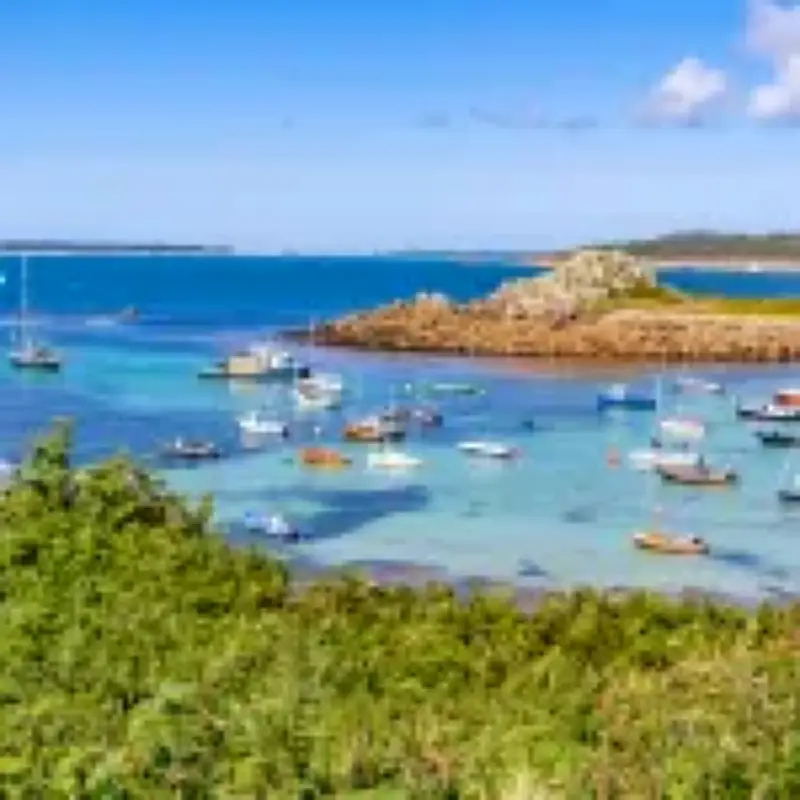
The Isles of Scilly, an archipelago 28 miles off the Cornish coast, have been officially named the friendliest place in the UK, according to a new index using government data. The index measured how often people chat to neighbours, feelings of loneliness, local pride, and levels of participation in civic life. The islands achieved a near-perfect score for almost all of the eight 'connection barometers,' with 95.4% saying different backgrounds get on well and 88.8% feeling they belong to their neighbourhood. Additionally, 87.3% of residents said that their neighbours can be trusted, while 86.5% are proud to live in their local area.
Top and bottom of the friendliness index
Following the Isles of Scilly in the rankings were South Hams in south Devon, West Devon, Derbyshire Dales, and Richmond upon Thames. The area named least friendly was Barking and Dagenham. The index highlights the strength of community connections in these areas, with the Isles of Scilly standing out for its high levels of social cohesion.
A subtropical paradise with five inhabited islands
The Isles of Scilly are warmed by the Gulf Stream, giving them higher sunshine hours and milder winters than the rest of the UK. While there are over 140 islands, only five are inhabited: St Mary's, Tresco, St Martin's, Bryher, and St Agnes. Tresco is known for its lush, subtropical 19th-century Tresco Abbey Garden, where over 20,000 exotic plants from 80 countries thrive. The family-owned island also features spectacular beaches like Appletree Bay, a half-mile crescent of soft, near-white sand and crystal-clear azure waters.
On St Mary's, the largest island and main hub, sub-tropical flora grows freely, while Pelistry Bay and Bar Point on the remote eastern shore offer prime snorkelling conditions. Great and Little Bay on St Martin's could easily be mistaken for its Caribbean isle namesake, and The Bar in St Agnes is a breathtaking sandbar where dolphin sightings are common.
Ancient history and wine paradise
The islands are steeped in history. Bant's Carn is a free-to-visit Bronze Age burial mound on St Mary's, one of the best examples of a Scillonian entrance grave, in the care of English Heritage. Below the graves are the remains of the Iron Age village of Halangy Down, dating back to around 200BC, featuring a courtyard house and garden plots. Visitors can also walk along the coast to Innisidgen Burial Chambers, two more Bronze Age ceremonial monuments. For those combining hiking and history, St Mary's offers a two-hour trek along the Garrison Walls, dating from the 16th to 18th centuries.
The islands also have a small-scale, boutique winemaking scene, with two producers: Holy Vale Vineyard on St Mary's and St Martin's Vineyard on St Martin's. The former is a family-run vineyard producing Chardonnay and Pinot Noir, while the latter offers tours and wine tastings. A self-guided tour with tasting costs £12 per person, with under-16s free, and vineyard-only exploration is £6 per person. St Martin's Vineyard also has a 'boozy farm shop' selling sparkling cider and their own beers. Fresh Atlantic seafood, including crab, lobster, scallops, and mussels, is plentiful.
Getting there and getting around
From London, the cheapest way is a five-hour train from Paddington to Penzance for around £62 one-way, followed by a 2-hour and 45-minute ferry to St Mary's, with a day-trip foot passenger fare of £35. Ferries operate seasonally between March and November. Alternatively, flights and sailings are available from Penzance Harbour, Land's End, Newquay, or Exeter Airports with Isles of Scilly Travel. Once there, island-hopping is essential, with daily local boats from St Mary's quay to the outer islands of St Martin's, St Agnes, Bryher, and Tresco.
The iconic Scillonian III ferry, which has been in service since 1977 and has carried over five million passengers, will set sail for the last time in November 2026. From March 2027, it will be replaced by the Scillonian IV, which will carry more passengers and provide a faster ride.