The Fallen: Exposing Ireland's Dark History of Institutionalized Abuse
Louise Brangan's meticulously researched book, The Fallen: The Magdalene Laundries and Ireland's Legacy of Silence, delivers a profoundly disturbing account of one of Ireland's most shameful chapters. This comprehensive examination reveals how Catholic-run Magdalene laundries operated as state-sanctioned prisons for thousands of women and girls throughout the 20th century, with the last facility only closing in 1996.
A System of Unprecedented Scale and Cruelty
Brangan's work demonstrates that the Magdalene laundries were not peripheral institutions but represented Ireland's primary carceral system for women. In 1951, at the height of their operation, statistics reveal a staggering disparity: while 27 males per 100,000 were incarcerated in prisons, 70 females per 100,000 were confined in these laundries. The author compellingly argues that these facilities represented the "deep end" of Ireland's exceptionally inhumane penal landscape.
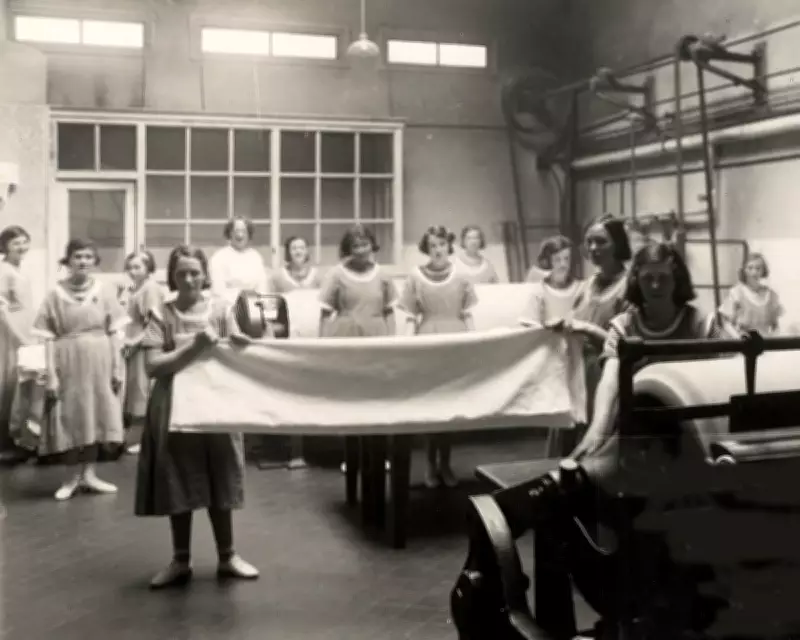
The laundries, established by the state but administered by religious orders, subjected inmates ranging from nine-year-old girls to elderly women in their eighties to brutal conditions. These women labored six days weekly without compensation, operating cumbersome hand-powered machinery to clean everything from clerical vestments to household linens. The regime enforced draconian discipline where even minor infractions met with severe punishment.
The Arbitrary Nature of Incarceration
Who were these women deemed deserving of such treatment? Brangan identifies them as "the fallen"—individuals believed to have committed sexual transgressions so severe they placed themselves beyond societal acceptance. Yet the reality proves far more arbitrary and disturbing. Many inmates were simply "the wayward and unwanted"—homeless, abused, or rejected individuals whose mere existence was treated as offensive.
The book chillingly details how women became ensnared in this system through mechanisms both formal and informal. Brangan recounts the story of fifteen-year-old Eileen, abducted from her Dublin workplace in February 1954 by members of the Legion of Mary, a lay organization self-appointed as guardians of Ireland's moral boundaries. Transported to Saint Mary Magdalen's Asylum, Eileen underwent institutional erasure: her clothes confiscated, her hair shorn, her identity replaced with the number "60."
A Climate of Collective Complicity
Brangan contextualizes these atrocities within Ireland's unique moral and political climate, where the Catholic Church exercised control comparable to communist parties in Eastern Europe. The laundries operated openly within communities, their imposing iron gates and granite walls standing alongside ordinary businesses like butchers and post offices. Yet the public largely averted their eyes, choosing willful ignorance over confrontation with the suffering occurring in plain sight.
While the Magdalene laundries represent a particular horror, Brangan notes they were not Ireland's only abusive institutions. Mother and baby homes, like the notorious Bon Secours facility in Tuam where nearly 800 infants were buried in an unmarked mass grave, demonstrate the systemic nature of this institutional cruelty.
An Incomplete Reckoning
The book concludes by examining the inadequate response to these historical crimes. To date, the Irish government has disbursed over €33 million in redress payments to laundry survivors, while religious orders have largely declined financial responsibility. Brangan gives voice to survivors like Carmel, whose testimony reveals the permanent scars left by institutionalization: "There's always something in my life that will remind me of my past life... I've moved on a bit. But I'll never heal."
The Fallen stands as both a vital historical record and a powerful indictment of institutional power, religious authority, and societal complicity. Brangan's work ensures that Ireland's Magdalene laundry survivors and their stories will not be forgotten, challenging readers to confront uncomfortable truths about how societies sanction cruelty against vulnerable populations.