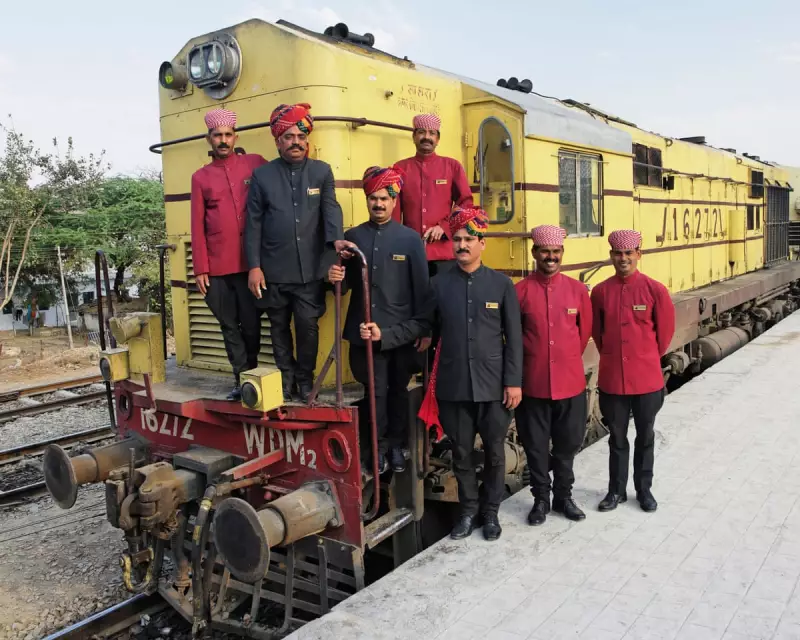
The Indian Railways, one of the world's largest employers, is making a significant sartorial change by removing the iconic bandhgala jacket from its formal staff uniform. The move, ordered by Railways Minister Ashwini Vaishnaw, aims to purge what he terms a 'colonial mindset' from the institution's culture and attire.
A Garment Steeped in History, Not Just Colonialism
While the tailored, high-collared bandhgala became part of the railway uniform in the late 19th century under British rule, its origins are deeply and authentically Indian. The jacket's design lineage traces back over four centuries to the grand courts of Mughal emperor Akbar in the 16th century.
Renowned menswear designer Raghavendra Rathore, a descendant of Jodhpur's royal family which further evolved the garment, strongly contests the colonial label. He describes the bandhgala as "India's most refined expression of royal tailoring". The design was adapted by Rajput rulers in present-day Rajasthan, with its high neck offering warmth in north Indian winters.
By the 19th century, the Jodhpur royal family modified it for polo and riding, pairing it with the breeches now known globally as jodhpurs. Its adoption by the railways actually saw it replace more European-style frocks and tunics. Rathore acknowledges some British military tailoring influences were incorporated during the Raj but insists "the jacket itself always remained Indian".
Part of a Broader Political Campaign
This uniform change is not an isolated decision. It aligns with the pledge by Prime Minister Narendra Modi's Hindu nationalist government to eradicate symbols of Britain's colonial legacy, which ended in 1947. Modi has stated the goal is "to remove any trace of the colonial mindset" from a developing India.
The bandhgala itself had been reclaimed as a nationalist garment post-independence and retained in railway formalwear. Rathore, while conceding the jacket may be impractical for railway work in summer heat, expresses curiosity about its replacement, hoping it won't simply be "an ordinary western suit".
The Future of a Cultural Icon
The debate highlights the complex layers of India's history, where a garment born in Mughal courts, refined by Rajput kings, adapted during the British Raj, and later embraced as a symbol of modern Indian identity, now faces removal in a new wave of decolonisation.
Despite its removal from the railways, the bandhgala's status as a ubiquitous garment for weddings and formal occasions across India remains unchallenged. Its journey from royal courts to railway platforms and beyond continues to reflect the evolving narrative of Indian culture and self-perception.